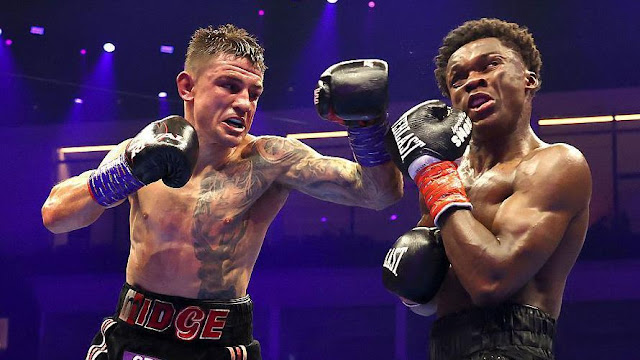

Sam Noakes walked into the ring in Riyadh with one of the toughest assignments in modern lightweight boxing and emerged with his reputation elevated despite leaving without the belt. The British contender pushed highly rated American Abdullah Mason into the deepest rounds of his career, forcing a tactical and physical test that exceeded expectations. However, after twelve tense rounds, the judges awarded Mason a unanimous decision for the vacant WBO lightweight world title.
The fight, staged in front of a high profile international audience in Saudi Arabia, showcased two very different styles. Mason relied on clean counters, technical precision and elite footwork, while Noakes brought relentless pressure, extended combinations and the willingness to take risks when the pace demanded it. The contrast produced one of the most compelling world title contests of the year.
Mason, who has been widely tipped as one of the sport’s future stars, entered the bout with a reputation for accuracy and explosive bursts. Noakes, by contrast, built his path to the title shot with aggression, late knockouts and the ability to overwhelm his opponents with volume and physicality. On paper, the fight presented a classic duel between controlled precision and sustained pressure. In reality, it became a test of resilience for both.
The early rounds belonged to Mason. The American’s jab landed sharply, disrupting Noakes’ forward movement and forcing the Briton to absorb clean, measured shots. Mason’s timing in the first three rounds kept him a step ahead, allowing him to counter with precision whenever Noakes attempted to close distance.

Noakes, however, refused to be discouraged. By the fourth round, he began to adjust, slipping Mason’s lead hand more effectively and crowding the American against the ropes. This shift marked the start of the fight’s most competitive stretch. Noakes targeted the body, throwing combinations that, while not always clean, forced Mason to work harder defensively than in any of his previous professional outings.
The middle rounds saw the contest become increasingly physical. Mason continued to score with sharp counters and disciplined footwork, but Noakes closed the gap repeatedly, forcing close range exchanges that neutralised Mason’s rhythm. The British corner urged him to maintain pressure and make the contest uncomfortable. Noakes responded, pushing the pace and forcing Mason into exchanges that required both stamina and concentration.
By round eight, the energy inside the arena shifted. Noakes’ pressure was visibly affecting Mason, who was forced to clinch more frequently and rely on quick pivots to escape corner traps. The momentum, while not fully in Noakes’ control, was balanced in a way that kept the contest unpredictable.