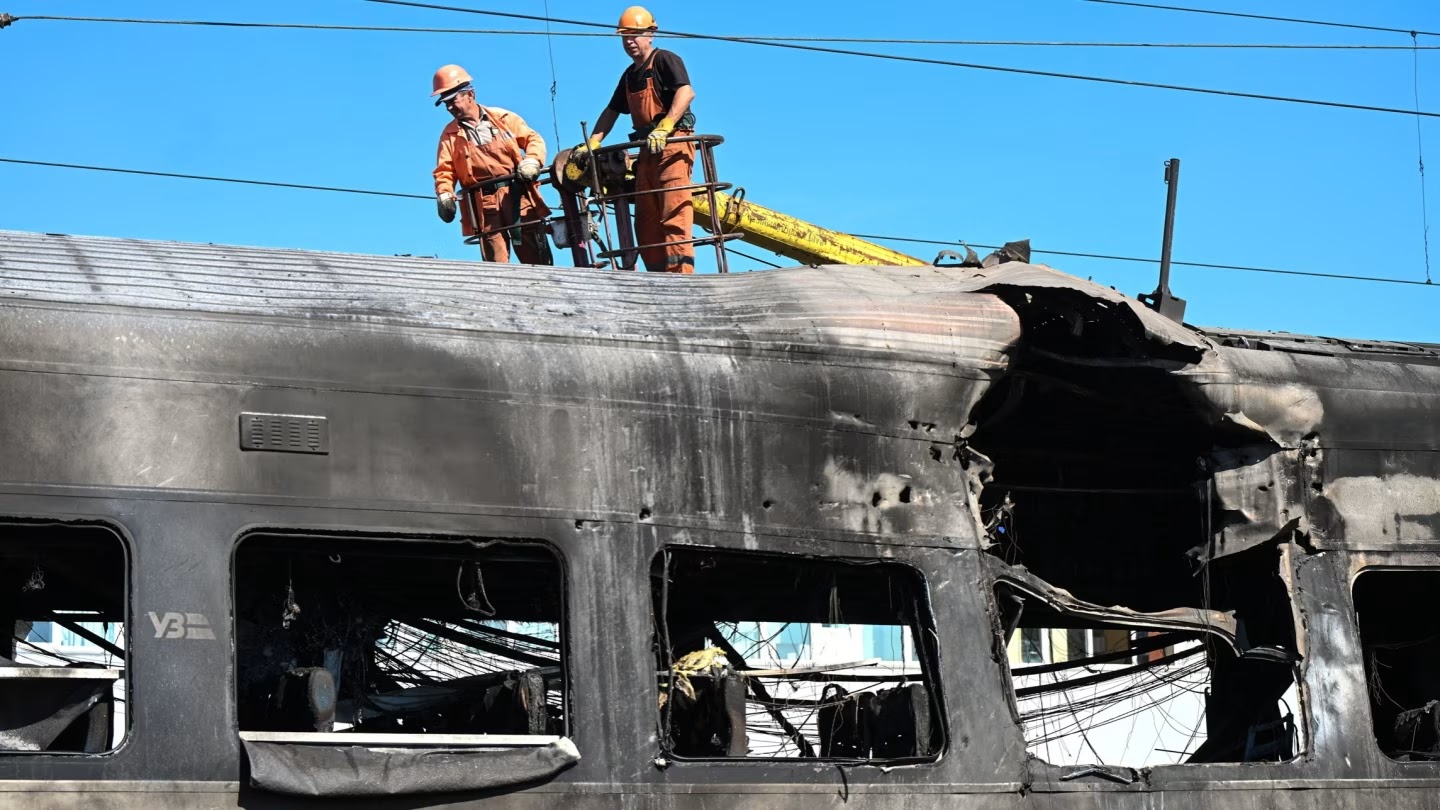

Ukraine’s railways, long seen as the country’s most resilient and symbolic infrastructure, are facing their most difficult test of the war as Russian strikes intensify against stations, power lines and repair depots. The system has kept operating against extraordinary odds, yet officials warn the pressure is mounting as attacks grow more targeted and resources stretch thin.

For nearly three years, Ukraine’s rail network has functioned as the country’s logistical backbone, moving civilians, soldiers, humanitarian aid and critical supplies across hundreds of active and shifting frontlines. It has been struck repeatedly, but its reputation for reliability has held. The question now is how long it can continue at its current pace as Russia escalates efforts to degrade it.
Rail officials say the strikes have become more precise in recent months, targeting not just visible stations but also essential but less obvious elements like transformer sites, switching systems and maintenance hubs. These are harder to replace quickly and require technical components that Ukraine cannot always source rapidly during wartime. Power outages triggered by repeated strikes have also forced trains to slow down or switch routes at the last minute, stretching crews already working under extreme pressure.
Yet Ukrainian Railways employees continue to operate in what officials describe as a moving frontline. Mechanics repair carriages under blackout conditions, conductors sleep in carriages between long-haul journeys and dispatchers work through air raid alerts that frequently interrupt power supply and communications. The system, which once relied heavily on scheduled operations, now functions through constant improvisation.
Despite the growing strain, the network remains critical. Millions of Ukrainians depend on it daily for movement across regions where the road network is damaged or unsafe. It is also a core military asset, transporting equipment, ammunition and personnel. Any prolonged disruption could complicate both frontline operations and civilian mobility, particularly as winter sets in.
International partners have quietly stepped up support, providing generators, engineering assistance and spare parts. European railway agencies have shared technical expertise, while U.S. officials have discussed ways to help maintain the system under sustained attack. Still, Ukrainian Railways faces a long-term challenge, balancing repair work with the need to keep trains running at all costs.