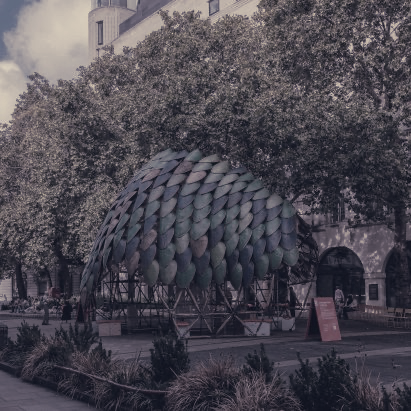
The Pangolin Shield pavilion, a bamboo structure topped with traditional lathis and woven knups, was installed on The Strand and emerged as a striking presence at London Design Festival. Its roof, composed of two types of police shields, made the piece one of the festival's most talked-about installations and foregrounded instruments of public order as material and motif in a central London location.
Dezeen published a special issue of Dezeen Dispatch to coincide with the festival, distributing copies at sites across the city and online. The issue included a Q&A with Sadiq Khan, who described the city's design as "an international success story", and collected several of the week's feature projects and exhibitions for readers unable to visit in person.
Other highlights at LDF ranged from student work to commercial displays. The One Tool Stool exhibition showcased designs from Royal College of Art students, and Lobby presented a fictional 1930s hotel suite as the setting for its first editions collection. These projects joined larger festival conversations about craft, reuse and presentation that framed much of the week's coverage.
Outside London, Dezeen's reporting covered fresh architecture and product stories elsewhere. Hotelier Not A Hotel revealed plans for a human-sized Pokémon Poké Ball guest room to be sited beside a lake in Hokkaido, Japan. From Helsinki Design Week, a Matti Suuronen Futuro House that has been manufactured for the first time in decades was exhibited after architect Jan van Dijs pursued an unusual social-media lead.
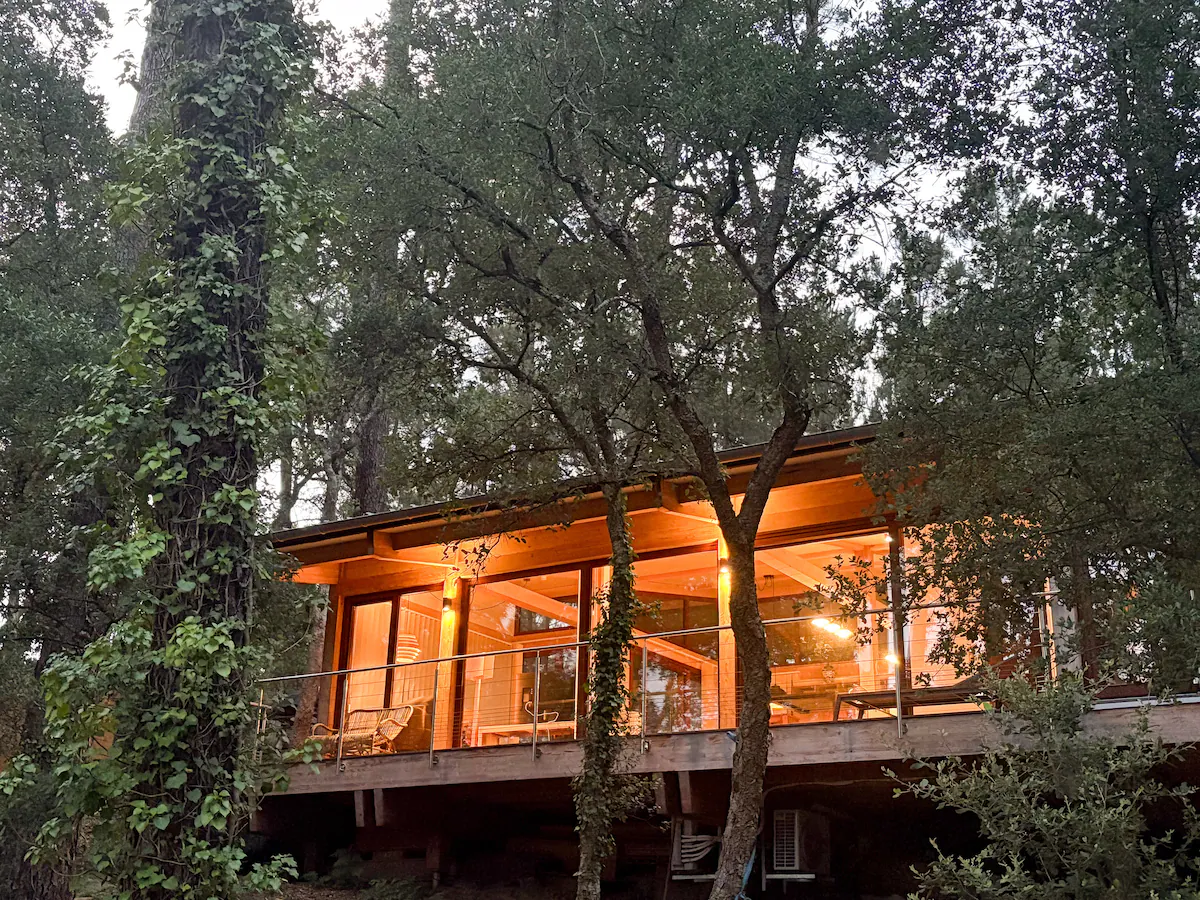
The site's weekly round-up also revisited design histories, looking back at Dyson's record of product reinvention by naming four successful transformations and four that failed to reshape markets, and collected the most-read projects, including Johan Sundberg Arkitektur's Pine House holiday cabin, a UK bathing-focused wooden retreat and a restrained cottage extension in Scotland.
Dezeen's journalists discussed these stories on the Dezeen Weekly podcast, which this episode centred on London Design Festival. The festival's mix of provocations, student shows and retrospective pieces framed a week in which both new commissions and archival revivals drew public attention to how design appears in everyday places.