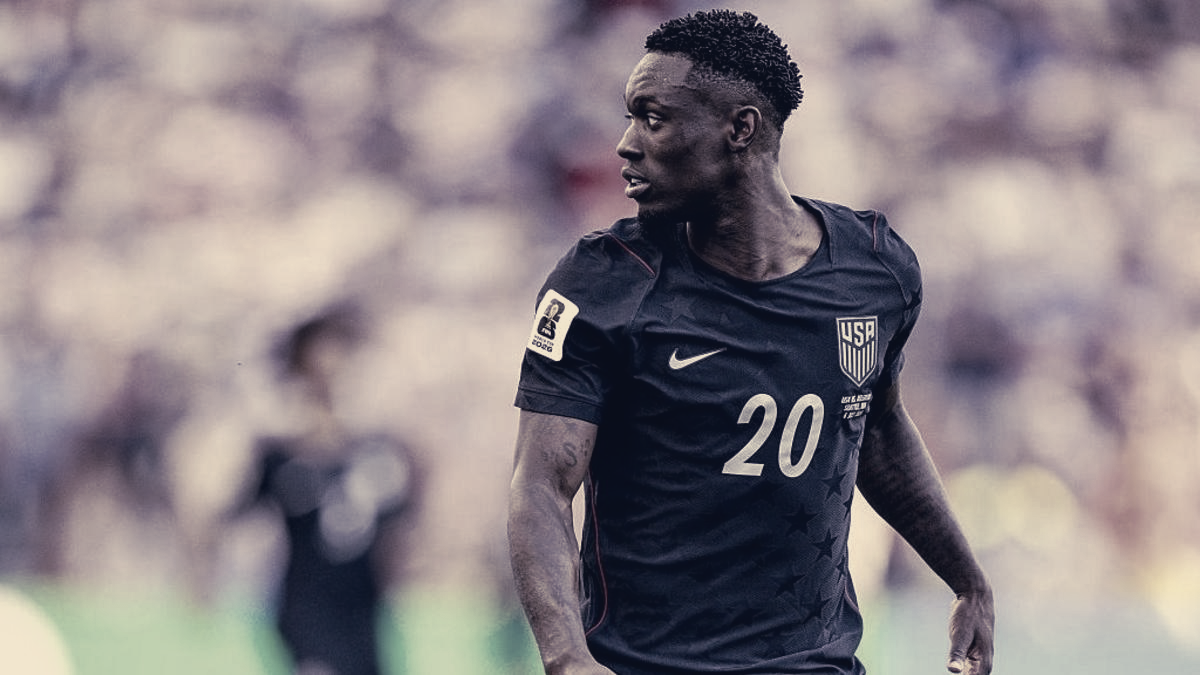

The Royal Belgian Football Association has withdrawn its backing for Gianni Infantino and formally asked FIFA to add the Folarin Balogun suspension to the FIFA Council agenda on 15 October, escalating pressure for public answers about a controversial disciplinary decision.
The RBFA says it needs a clear explanation of why a one-match ban was suspended, a move that allowed Balogun to play for the United States in the World Cup last-16 tie with Belgium. FIFA cited "article 27 of the Fifa disciplinary code", which permits the body "to fully or partially suspend the implementation of a disciplinary measure", but provided no further public detail on its reasoning.
The suspension of that one-match penalty proved contentious after reports that US President Donald Trump and White House officials had lobbied FIFA. National confederations and UEFA criticised the lack of transparency, and the RBFA has now converted those concerns into formal action ahead of the October council session.
Balogun had been shown a straight red card in an earlier game, the incident recorded as the 189th red card in World Cup history and only the second, after Garrincha in 1962, not to result in a suspension. He scored three goals in the tournament, started the last-16 match against Belgium, and the Red Devils lost that game 4-1. Belgium were then eliminated by Spain in the quarter-finals.
The RBFA said the Balogun episode is one of two reasons it will not back Infantino; the other is concern about the now-abandoned plan to sell stakes in FIFA competitions to private investors. Infantino has confirmed he will stand for re-election in March, leaving the Belgian move as a potential complication for his campaign.
RBFA president Pascale van Damme set out the association's demand for answers and better process, saying, "Two months after the events, our questions remain unanswered. Given the importance of transparency and clarity for all parties involved, we request the necessary explanations and, at the same time, wish to explore where improvements to the current processes are possible, so that similar cases can be handled in a clear, consistent and efficient manner in the future. Together with Uefa, the other confederations and the national associations, we remain committed to transparency in decision-making, strong governance and clear processes. We remain open to constructive cooperation, in the interest of the trust, integrity and future of football."
The Belgian request forces FIFA to confront procedural questions at the Council meeting on 15 October, and it adds to a growing list of national bodies seeking clearer disciplinary rules. FIFA will need to decide whether to publish a fuller rationale for the Balogun decision and whether to propose changes to ensure more consistent treatment in future disciplinary cases.