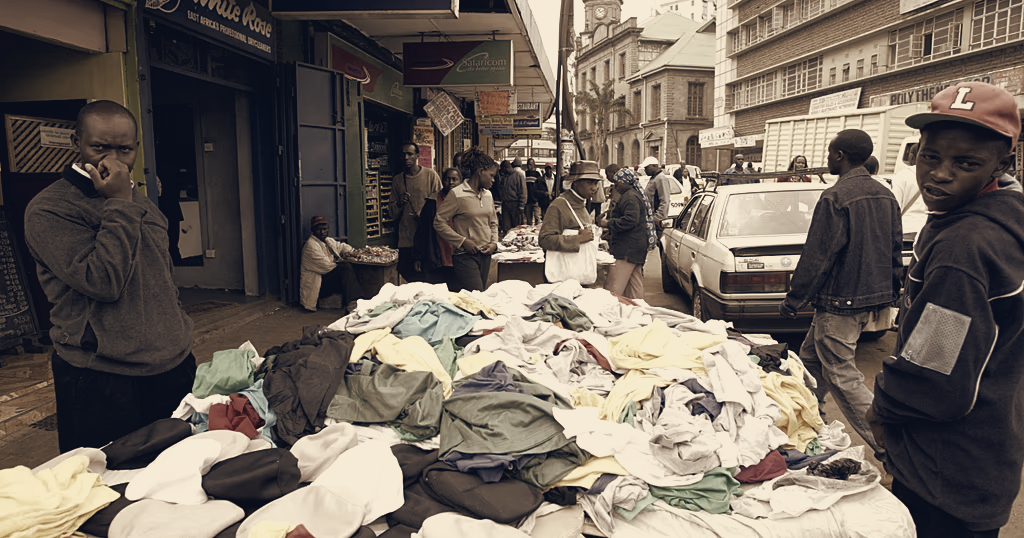

Hundreds of Burundians in Nairobi are trying to leave Kenya after President William Ruto ordered foreign-owned small traders to close, giving them until Monday to shut up shop. The directive prompted a rapid exodus from informal trading spots, hitting people who rely on street vending as their primary income.
On Monday long lines formed outside the Burundi embassy in Nairobi, with people holding suitcases and envelopes while they waited for travel documents and identification. Witnesses and embassy visitors described a rushed effort to obtain paperwork so families could return home. Pastor Jean-Baptiste Ndayizeye said, "They've expelled us like animals." Several people at the embassy said neighbours had been attacked and robbed.
Those accounts of attacks and thefts could not be independently verified. Still, the scene at the consular compound reflected acute anxiety among migrants who often work informally and lack full legal status. Eric Bizimana, who arrived in Kenya in 2022 after a period of unemployment in Burundi, said he never applied for a work permit because of the cost. A Kenyan motorcycle taxi driver who brought two Burundians to the embassy, Philemon Jaika Adamba, said, "They're so sad."
Burundi, a country of about 15 million people and one of the world's poorest, is a member of the East African Community, whose states provide for freedom of movement. Kenyan officials acknowledged that regional dynamics and historical factors have left some East African nationals living and working in Kenya without complete documentation.
The situation has become a diplomatic flashpoint. Burundi's foreign minister, Edouard Bizimana, condemned what he called "violence against foreigners, particularly Burundians" and said the "Kenya government is responsible for the lives of Burundians living in Kenya." He warned that leaving security to civilians "gives the impression of a failed state because it gives free rein to violence, to looting, and to xenophobia."
Kenyan junior foreign minister Korir Sing'Oei visited the embassy, apologised to those gathered and said police would protect reported attack sites. Sing'Oei described the president's remarks as "misunderstood," adding, "Because of this lack of understanding, many have been attacked by their neighbours and their friends." He told the crowd, "Our main aim is to know how you are living, where you are, that you have identification, and that your jobs are registered."
Government spokesperson Charles Owino announced a "formal documentation and registration window" and urged Burundians to present paperwork at the embassy. Officials say the immediate next steps are registration, verification of status and local protection where violence has been reported, as consular staff process travel papers for those seeking to return to Burundi.