
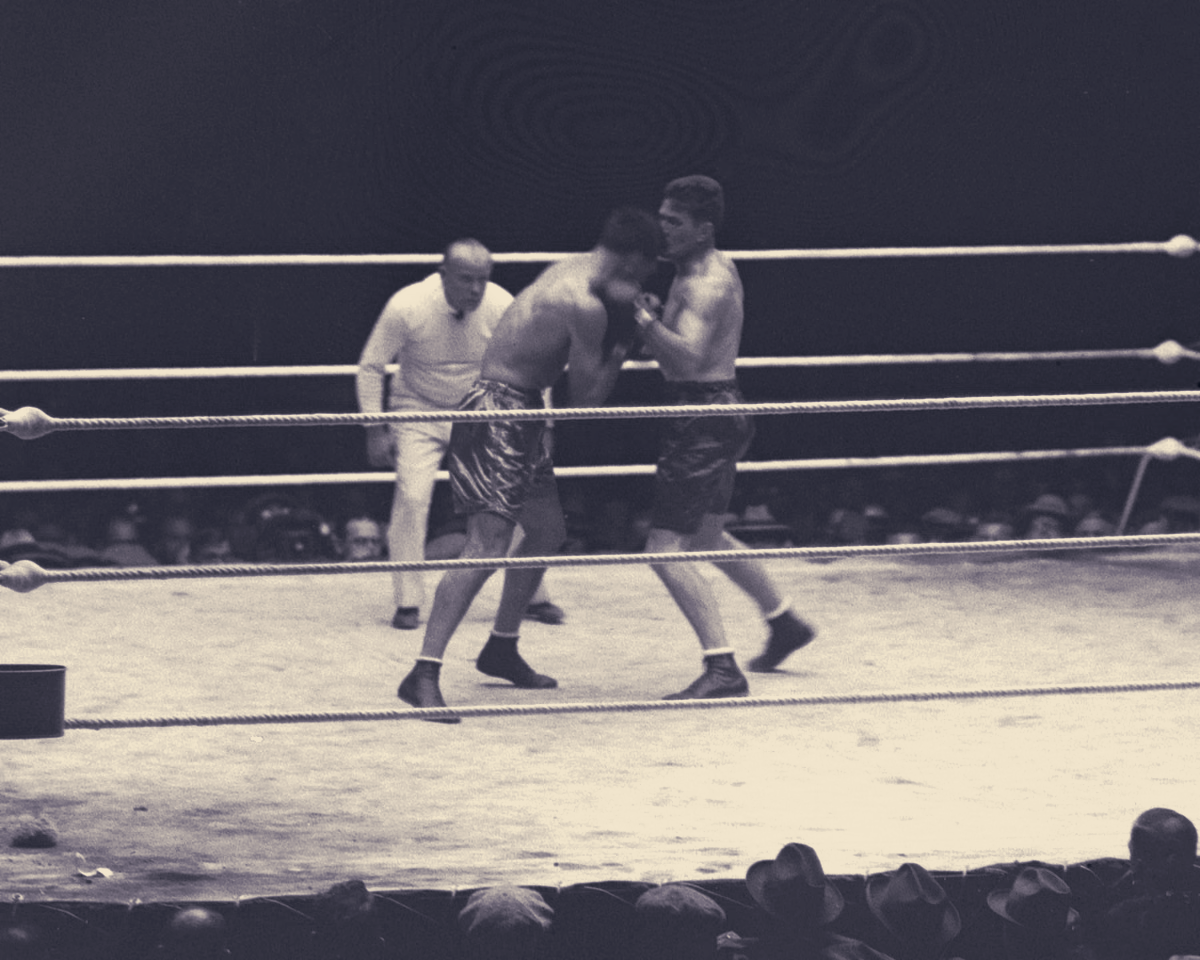
Boxing acquired a mass-audience spectacle on 23 September 1926, when Jack Dempsey and Gene Tunney met in Philadelphia before 120,000 spectators. The first of their two championship fights now marks a centenary that sports historians treat as a turning point in how the heavyweight title was staged and consumed in America.
The rivalry sits among the most storied in the sport. Dempsey had become the public face of a new, commercially successful boxing, a fighter whose life story, rising from hobo camps into ring stardom, fed the mythology around him. He described his past plainly: "I was a hobo," he said, "But I was never a bum." Contemporary writers and trainers emphasised his relentlessness. Ray Arcel called him "a saloon fighter," and Paul Gallico wrote that Dempsey carried "a constant bottomless well of cold fury" and relied on aggression rather than defence.
The fight in Philadelphia arrived after a decade that transformed boxing’s place in American life. Promoter Tex Rickard had steered the sport toward respectability by staging huge outdoor events and using star fighters as attractions. Earlier spectacles under Rickard included Dempsey’s 1921 meeting with Georges Carpentier, which drew more than 80,000 people and a record gate of $1,789,238, and it was the first world title contest to be broadcast live on radio. Those milestones set the stage for Dempsey and Tunney to carry heavyweight championship boxing into the modern era.
Both men occupied different parts of that transition. Dempsey personified raw, crowd-winning ferocity and the promotional possibilities of charisma. Tunney presented the new opponent, a challenger whose skills and style tested Dempsey’s dominance. Their encounters became spectacles because promoters, mass audiences and emerging media combined to make championship boxing a national entertainment rather than a marginal pastime.
Wednesday marks the one hundredth anniversary of their first meeting, and the bouts still stand as examples of how fighters, promoters and technology reshaped professional sport in the 1920s. The Dempsey, Tunney era left the heavyweight title not only as a measure of athletic supremacy but as an engine for mass spectacle.