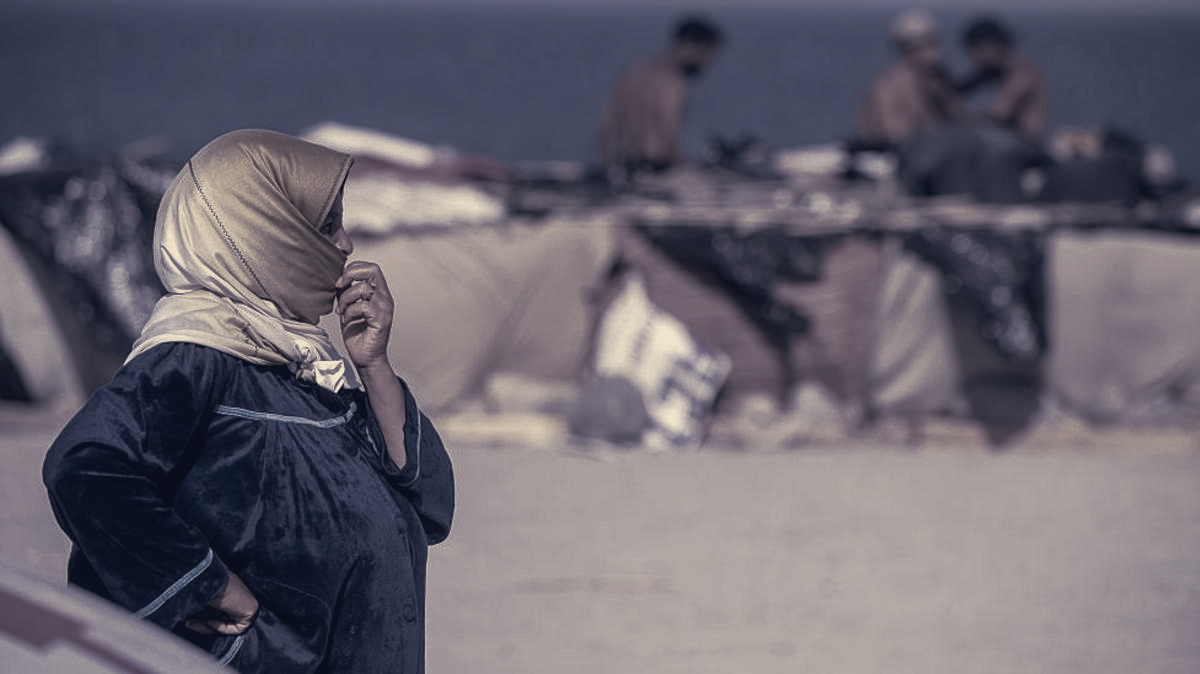

Migrant women and children in Ceuta are at heightened risk of sexual violence, prosecutors and medical staff warn.
Spain's prosecution service says 23 sexual assaults have been recorded in the autonomous city since the mass arrivals at the end of July, nine of them involving children. Chief prosecutor Silvia Rojas said the tally worked out to almost one reported case every day, and she warned migrant girls were "particularly vulnerable because of their irregular status in the territory." Prosecutors also say many victims do not file complaints, citing fear or their current situation in Ceuta.
The surge followed a border breach on 30 and 31 July when about 72,000 people crossed from Morocco into Ceuta. Most returned, but authorities estimate some 5,000 migrants remain in the city. Between 1,400 and 1,600 of those still there are children, Rojas said. Among the suspected attackers are four Moroccans, three Spaniards and a Belgian.
Medical staff in Ceuta have treated multiple victims, emergency doctor Susana Ascaso told reporters; one case involved a 10-year-old. A 24-year-old woman from Morocco described putting her life at risk to reach Ceuta and being sexually assaulted while sleeping among a group of men and women, saying, "I was shocked… If I had known this, I wouldn't have come." Ceuta University Hospital has recorded several such cases, exposing gaps in protection and in the identification of violence against migrant women and girls, the Spanish Society of Epidemiology said.
The situation has fuelled local tensions and episodes of violence between migrants and residents. City authorities report that at least 100 people died trying to swim around the border fence, figures the mayor provided. The national government has approved a multi-million euro aid package to fund essential services and care for unaccompanied children, and Prime Minister Pedro Sánchez convened the national security council for the second time in a week to address the crisis.
The crisis is now political and diplomatic. The mayor has called for demonstrations on the city's holiday in support of Ceuta, and opposition parties have criticised the government. Sánchez said no intelligence indicated Moroccan state involvement, and he suggested disinformation on social media was being amplified by outside actors, naming Russia and Israel and an international far-right movement. Government spokeswoman Elma Saiz said there was evidence that "various digital forums amplified what happened with the intention of fracturing and polarising Europe." Israeli Foreign Minister Gideon Sa'ar called Sánchez's claim "a blatant lie," and Russia's foreign ministry spokeswoman demanded proof.
King Felipe VI is due to visit Ceuta "as soon as conditions allow," Sánchez said, a move aimed at asserting Spanish authority in the city. For now authorities face a short-term priority: protecting a vulnerable migrant population while completing screening and returning those who do not qualify to remain, and preventing further clashes with local residents.