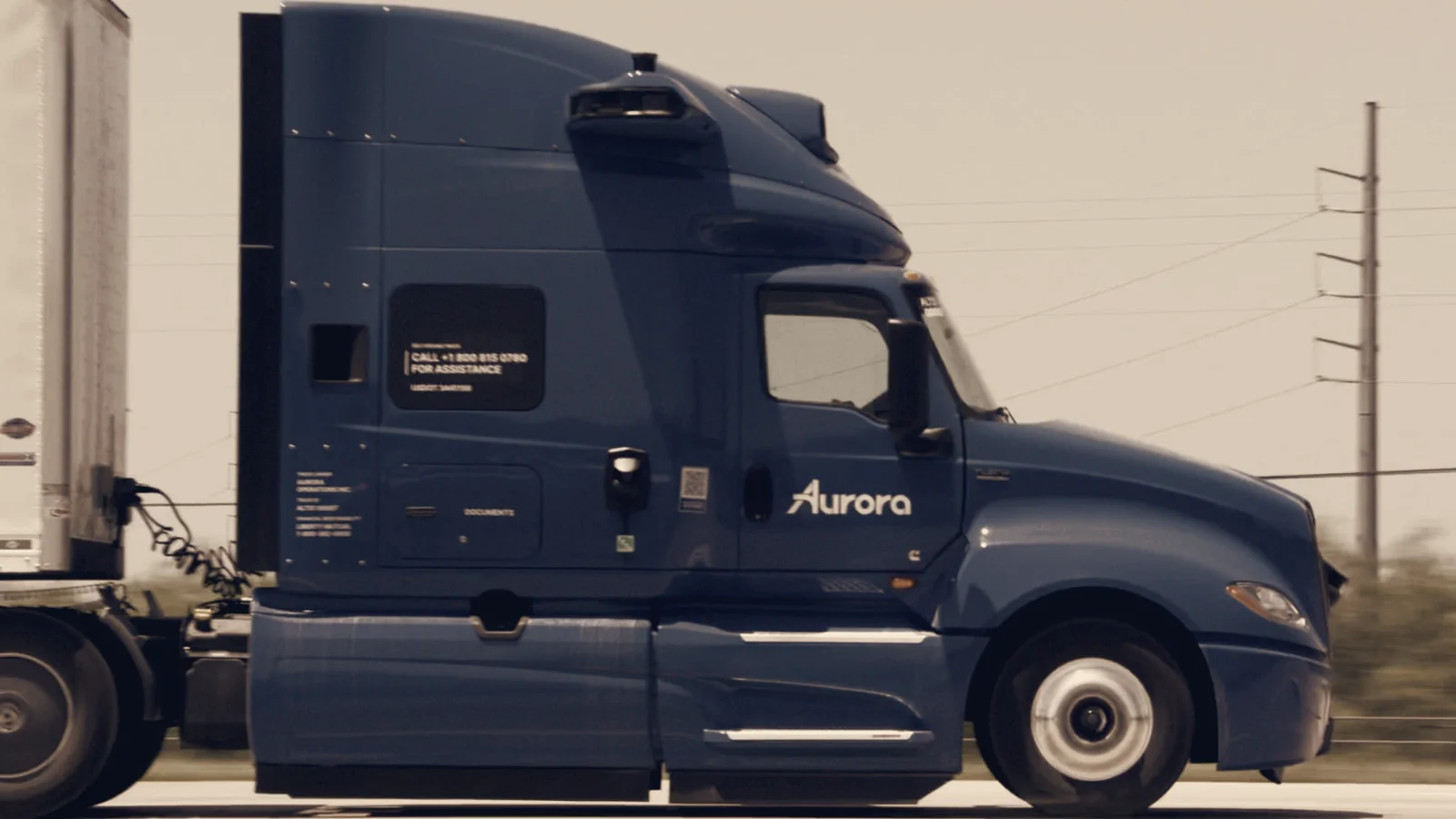
Aur has set a corporate target to stop burning cash and show positive free cash flow by 2028, a priority sharpened by a loss of more than $800 million in 2025. To get there the company is betting on rapid fleet growth, moving from roughly 20 driverless rigs today to about 200 by year‑end, then expanding further to compress per‑mile costs and lift margins.
The commercial plan centres on a pay‑per‑mile “driver as a service” model, where customers buy miles rather than drivers. Founder and CEO Chris Urmson emphasises the hardware and software stack that guides those rigs, describing the system as a mix of lasers, radar and cameras that sense traffic and steer the vehicle. On a highway ride‑along Urmson highlighted efficiency gains, saying, "We can help them [truck operators] save on fuel economy," and "We can move goods more quickly and then we can fill the need when they can't hire amazing drivers for their teams."
Aurora leans on external cost comparisons to make the margin case. Ravi Shanker of Morgan Stanley estimates "an autonomous fleet should be nearly 7.5X as profitable as a human-driven fleet today." Bank of America projects Aurora services will cost ~$0.85 per mile versus approximately $1.30 per mile for human driver wages and benefits, before indirect labour expenses. The company also points to higher utilisation from driverless rigs, which it says can run up to 20 hours a day compared with federal hours‑of‑service limits for human drivers.
That economics pitch faces real pushback, and not only technical ones. Sean Wu, CEO of uShip, acknowledged the cost appeal but cautioned that human drivers deliver judgement, customer service and protection, saying, "There is just a lot more to think about than 'Hey they are moving a truck from point A to point B.'" Converting interest into recurring, contracted miles remains a central commercial hurdle.
Aurora frames its scaling case on a technical track record: since it began public‑road testing in 2022 the company says it has logged more than 440,000 miles and run what Urmson calls 15 million tests before deploying vehicles. Executing the next phase, Urmson says, means meeting internal timelines while signing enough paying routes to prove the unit economics behind the pay‑per‑mile offering and to make the 2028 cash‑flow goal credible.