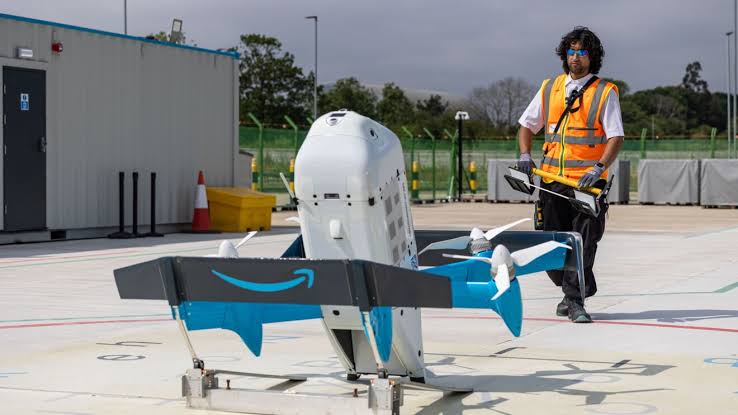
Amazon will offer drone deliveries in almost 500 U.S. cities and towns by the end of the year, a move that multiplies Prime Air’s current footprint and pushes the program into operational scale. The company said the expansion, disclosed in a Wednesday blog post, represents roughly a sixfold increase from its present service area and follows a pivotal 2024 regulatory greenlight for long-range flights.
The announcement reinforces internal projections made in March by David Carbon, vice president of Prime Air, who told staffers the unit expects to hit 1 million deliveries this year and called Prime Air the "highest demand drone delivery service in the industry." Amazon also said it has completed hundreds of thousands of drone deliveries so far this year and operates thousands of flights each day, suggesting momentum behind the internal target.
The program has not progressed without setbacks. Early technical failures and staff cuts slowed development after Jeff Bezos first pitched drone delivery in 2013, and recent incidents have drawn federal scrutiny. Two drones collided with a crane in Tolleson, Arizona in October, prompting an NTSB probe and a separate FAA investigation. Carbon said the team had been "detecting these cranes above the industry standard," but that real-world performance "wasn't good enough" and called the experience humbling.
Regulatory pressure did not end there. The FAA is investigating a November incident in Waco, Texas, where an Amazon drone severed an internet cable, and the UK's Air Accidents Investigation Branch opened a probe after a drone crashed into a garden in Darlington, England. Those enquiries add operational risk as Amazon scales deliveries across new metro areas.
Amazon has broadened the types of items drones can carry by integrating drone operations into larger robotic sort centers, rather than the smaller same-day hubs it used initially. Its vehicles can currently transport packages up to 5 pounds within about a 7.5-mile radius of a facility. Prime Air is testing a new delivery mechanism to handle more fragile and perishable items, including a "gentle delivery option" that lowers packages on a retractable tether, an alternative to the roughly 13-foot package drop used today.
The expansion places Prime Air directly in a competitive field where other operators already report large delivery volumes. Alphabet’s Wing reported crossing 1 million commercial drone deliveries earlier this year and runs in 20 U.S. markets through partners such as Walmart and DoorDash. Zipline, a drone specialist, says it has completed 2 million deliveries across four continents. Those figures frame Amazon’s target as both ambitious and urgent.
Local communities remain a battleground. Residents in several launch markets have raised issues about noise, privacy and potential impacts on property values, concerns that could shape local permissions and flight patterns as the rollout progresses. Amazon’s ability to convert a broader rollout into a reliable, accepted service will hinge on resolving technical faults and public resistance while navigating ongoing regulatory probes.
What happens next is clear: Amazon will push to bring Prime Air into more urban and suburban neighborhoods by year-end, while testing new payload systems and delivery methods to expand the serviceable product range. At the same time, federal and international investigations and community backlash could slow deployments or force operational changes, making the coming months decisive for whether drones move from novelty to core delivery infrastructure.