Libya's national oil company warns it may declare a force majeure and shut down operations at the country's largest operating refinery, Zawiya, if drone attacks continue.
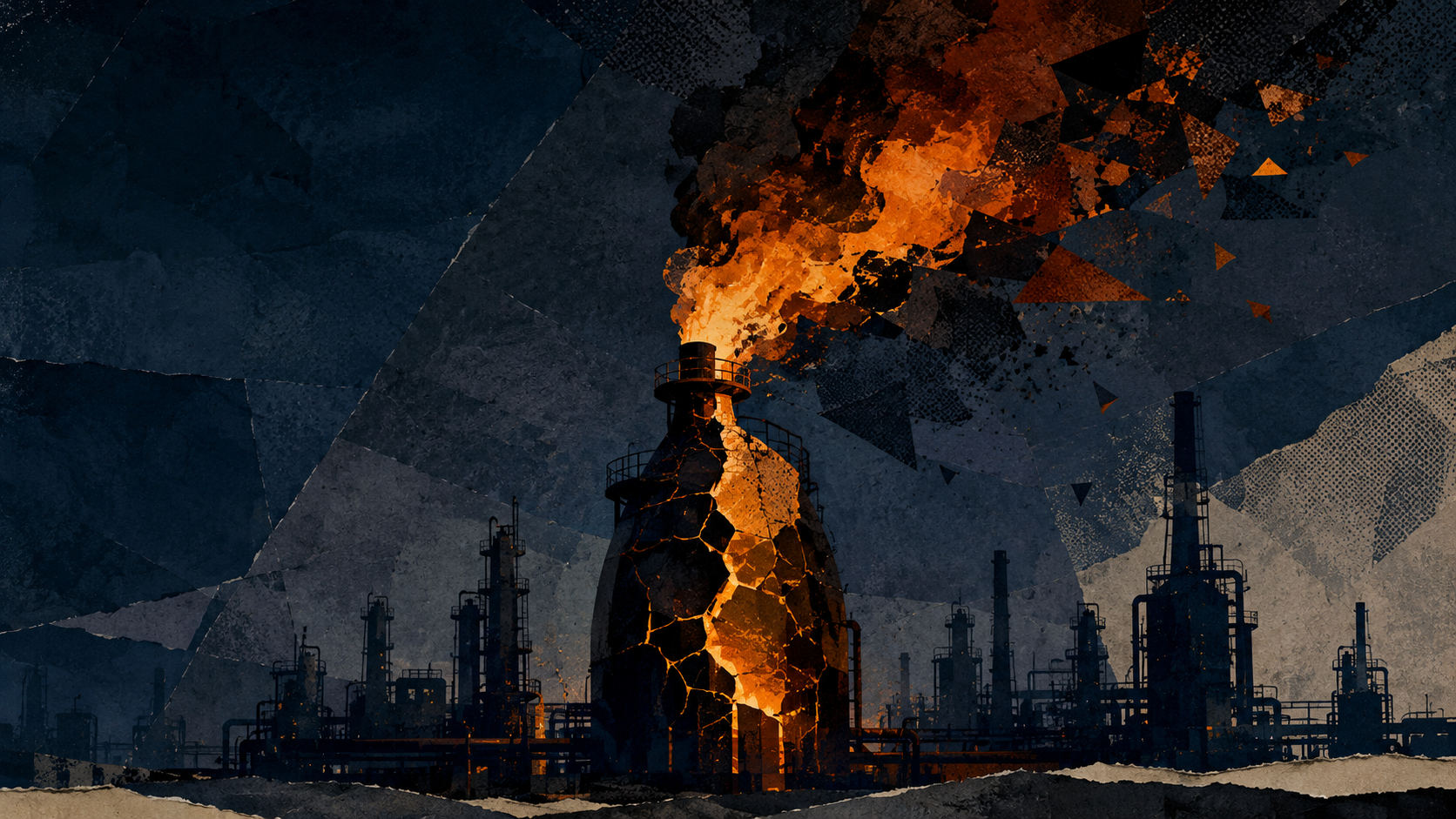
The warning comes after a massive fire broke out at the refinery, located about 40km west of the capital, Tripoli, following a drone attack on Monday evening. The fire, which was still being battled by firefighters, occurred at tank number 402-T, belonging to the Brega Oil Company, and contained about 4.5 million litres of gasoline.
The National Oil Corporation (NOC) said the tank was "directly targeted, resulting in a severe fire before the tank completely collapsed". The attack followed drone strikes on a water desalination plant at the refinery on Sunday and on a naphtha reservoir on Saturday.
The company declared a "maximum emergency" in the region and urged authorities to launch an investigation and bring the perpetrators to justice. There was no immediate claim of responsibility for the attacks, and the company did not say who they believed was behind them.
The refinery, which has a refining capacity of 120,000 barrels per day, is still being subject to sabotage attacks, with a drone targeting an oil blending and filling plant operated by the Zawiya Oil Refining Company. The company's board of directors warned that if these attacks continue, it will have to declare a state of force majeure and suspend operations at the refinery.
The Brega Oil Company appealed to "all parties to stop the fighting and stay away from oil facilities and depots", stating that "oil facilities are vital infrastructure and owned by all Libyans" and that "protecting them is a national responsibility that does not tolerate any negligence".
The attacks highlight the continuing security challenges in Libya, where rival administrations and armed groups have retained influence despite a 2020 ceasefire that halted major warfare.
The country split in 2014 after a NATO-backed uprising that toppled longtime leader Muammar Gaddafi in2011. Two governments are currently vying for power: the United Nations-recognised administration in Tripoli, led by Prime Minister Abdul Hamid Dbeibah, and a rival in the east backed by military commander Khalifa Haftar.
In response to the attacks, the Tripoli-based government said Dbeibah held a meeting with key officials, including the interior minister and the chiefs of some armed groups in the capital, "to follow up on the latest security developments". Dbeibah "stressed the need to deal firmly with any transgressions or actions that threaten security or harm vital facilities and installations".
A Libyan parliamentary panel also condemned the attack and called for stronger protection of oil installations, stating that the attack targeted "one of the most vital facilities in the oil and gas sector that is a cornerstone of the national economy".