Federal Reserve independence is under visible strain, as the Trump administration has launched a broad public push to prevent a rate increase ten days before the Sept. 15-16 Federal Open Market Committee meeting.
The campaign has come from the top. In the past week the president, the vice president, the Treasury secretary and a senior economic counselor publicly urged the Fed not to raise rates and in some instances to cut them. President Trump intensified the pressure by threatening to halt trade with countries that run trade surpluses with the U.S. unless the Fed lowers interest rates, a direct threat tying trade policy to monetary decisions.
Senior economic counselor Peter Navarro followed with an interview in which he called a rate hike "careless" and warned it "would hit precisely the sectors America needs to prosper most." He also labelled members of the FOMC "clowns," while saying Warsh is trying to "do the right thing." Vice President J.D. Vance said, "We believe that the Fed should be lowering interest rates," and added that the administration is taking steps "to try to keep those interest rates down," while hoping for help from the Federal Reserve. Treasury Secretary Scott Bessent told CNBC the Fed typically refrains from raising rates during a supply shock until second- or third-order inflationary effects appear.
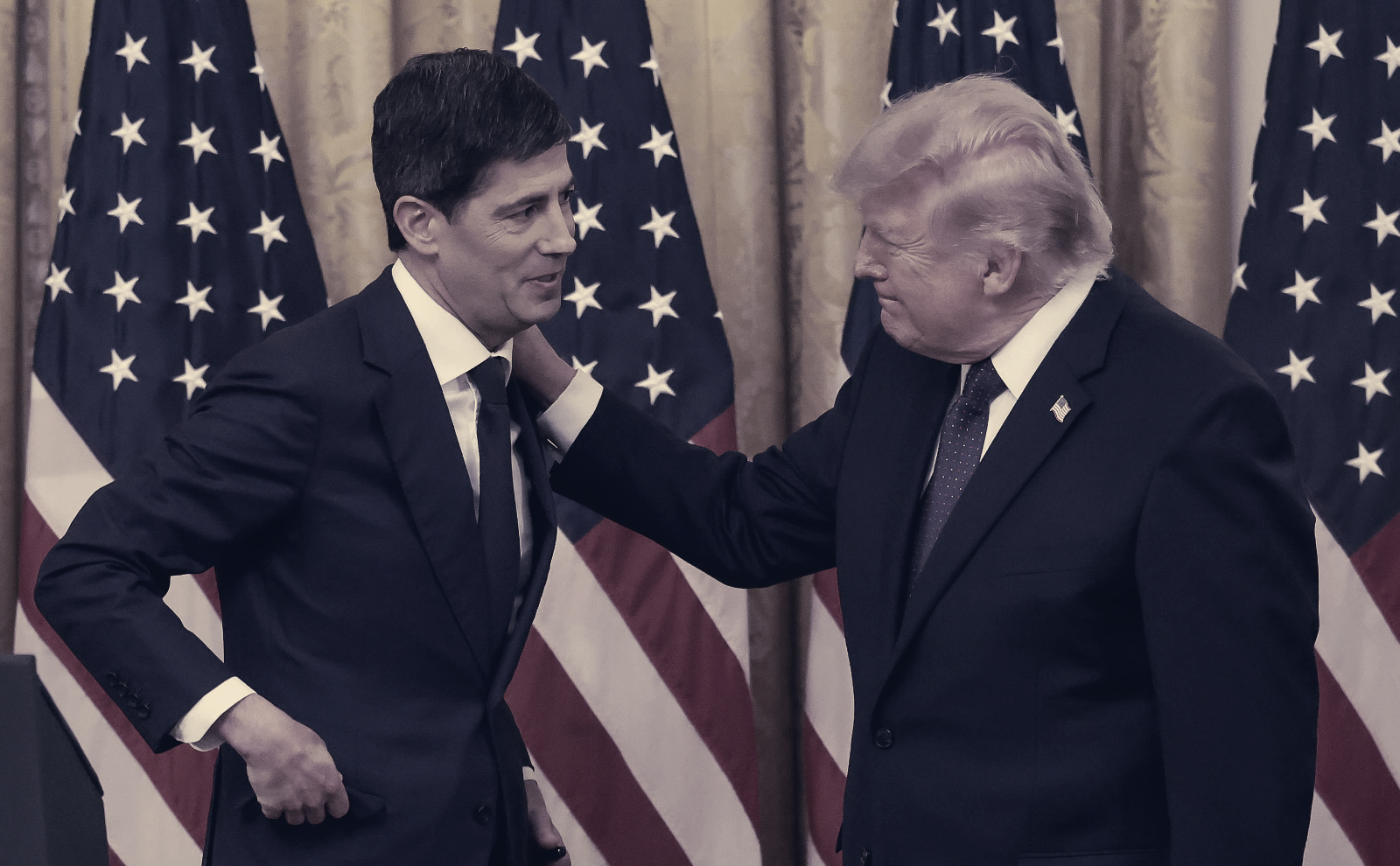
The timing complicates matters for Fed Chairman Kevin Warsh. Markets place about a 60% probability on a rate hike at the Sept. 15-16 meeting, a figure nudged higher by a strong jobs report. Warsh has pushed back publicly on political influence, saying the president has had no impact on his choices and pointing to the Fed's prior decision to hold rather than cut as proof of independence. He has also said politicians have a right to comment on monetary policy.
The administration rejects a conventional link between growth and inflation, arguing that supply-side gains can expand productive capacity without stoking price pressures. Officials have highlighted a three-month annualized Consumer Price Index rate of 1.6% and contrasted that with the three-month annualized core Personal Consumption Expenditures price index, the Fed's preferred gauge, at just over 3%. Fed officials have pushed back, noting inflation has exceeded the 2% target for five years and citing signs of broader price pressures, including effects from tariffs and rising energy costs related to the U.S. war with Iran.
The Fed's internal debate surfaced at the July meeting, when three officials, Beth Hammack, Neel Kashkari and Lorie Logan, dissented in favour of a quarter-point hike. In Jackson Hole, Warsh argued the central bank must keep its focus on inflation, pointing out that 54% of the 199 components in the PCE price measure rose more than 3% over the prior 12 months. The August jobs report showed average hourly earnings up 0.3% for the month and 3.1% year-over-year, while the unemployment rate held at 4.1%, a mix that helped lift markets' estimate of a September hike.
Markets will now focus on the upcoming CPI print, which Fed officials have described as a critical gauge to determine whether inflation is easing or accelerating, and that data could decide whether the Fed hikes or holds. No FOMC member has recently advocated public discussion of rate cuts, leaving the central bank's next move as the pivotal outcome of this intensified political push.