
A box of zines helped send tattoo artist Daniel “Des” Sanchez Estrada to 30 years in prison. The sentence stems from a protest outside the Prairieland Detention Center in Alvarado, Texas, last year, when a demonstrator shot a police officer in the neck. Estrada did not attend the protest, but he was sentenced to 30 years on a charge of concealing evidence, and a container of self-published booklets sits at the centre of the prosecution’s case.
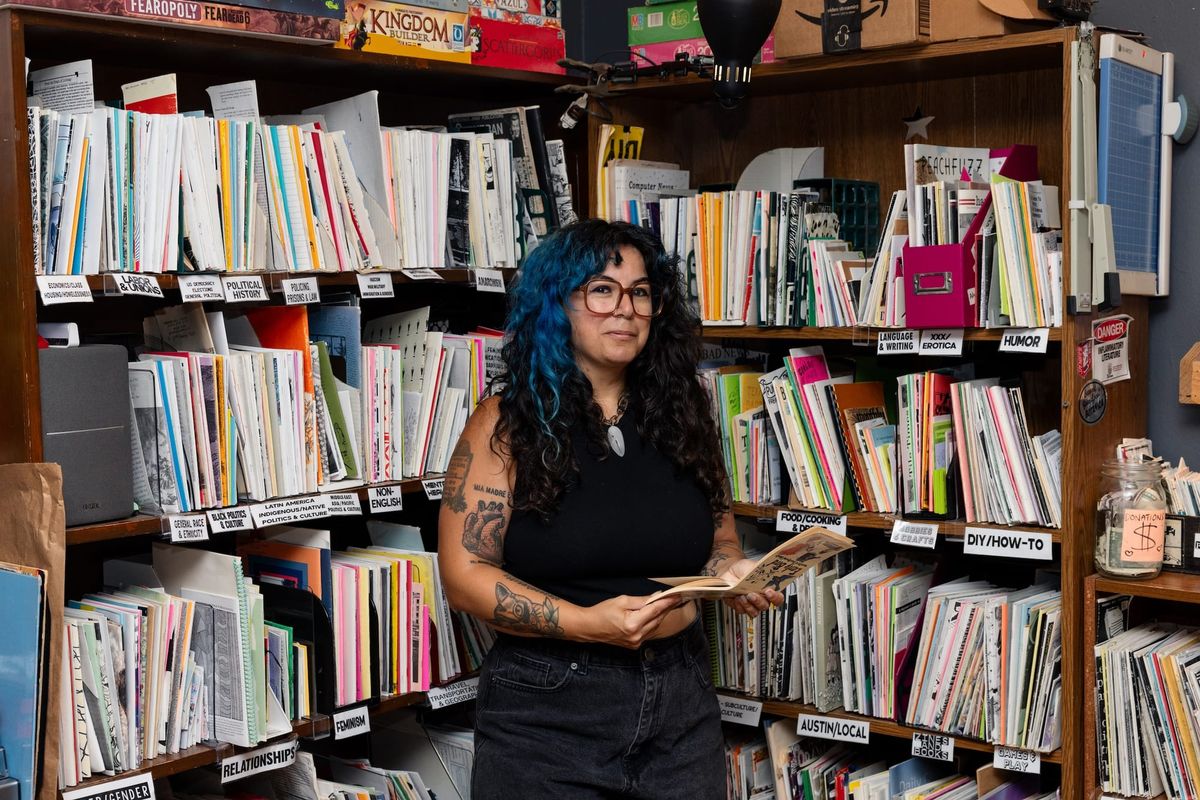
Zines are small, self-published booklets that are often hand-bound, inexpensive to produce and easy to circulate. They can include a wide range of art and writing and have long been used as a vehicle for unfiltered expression, a role that founder Michelle Millette emphasises at her Sherwood Forest Zine Library in Austin. “Zines, by nature, are supposed to be this open space to say whatever you want,” Millette said. “Zines have become one of the few spaces that allows someone to have their own opinion without having a comment section.”
Millette houses roughly 3,000 zines on bookcases in her living room. She opens the collection to the public on a bimonthly schedule for four-hour periods, and during those sessions dozens of new and regular zinesters drop in. Some come to see the novelty of a home-based, curated archive, others arrive to read and catch up with familiar faces.
The Sherwood Forest Library is part of a wider Texas scene. For more than 30 years zine culture has spread across the state, from Houston picnic meetups in the 1990s to festival booths, workshops and even dedicated sections in public libraries, with communities active as far west as El Paso and as far north as Denton. The presence of a physical zine collection in a high-profile criminal case underlines how material produced outside mainstream publishing can enter legal proceedings.