

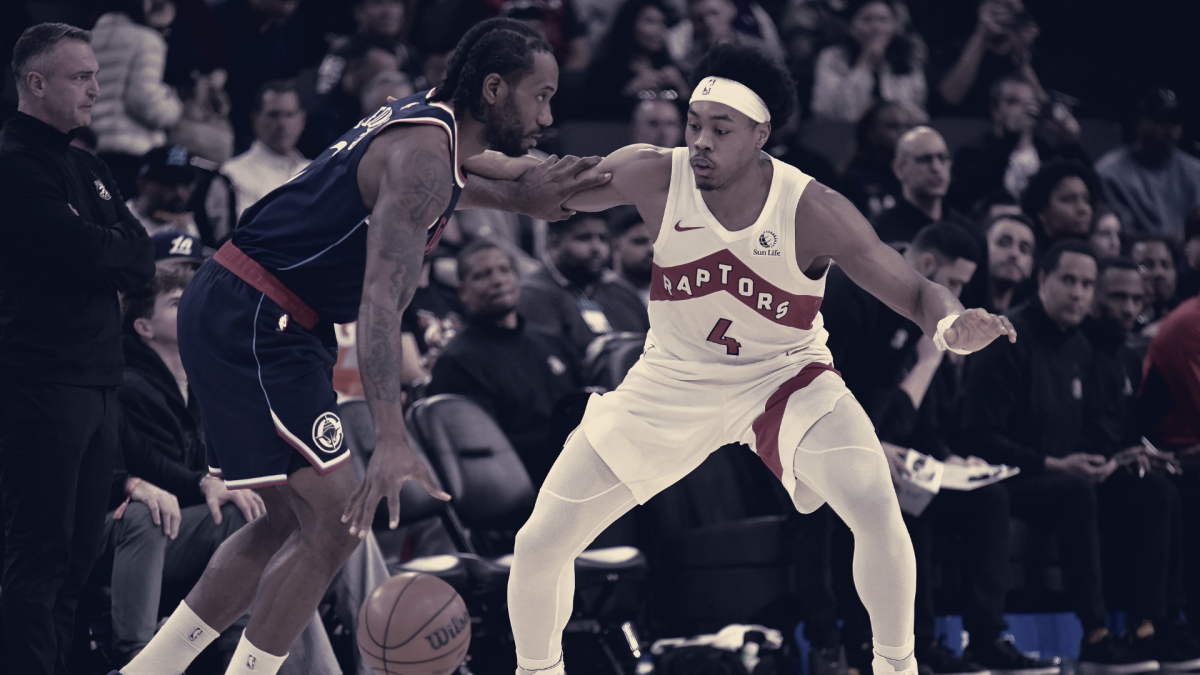
Toronto gains a high-end scorer after Kawhi Leonard signed a two-year, $115 million extension, but the Raptors' push toward Eastern Conference contention now depends on his availability and how the club rearranges minutes for Scottie Barnes and RJ Barrett. Leonard will play this season under his current $50 million contract and begin the new deal in 2027.
On paper the move strengthens a Raptors roster that won 46 games and pushed the Cleveland Cavaliers to seven games in the first round, built around a top-five defense that forced a league-high 22 turnovers per game and fuelled a transition attack that produced 28.6 points per game, bettered by only two teams. Leonard brings elite isolation and pick-and-roll scoring that the team lacked after flipping Brandon Ingram for a faster, higher-ceiling look.
But three constraints temper optimism. First, health remains the overriding risk. Leonard posted one of his best regular seasons last year, appearing in 65 games and delivering near 28, six and four averages on close-to 50-40-90 shooting. Even so, he tore an ACL following a 68-game 2023-24 season, missed 15 of 50 playoff games with the Clippers and sat out 119 games across two seasons with separate knee problems. Availability is binary: when Leonard plays, he is among the league's best, when he does not the roster's ceiling drops substantially.
Second, Leonard and Scottie Barnes overlap in their shot profiles. Last season Barnes attempted just under eight shots per game between five and 19 feet, and Leonard attempted just over eight in that same range. Cleaning the Glass shows 31% of Barnes' shots came from the short midrange and 32% of Leonard's did as well. Coach Darko Rajakovic can stagger minutes to limit congestion, and Leonard increased his 3-point volume to a career-high 6.8 attempts per game, a path toward easing overlap, but the two will need role clarity.
Third, RJ Barrett's positioning is uncertain. Barrett finished last season with a career-high 58.5 true shooting percentage and has been a consistent 20-point scorer, but he occupies many of the same scoring zones as Barnes and Leonard, particularly in the runner and short midrange areas. His three-point conversion has been 34 and 35% the past two seasons, though he converted 38% on wide-open threes and 42% on unguarded attempts last season. In theory Leonard's gravity should create more open shots for Barrett, but Barrett will likely see reduced half-court usage and must convert more transition and uncontested looks to sustain the attack.
What happens next is practical: the Raptors must define staggered minutes and clearer shot roles in training camp while monitoring Leonard's body. The extension locks Leonard to the franchise structure through 2028-29 with a player option in the final year, but the team's short-term ceiling will be decided by his availability and whether Barnes and Barrett can adapt their games to complement an isolation-focused star.