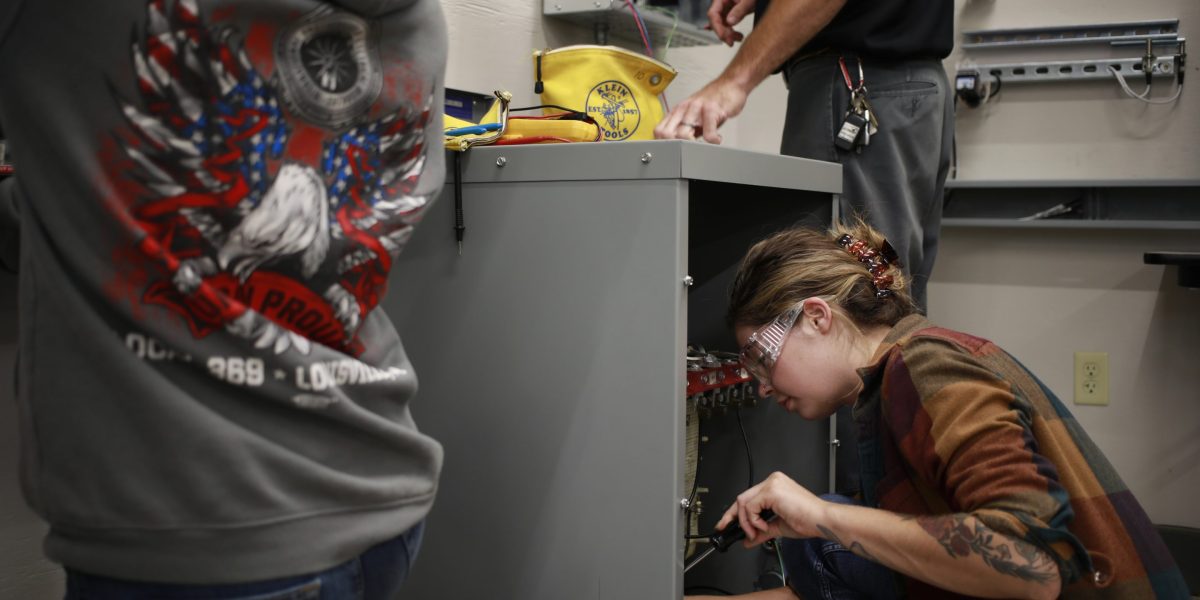

The AI-driven data center boom needs more than 300,000 new electricians over the next decade, or major cloud and AI projects risk slowdown, higher costs and missed delivery dates.
That shortfall compounds an expected wave of retirements, with about 20,000 electricians leaving the workforce each year, roughly 200,000 over ten years, and nearly 30 percent of union electricians aged between 50 and 70.
McKinsey estimates global data center investment could hit a cumulative $6.7 trillion by 2030, making labor the proximate constraint on that capital deployment.
Electrical work is not marginal in data centers, it is the spine. The IBEW says electrical labor accounts for 45 percent to 70 percent of total data center construction costs.
Single large facilities can be 40 percent to 50 percent larger than the average Walmart Supercenter and require as many as 1,500 workers at peak construction. Meta’s Hyperion project is projected to scale four times the size of Central Park.
Trade groups warn the construction industry needs hundreds of thousands of new workers this year alone, with the Associated Builders and Contractors estimating 349,000 net new hires required in 2026 to meet demand.
Big Tech executives and policy analysts have begun to sound the alarm. The IBEW calls the shortage "life-or-death" for companies including Amazon, Meta and Microsoft. Darrell West of Brookings said, "The electrician shortage is quite dire," adding that these skilled workers are in short supply nationwide and that the shortage has become a leading barrier to data center construction.
Google’s policy report warns a lack of electricians "may constrain America’s ability to build the infrastructure needed to support AI."
Microsoft President Brad Smith has identified electrical talent shortages as the No. 1 problem slowing their U.S. data center expansion, with the company already relying on electricians who commute 75 miles or temporarily relocate to fill roles.
Companies and unions are responding with recruiting and training investments. Google pledged $15 million and partnered with the electrical training ALLIANCE to expand the pipeline.
Oracle says it will invest in local workforce training after Bloomberg reported some schedule shifts tied to labor gaps, a claim Oracle disputes, saying projects remain "on schedule and on plan."
For Gen Z workers like 22-year-old Nicholas Bowman from Newport News, Virginia, the gap represents an economic opening: apprentices can start earning about $42,000 in year one and expect roughly $71,000 as a journeyman, while avoiding college debt.
The immediate business test is capacity, not capital. Tech companies can finance buildouts, but they cannot write checks for people.
The next phase will hinge on whether training pipelines scale fast enough to replace retiring workers and staff the construction peaks that the AI era demands, and whether public and private investment sustains those workforce programs at the speed and scale the forecasts require.