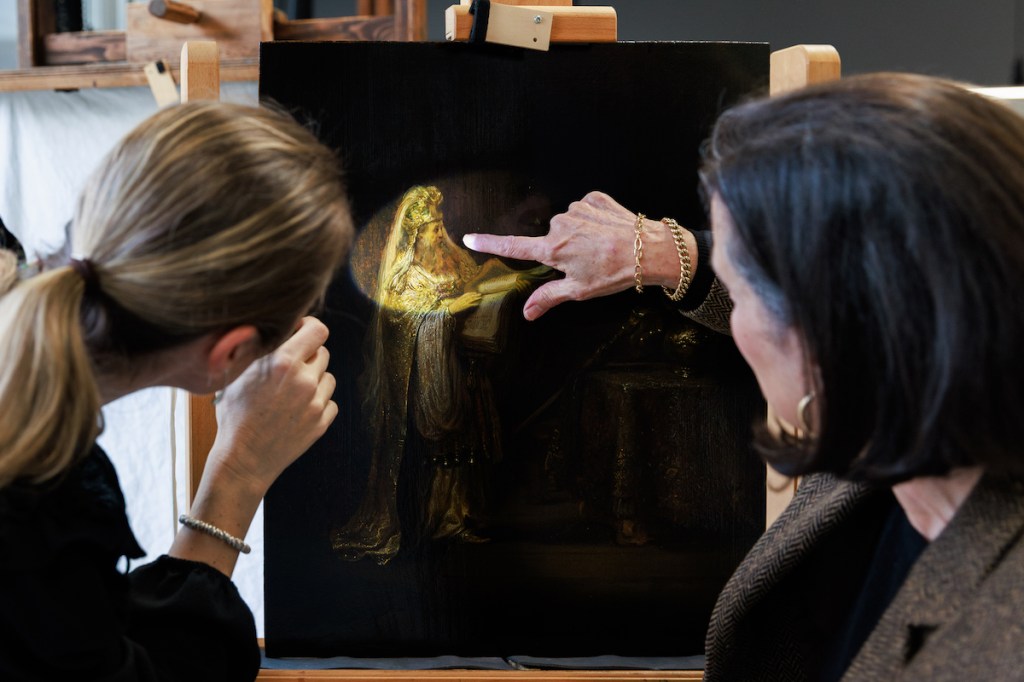

The Rijksmuseum has authenticated a work last seen by the public in the 1960s as a genuine Rembrandt, announcing the attribution on Monday, March 2, 2026.
The finding reassigns a piece of art history that scholars had long written off, and it brings a previously hidden canvas back into the centre of the Dutch canon.
The painting, titled Vision of Zacharias in the Temple and dated to 1633, disappeared from view during the 1960s and has not been exhibited since.
For years it was discredited by specialists familiar with Rembrandt’s oeuvre, leaving the picture in obscurity.
That consensus changed after a two-year technical study focused on the paint used to make the work, undertaken by experts with the Rijksmuseum.
Museum scientists concluded the materials and execution align with Rembrandt’s hand, prompting the institution that also houses The Night Watch (1642) to make the public attribution.
The reversal is notable because it comes from the Rijksmuseum, the steward of one of Rembrandt’s most famous works, which lends institutional weight to the reassessment.
The rediscovery highlights how technical analysis can overturn long-standing judgments in art history, and how museums are increasingly using science to re-evaluate attributions.
It also underscores a broader cultural shift toward revisiting collections with new tools and expertise rather than relying solely on established connoisseurship.
The Rijksmuseum says the painting will now go on view to the public, closing a decades-long gap between the work’s creation and its return to the exhibition space.