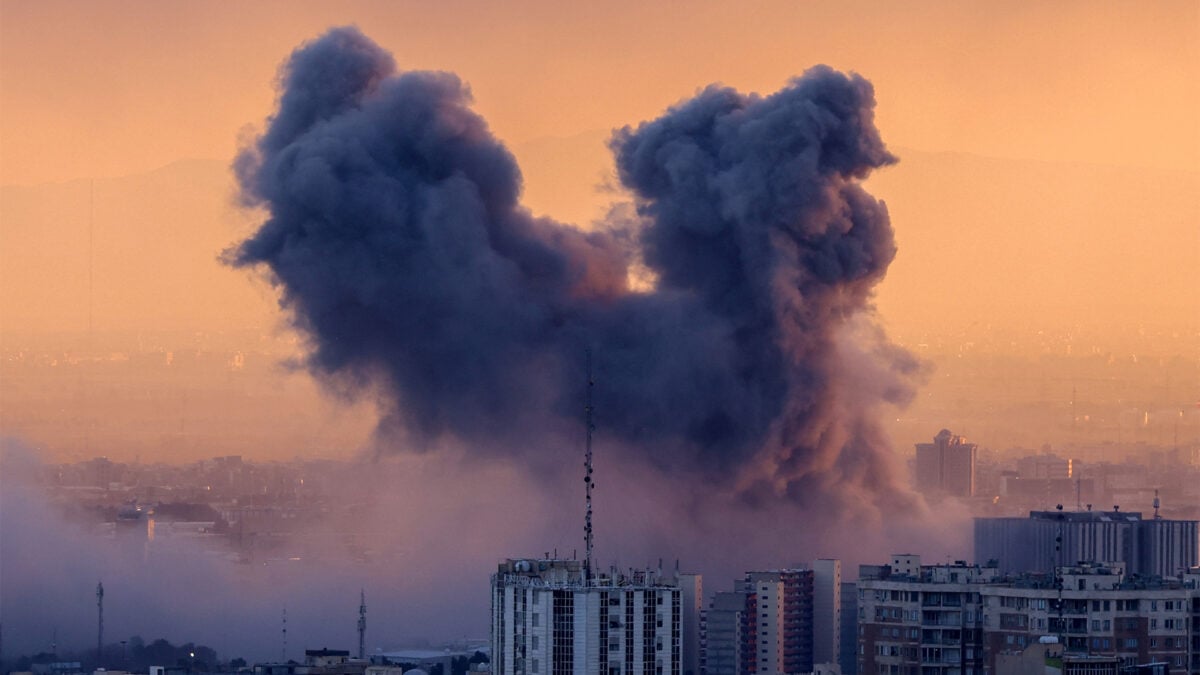

Bitcoin has gained ground as the war in Iran stress-tests its "digital gold" narrative. The Middle East conflict is reshaping where value is stored and who can move it, with Iranian exchanges at the center of an immediate liquidity shift that has geopolitical as well as market implications.
Blockchain analytics firm Chainalysis logged $10.3 million in outflows from major Iranian platforms between February 28 and March 2, with hourly volumes spiking toward $2 million in the hours after the strikes. Elliptic recorded a 700 percent surge in outflows from Nobitex, Iran’s largest exchange, with funds moving primarily to overseas platforms. At the same time TRM Labs found overall transaction volumes fell about 80 percent after Tehran cut internet connectivity by 99 percent, even as routine cold storage transfers of $35 million to $40 million continued.
Those flows are hard to interpret. They could reflect citizens pulling funds into self-custody wallets for protection, state actors using exchanges to launder or evade sanctions, or platforms shifting liquidity between their own wallets to obscure internal balances. Exchanges also suspended or batched withdrawals and paused trading pairs such as USDT-toman at the direction of the central bank. A toman equals 10,000 rials, underscoring the local currency pressures behind the crypto moves.
The Central Bank of Iran acquired at least $507 million in Tether’s USDT to support the rial and settle trade, illustrating how stablecoins can strengthen dollar dominance while giving sanctioned states new tools to sidestep restrictions, a dynamic highlighted by the GENIUS Act debate. Chainalysis estimated record illicit crypto activity of $154 billion in 2025, and Iran’s use of stablecoins sits alongside reports of Maduro’s Venezuela leaning on USDT in recent years. Unlike stablecoins, Bitcoin is decentralized and cannot be blacklisted by an issuer, though that does not immunize it from price swings or censorship at the network access level.
Price action reflects the tension. Bitcoin briefly dropped to $63,000 when the bombing began, then recovered above $71,000, roughly 9 percent above pre-conflict levels, and has outperformed gold in this episode. That performance will encourage proponents who argue Bitcoin can act as a global, apolitical reserve, yet the asset remains about 50 percent below its October all-time high and still in an early stage despite 17 years of operation. What happens next will depend on whether flows are sustained, how Iran and other sanctioned states use stablecoins and exchanges, and whether internet restrictions and exchange controls persist, all of which will determine if crypto consolidates a new role in regional financial lifelines or remains a volatile adjunct to them.