Claudia Rankine says a single exhibition changed how she thinks about public monuments, shifting attention from heroic statuary to the ground beneath them. In March she traveled to Los Angeles to see Monuments, the show curated by Hamza Walker, Bennett Simpson, and Kara Walker, co-presented by the Museum of Contemporary Art and the Brick. Rankine described the show as engaging wide-ranging conversations about the presence and removal of monuments, and she credits it with reshaping her sense of what public sculpture might do.
Back in New York she began to ask what alternatives to traditional government memorials might look like. Rather than replicating triumphant equestrian figures and other martial forms in steel, stone, or granite, Rankine suggested asking different questions: what if public art invited people to notice the lawn itself, and more precisely, the soil that allows that lawn to exist? That reorientation reframes monuments as processes and environments, not singular celebratory objects.
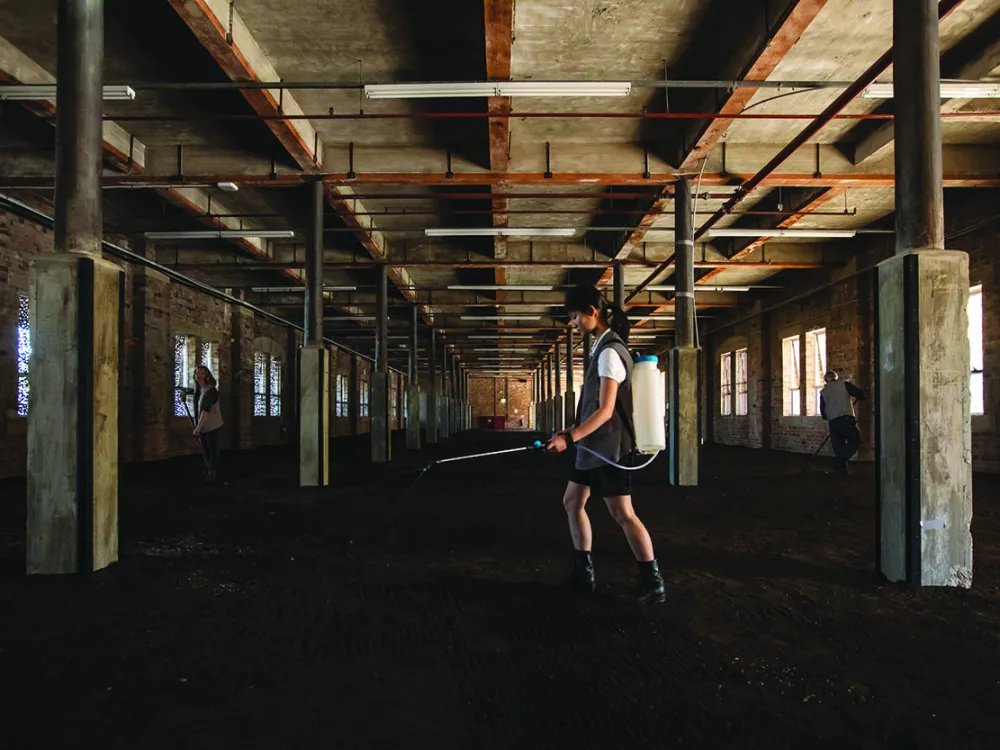
Rankine singled out Asad Raza’s Absorption, 2019, installed at Kaldor Public Art Projects in Sydney, as an important example. The work appears to have informed her thinking about how an artwork can operate in public space without reproducing colonial or militaristic narratives. The article that prompted Rankine’s remarks also notes that Asad Raza will curate the 2025 edition of Cleveland’s Front International Triennial.
Her response matters because it models a different set of priorities for civic commemoration, privileging ecology and everyday materiality over monumentality. If more artists, curators, and institutions take cues from that shift, the future of public sculpture could prioritize relationships, maintenance, and context rather than celebratory singularities. Rankine’s intervention keeps the conversation about monuments in motion and points to soil as a starting point for imagining new civic forms.