Access to a large, free library of polar photographs changes how educators, campaigners and the public can depict the Arctic and Antarctic, the organisations behind the project say. In May this year Ponant and the Woods Hole Oceanographic Institution unveiled the Polar Ocean Image Collection, more than 500 images of ice, wildlife and seascapes made available without charge through the Ocean Image Bank.
The Story in Pictures
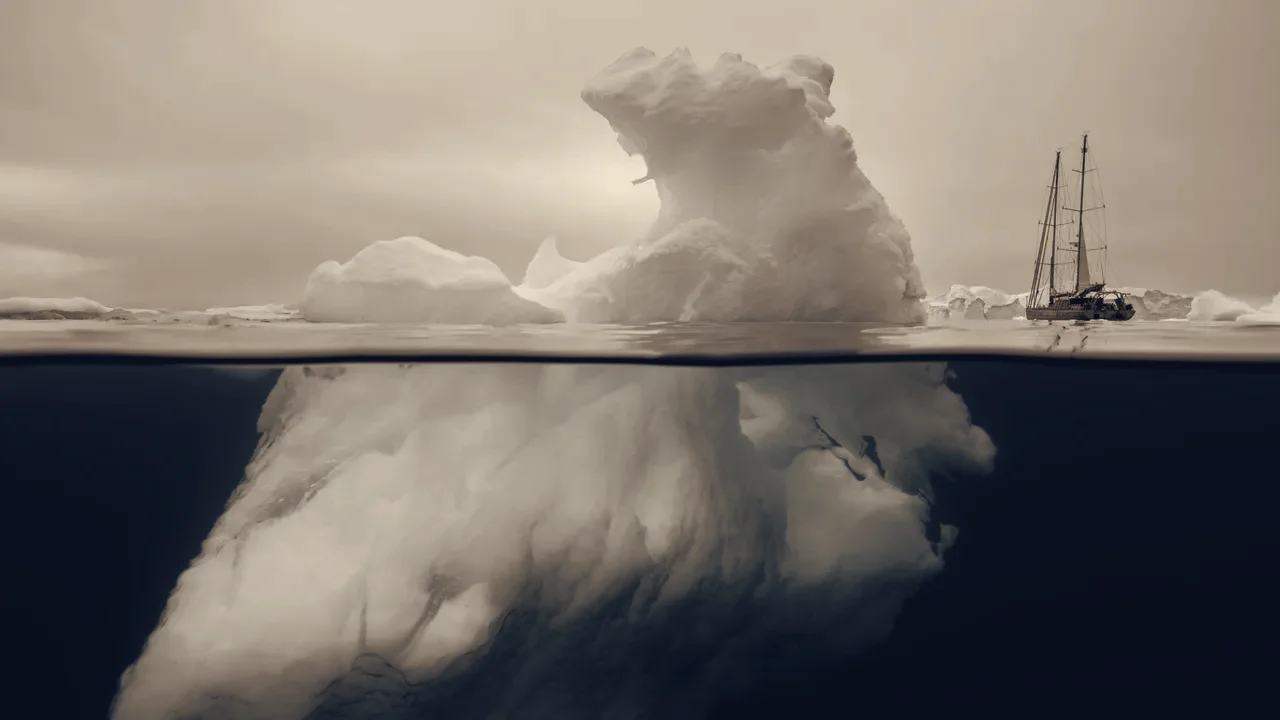
The collection builds on a partnership launched in 2025 and draws heavily on Ponant’s Polar Studio work, supplemented by images donated by more than 200 photographers. The files include conventional wildlife and iceberg shots as well as more challenging compositions, like a “splitshot” showing a half-submerged iceberg dwarfing a nearby sailboat. Curators say that variety is central to the project’s aim of conveying scale and life across the poles.
WHOI’s lead for the Ocean Communication Academy and Room 71, Richard Vevers, frames the effort as a remedy for the emotional gap that often separates people from polar science. Vevers, who previously founded The Ocean Agency and worked on the documentary Chasing Coral, argues that strong imagery can move policy as well as public feeling. He notes that coral bleaching visuals were widely used at COP21 to underscore the 1.5 degrees Celsius target, and he believes similar visual narratives can shift perceptions of polar regions.
Part of the problem, Vevers says, is a persistent misconception he calls the “white nothing” problem, where frozen expanses are seen as empty and irrelevant. That perception is compounded by the fact that fewer than 0.01% of the world’s population will ever visit Antarctica or the North Pole, and by conventional maps that place oceans at the edges of worldview. To counter that, WHOI is also promoting the Spilhaus projection, an ocean-centered map that places Antarctica at the center to show how the seas interconnect, and to recast the Southern Ocean as central rather than peripheral.
Room 71 takes its name from the fact that 71% of the planet is covered by oceans. Vevers describes the unit’s brief as a push to “reimagine how we design technology to engage new audiences.” The Polar Ocean Image Collection is intended as a resource for non-commercial use that can be repurposed by educators, publications and communicators to build a more immediate, transportive sense of the poles.
Organisers say the repository does not promise direct policy outcomes, but it is designed to widen visual storytelling about places many people will never see in person. The immediate next step is public access to the Ocean Image Bank’s polar folder, and continued promotion of ocean-focused mapping and imagery as ways to shift how people understand and value the planet’s coldest regions.