
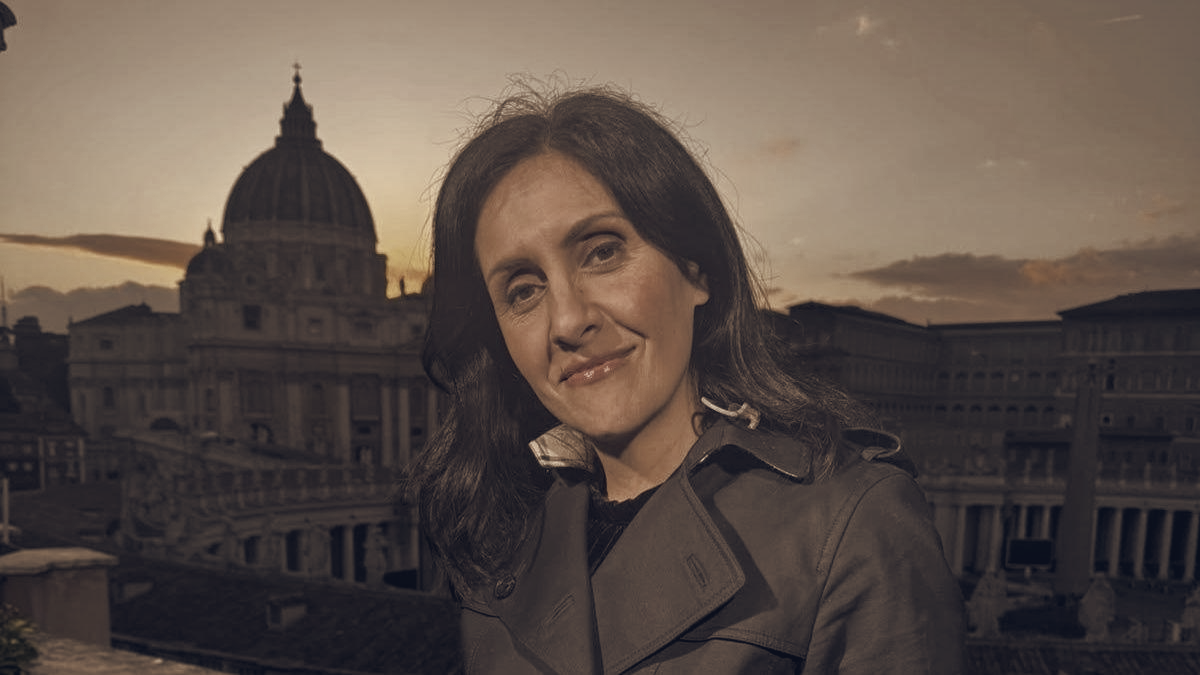
A BBC News anchor will need ongoing treatment after being diagnosed with a rare blood cancer, Maryam Moshiri has told the broadcaster. The 49-year-old, who joined the BBC in 2003 and is one of the channel’s best-known faces, said she decided to make her condition public to raise awareness.
The Story in Pictures
Moshiri said she was diagnosed in November 2024 with polycythaemia vera, a form of blood cancer that cannot be cured but can be managed. In PV the body produces too many red blood cells, which thickens the blood and raises the risk of blood clots that can cause stroke, heart attack or deep vein thrombosis. Symptoms can include headaches, confusion, dizziness and blurred vision.
"It's been two years since my diagnosis and I've felt that I've started to understand the disease a lot better and the way it affects my life," she told the BBC. "I'm going to have to spend the rest of my life being treated for this," she added.
Initially Moshiri underwent repeated hour-long venesections, the procedure that reduces blood volume by drawing blood from a vein. She said she had venesection seven or eight times over about five months, which left her iron levels very low and intensified exhaustion. She described hair loss, widespread itching and profound fatigue.
After starting immunotherapy with interferon on the NHS and adjusting the treatment, Moshiri said her condition has stabilised. "I've only needed one venosection in about 15 months, so that's been really good," she said, and added that recent months had been better than the previous two years.
She acknowledged the unpredictable nature of the illness. "Even though I feel the best I have in two years, I don't know how I'm going to be in six months, one year, two years," she said. The presenter also noted the practical impact on family life, saying the fatigue can make it impossible to attend some occasions or play with her children.
Despite this, Moshiri has continued to report and present, travelling for BBC coverage to Qatar at the start of the US-Israel war with Iran, to the Vatican for the selection of the new Pope, and to Greenland for Vice-President JD Vance's visit. She credited her husband Jonathan, her three children Iris, 13, Vivienne, 11, and Caspian, 9, and BBC management for their support.
Helen Rowntree, chief executive of Blood Cancer UK, thanked Moshiri for speaking publicly and warned that blood cancer can be a "silent" disease with vague symptoms. Rowntree said the illness is the UK's fifth most common cancer and the third biggest cancer killer, and called for continued public and government support to fund kinder, more effective treatments.
Blood Cancer UK also noted that in some cases PV can progress to myelofibrosis or, more rarely, to acute myeloid leukaemia. Moshiri said she hoped her disclosure would help others spot the signs earlier and underline that, with the right treatment, people with PV can often lead relatively healthy lives.