

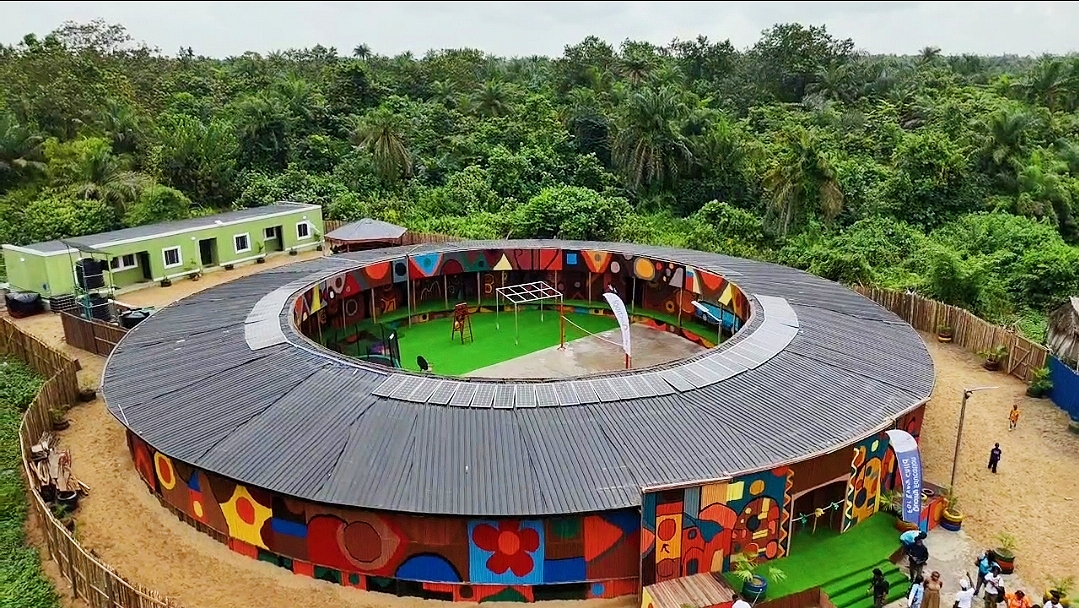
Nigeria gains new international recognition as the Slum2School Green Academy on Saga Island, Epe, is named among the Top 10 schools for T4 Education’s World’s Best School Prize for Environmental Action, the first time a Nigerian institution has reached that stage.
The UK-headquartered T4 Education announced the shortlist, placing the Green Academy alongside leading global projects that blend education and sustainability. The prize, now in its fifth year, highlights schools across five categories, including Environmental Action, Community Collaboration and Innovation. Winners will be selected by an expert Judging Academy, with the Top 3 finalists and prize recipients to be revealed in November 2026. All 50 shortlisted schools will also compete for a Community Choice Award, decided by public vote.
Vikas Pota, Founder of T4 Education, framed the shortlist as a statement about what schools must produce next. “Each one of these exemplary schools shortlisted for this global prize has, in its own unique way, helped prepare young people for a world that has never seemed so uncertain,” he said. “It is more important than ever that our schools grow leaders who can face massive challenges from rising conflict and inequality to populism and climate breakdown.”
The Green Academy was established to reach children cut off by waterways who previously lacked access to formal schooling. It now educates 250 pupils from eight riverine communities, using facilities and practices designed around local materials and environmental resilience. Buildings use locally sourced bamboo and wood, power comes from solar arrays, and the campus captures as much as 160,000 litres of rainwater each year. A waste-to-biogas system supplies clean cooking fuel, while open-air, circular classrooms prioritise natural light and ventilation.
Environmental stewardship is embedded in daily learning. Students cultivate food, manage compost and hydroponic systems, and convert invasive water hyacinth into products they can sell. The school also introduced the first consistent internet connection to the Saga community, widening pupils’ access to digital lessons and virtual mentors.
The Green Academy’s placement on the global shortlist shifts attention to community-rooted, low-cost climate solutions in education. The immediate consequence for the school is increased visibility and the chance to win one of the prize categories in November 2026. For Nigerian educators and funders, the recognition offers a concrete example of scalable sustainable schooling in marginalized contexts, and a platform to attract partners and votes in the public award.