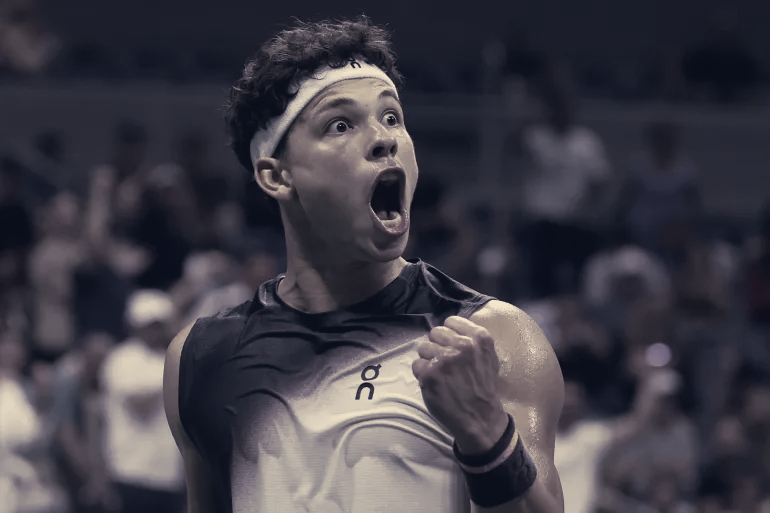
A victory on Sunday would make Ben Shelton the first Black American man to win the US Open singles title since Arthur Ashe in 1968, a milestone that would also end a long drought for American men at majors. The world No 4 advanced to the final after beating Carlos Alcaraz and Frances Tiafoe, and will contest the title in Arthur Ashe Stadium, the court that carries the name of the player he could emulate.
Shelton has framed the match in personal terms, crediting his paternal grandmother, Regina, who died this year, for making his family’s tennis pathway possible. “My dad lost his mom earlier this year and she’s the reason he was able to play tennis,” he said. “Without her, there’s no Ben Shelton standing here today. So this one is for her.”
The stakes extend beyond the trophy. A Shelton triumph would make him the first Black man to win any grand-slam singles title since Yannick Noah at Roland Garros in 1983, and the first American man to claim a major since Andy Roddick in 2003. Those historical markers are the broader context for a final that pairs a rising American with an established opponent.
That opponent, Alexander Zverev, presents a difficult matchup. Shelton has not beaten Zverev in five previous meetings, holding a 0-5 record, and has dropped 10 consecutive sets to the German since their opening encounter in Cincinnati in 2024. Zverev’s two-handed backhand has proved effective against left-handed opponents, limiting the angles and crosscourt forehand patterns Shelton habitually uses.
Still, Shelton’s own improvement underpins his run. He has worked on his backhand, return of serve and baseline steadiness since turning professional from college, adjustments he says are aimed at competing at the sport’s top level. “Problem-solving has been the name of the game here,” he said. “I was 0-1 against Stef, 0-3 against Carlos, Foe beat me the last time we played on this court. It’s been a lot of uphill battle, so I think I’m fully ready for the challenge to problem-solve.”
His father and coach, Bryan Shelton, pointed to his son’s record in title matches as evidence of readiness. “He’s got an amazing record on Sundays. Don’t want to jinx him here, but if you look at his record throughout his career, he’s played well on Sundays,” Bryan Shelton said. “So that’s where he wants to be. He feels like he’s going to play his best tennis at the end of the week, or end of the two weeks. So glad he has a chance at the US Open.”
The final will settle more than a championship. It will measure whether the technical gains and composure Shelton has shown on this run are enough to reverse a lopsided head-to-head record and carry him into a rare, history-making place in American tennis.