Hyke’s formal move into a dedicated menswear line changes the company’s commercial proposition and puts the label squarely against Japan’s current crop of pared-back menswear designers. The collection leans into the brand’s practical past, translating military and workwear codes into items meant to sit alongside the restrained silhouettes that dominate Tokyo stores today.
The Story in Pictures
Designers Hideaki Yoshihara and Yukiko Ode drew on a long practical track record that stretches back to 1998, when they launched Green. That experience shaped the season’s edits, which reworked military templates into contemporary wardrobe pieces. Classic M-51 arctic trousers were refitted as roomy drawstring pants, while an M-65 field jacket was reinterpreted in Pertex fabric to add windproof and waterproof performance.
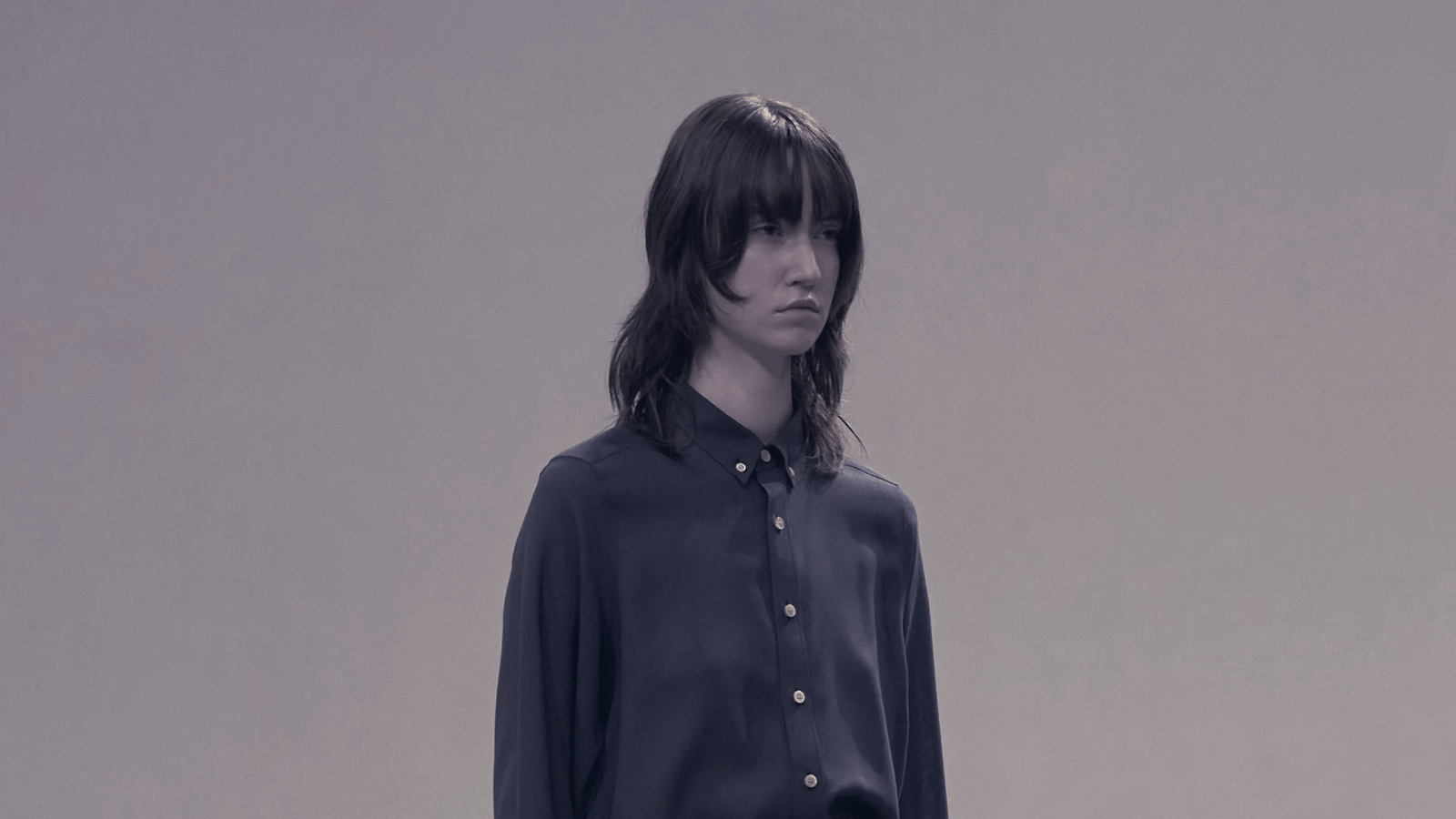
The season outlined a set of staples intended for both men and women: saxe blue shirts, black cargo jackets and streamlined raincoats signalled a catalogue approach rather than a one-off concept. Product details underscored Hyke’s interest in gender-neutral construction and wearing ease. Women’s outerwear included sleeve slits to expand mobility, cricket-style sweater vests opened at the sides, and an oversized men’s T-shirt incorporated a vertical zipper at the neck to create an androgynous silhouette.
Hyke framed the launch with name-brand collaborations to sharpen its retail case. Bags were made with Briefing, and the label worked with Baracuta on outerwear trims. Hyke adapted Baracuta’s tartan lining into a black-and-beige palette, using that fabric as lining for a desert storm coat and across button-up shirts and shirt dresses, a clear nod to cross-gender merchandising.
Presentation choices reinforced the collection’s restrained register. Hyke favoured a filmed show this season, staging movement sequences developed with choreographer Cindy Van Acker and the Belgian company Rosas. Models started seated, as if waiting at a station, then rose and walked in small, everyday gestures. The film emphasised the clothes’ refinement, while also prompting a question about format; the collection’s quiet shifts in proportion and finish might register differently in a live setting.
Yoshihara said the pivot responded to buyer demand, “We’ve been doing unisex styles for about ten seasons now, but wholesale buyers have been asking for [dedicated] menswear.” He added that the decision followed a year of internal debate, “For about a year we were torn between quitting or committing to it fully, but we already have the experience and the set up for it, so decided to give it a real shot.” The launch marks Hyke’s next growth phase, testing whether utility-led tailoring and high-profile collaborations can convert retail interest into sustained menswear sales.