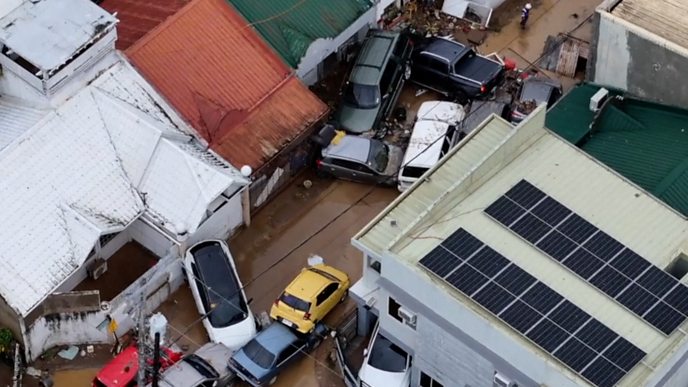
In the wake of Typhoon Kalmaegi’s catastrophic landfall in the central Philippines, scenes of devastation emerged across the province of Cebu - including entire blocks of streets strewn with overturned cars, piled one atop another after floodwaters and storm surge swept through low-lying areas.

Authorities say the typhoon unleashed torrential rainfall and flooding that overwhelmed riverbanks and drainage systems, while high winds collapsed infrastructure and launched strong flows of water through urban zones. Cars that were parked along rivers or in neighborhoods adjacent to flood paths were carried away, collided, or stacked, creating dangerous blockages that hampered rescue and relief efforts.
The Scope of Damage & Human Impact
In Cebu, local government officials confirmed that at least 100 people are confirmed dead, with many more missing, as search-and-rescue operations continue. The flooding washed out roads, destroyed homes, and left thousands stranded. Vehicles - some submerged, some overturned - have become silent evidence of how quickly the disaster struck.

One resident described waking at dawn to find:
“Cars floating past the window, then piling up like logs on the road.”
Emergency workers said the stacked vehicles created hazards: blocking water flow, hindering access, and complicating the task of moving debris or transporting survivors. In the municipality of Bacayan, for example, a muddy street revealed dozens of vehicles jammed together after being swept from nearby zones.
Why Did the Cars Pile Up?
Several factors combined to create the perfect storm for such vehicular carnage:
- Flash floods and rapid water flow: The rainfall in some areas exceeded monthly averages within 24 hours, giving little time for evacuation.
- Topography and infrastructure deficits: Many affected areas lie along riverbanks or in floodplains and . have aging drainage systems or failed flood-control measures, which amplified water-flow speed and volume.
- Vehicle location and parking practices: Cars parked in vulnerable zones-near riversides, low-lying roads, or informal settlements-were especially at risk of being displaced by strong currents or debris flows.
- Storm surge and wave action: Besides rainfall, the typhoon’s surge and intense winds elevated water levels, pushing vehicles off roads and into piles.