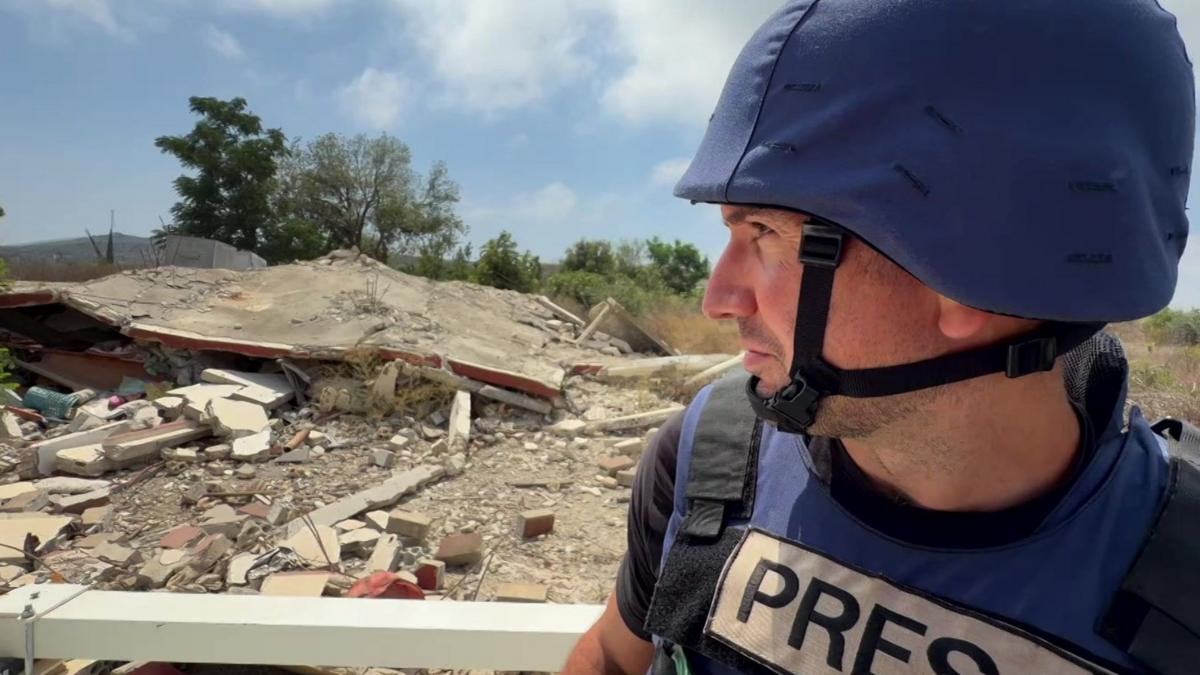

Israel is expanding its hold on southern Lebanon, fortifying positions and carrying out demolitions that threaten to make its presence long term. A BBC team travelled with a UN peacekeeping convoy to areas now under Israeli control and reported widespread destruction, military checkpoints and a visible occupation along the border.
The coastal drive near Naqoura shows how much of the state has been pushed back, with a Lebanese checkpoint the last clear sign of government authority before a zone marked by Israeli flags. That strip of land now accounts for around 5% of Lebanon and in places stretches 10km from the border, creating a swath of territory closed to unauthorised entry.
The UN force in Lebanon, known as Unifil, allowed the convoy entry under a deconfliction arrangement. The mission, led on the ground by Finnish troops, escorted civilians to and from Christian villages that were spared direct attack but are isolated because surrounding areas are under occupation.
Teams on the ground described infrastructure laid down after the invasion, service roads, constant troop movement and residential buildings repurposed by soldiers, some draped in netting to guard against explosive drones. Surveillance drones were audible overhead and explosions could be heard in occupied villages, consistent with ongoing demolitions.
Unifil says Israeli forces have added four new bases in the invaded areas, bringing their positions to nine. The UN mission also reports consolidation and fortification work, and has observed what appear to be civilian personnel conducting demolition and engineering tasks in support of military activity. Human rights groups warn that some actions amount to deliberate destruction of civilian infrastructure and may constitute a war crime. Hundreds of thousands of Lebanese remain displaced with no clear path home.
Israeli Defence Minister Israel Katz said he had instructed the military to "take all necessary steps to prepare for a long-term presence in the area". Israeli officials frame their operations as efforts to create a security zone protecting northern Israel from rockets and drones, and to prepare for a possible ground invasion. The Israeli military told reporters the destroyed buildings were used by Hezbollah and that its actions complied with international law, and it did not answer other specific questions about operations in occupied areas.
Since a June cessation was announced, a Lebanese intelligence official told the BBC Lebanon's military has recorded more than 5,000 alleged violations by Israel, including air strikes, drone attacks, shelling and near-daily incursions beyond the so-called Yellow Line. Hezbollah has not carried out attacks against Israel since the ceasefire, but it has targeted Israeli troops operating inside Lebanese territory. The combination of new bases, ongoing demolitions and recorded violations raises the prospect that Israel's temporary incursions could harden into a prolonged security presence, deepening displacement and isolation for border communities.