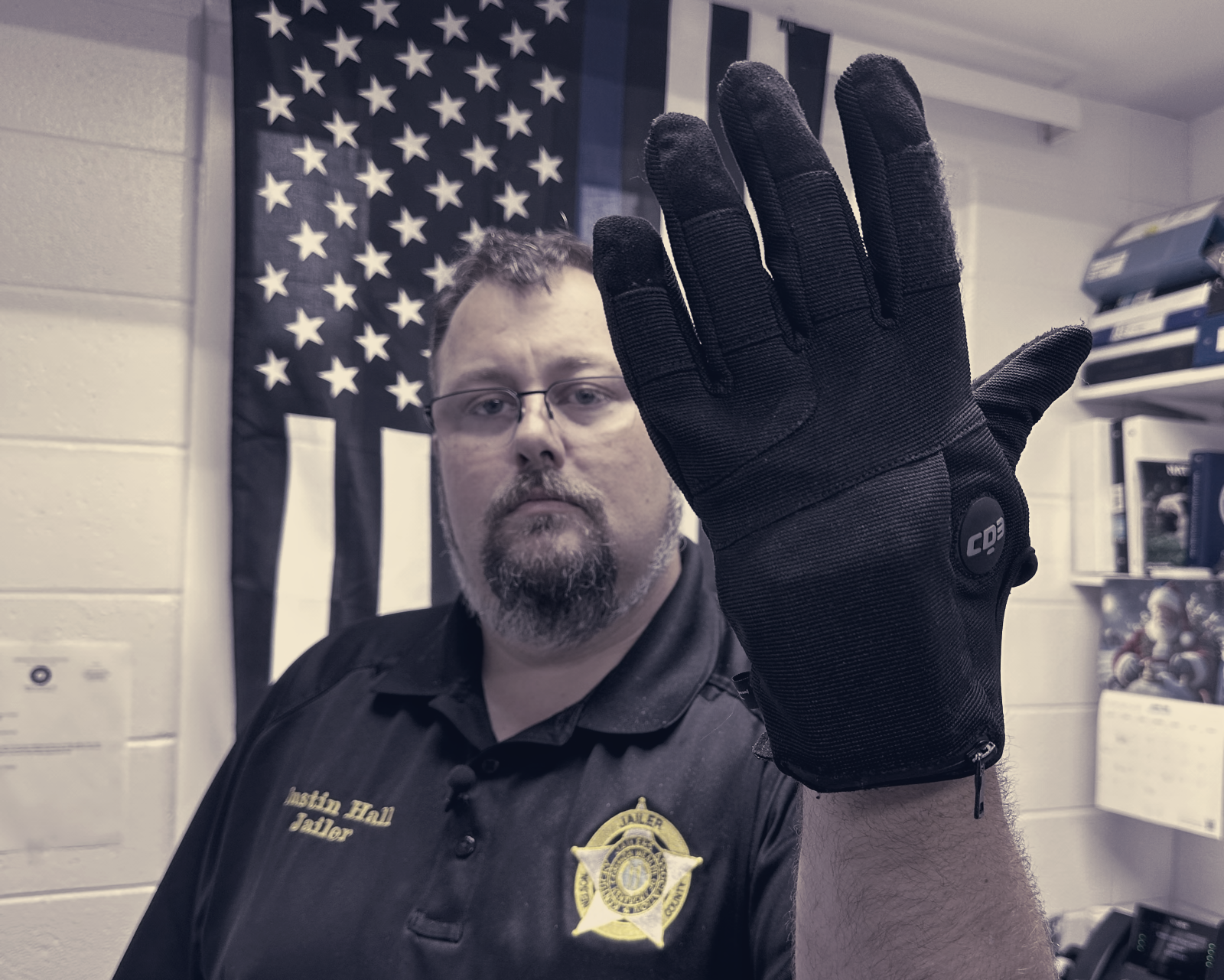

Omaha public schools moved to remove electric shock gloves from most middle and high schools, and the Omaha Police Department agreed to the district’s request. Superintendent Matthew Ray asked school resource officers to stop using the devices on August 18, and the department complied two days later. The change follows reporting that highlighted plans by other agencies to equip officers with what are sometimes called “Gloves,” or "generated low output voltage emitters".
The decision does not apply across the metro. Bellevue police, who patrol two Omaha schools, announced they will keep carrying the gloves. Three other large districts that host Omaha school resource officers — Millard, Elkhorn and Westside — have not taken action. The Associated Press left messages seeking comment from those districts. Bellevue schools spokesperson Amanda Oliver said, “We’ve got a great communication and dialogue that we have with them consistently. And so for us right now, no changes are being made.”
District leaders and parents reached the issue from different entry points. Ray told the school board on August 17 and wrote to the community that he only learned of the gloves the previous week. Local station KETV produced emails from 2023 showing Omaha police had notified districts then that the department planned to equip officers. Officials at the Omaha district said they were already aware because Bellevue police had the devices at two Omaha schools.
The devices have been demonstrated publicly by police as a way to quickly control someone refusing commands, and officers were trained to give warnings and touch a person for up to 15 seconds when activating the gloves. Omaha police said the department used the gloves twice during the 2025-26 school year. The department’s statement, signed by the mayor and Police Chief Todd Schmaderer, said, “We believe it is the safest use-of-force option in the rare times when it is used.” Omaha has also agreed to a 2025 contract that paid Compliant Technologies LLC about $66,000 for 40 gloves.
Opposition at a school board meeting was emphatic. About 30 people spoke against police using the gloves and no one spoke in favor. “I can’t even imagine walking down the hallway and seeing a peer of mine being electrocuted in a place that is supposed to be a safe space for students,” said Nora Wessel, a senior at Omaha Central High School. “Yet, this is now a very real possibility. These are adults we are supposed to be able to trust, but these weapons create a barrier for our students to turn to resource officers when needed.”
Security consultants urged clearer policy before technology like this is used in schools. “Before schools allow police to bring in technology like shock gloves, there should be a careful discussion of questions like how school resource officers will respond to students with disabilities or special medical needs, how parents will be informed and under what circumstances the gloves can be used,” said Ken Trump, president of National School Safety and Security Services.
Omaha’s mayor, John Ewing Jr, who helped build the school resource officer program, said the police department has honored the district’s decision to “opt out.” The department emphasized officers will continue to carry stun guns, batons, pepper spray and firearms. Bellevue Police Chief Ken Clary defended his force’s policy, saying, “I am not comfortable having our officers give up a tool that has repeatedly proven to be safe, effective and less harmful than the alternatives.”
Police describe the device as a button-activated glove that must touch skin to produce a painful voltage but leaves no burn or contact marks. Omaha officials said one use this school year stopped a student who was trying to flee after a fight with a security guard. A second use involved a student at an integrated learning center for special education students, who police say made verbal threats, threw a chair that struck a guard in the head, and then punched the guard.
Superintendent Ray acknowledged longstanding relationships with law enforcement and defended school resource officers’ role in safety, but said continued use of the gloves “would be counterproductive to our work together.” As students returned to classes over the past two weeks, the policy split leaves neighboring districts and parents watching whether Bellevue’s stance or Omaha’s ban defines acceptable practice in the region.