
North-west Indiana has entered an 11th day without reliable electricity, leaving 33,124 Northern Indiana Public Service Company customers offline, the utility said. The outages stem from storms that began on 11 August, which toppled trees, snapped lines and damaged about 300 power poles across the region.
Nipsco said it has restored power to 341,376 customers out of 374,500 who lost service, adding that “Substantial progress has been made in restoring service to our communities.” The company warned customers they “may continue to encounter circumstances that temporarily increase numbers of outages,” and said it has suspended disconnections for customers struggling to pay bills.
Residents in Gary face some of the longest waits. City officials told residents restoration may not arrive in parts of Gary until Tuesday, nearly two weeks after the storms began, a delay that has driven lines for food and ice, closed businesses and interrupted phone and school access.
Anger and frustration have mounted. “This statement is ridiculous,” Gary resident Bridget Sanders told the CBS affiliate in Chicago. “It’s unacceptable. They need to do better.” Sanders added residents feel they “are being left behind” and are “the last ones on the totem pole.”
A proposed class-action lawsuit accuses Nipsco of failing to trim trees that brought down lines. “This situation was predictable. It was obvious and it was preventable,” attorney Otto Shragal of the Allen Law Group said. Nipsco rejected that account, stating “We strongly disagree with the characterization of Nipsco’s vegetation management practices,” and noting that “Nipsco’s vegetation management spend has more than doubled since 2016, demonstrating our commitment and focus on maintaining a safe and reliable electric system.”
On the ground, residents describe daily hardship. In the Aetna neighborhood, downed trees still line streets. “I feel that we have just like learned to adapt to it,” Cynthia Hunter told the CBS station, describing nights spent sleeping in vehicles to keep cool. “As far as charging phones or anything else electronic, we take it to the car and charge it. We spent the night in the car, the truck, a couple of nights just for air. It’s hard, guys. It’s really, really hard.”
Renita Theus, 41, told the New York Times, “Every day I’m crying. It’s hot in the house. I toss and turn and can’t sleep. I walked to the dollar store and they’re all out of candles and batteries.” She added, “There’s a lot of people here struggling,” and said she worried for newborns and people on ventilators.
The storms produced extreme winds and flooding across Indiana and neighbouring states. The National Weather Service’s Storm Prediction Center recorded straight-line winds of 99mph in Gary, while other areas saw winds greater than 80mph and rainfall between 6 and 9 inches, with a reported maximum of at least 11.23 inches. Authorities confirmed several deaths, including a four-year-old in Geneva Township when a tree fell on a home, and another person killed in a suspected weather-related house explosion in Portage.
Governor Mike Braun said on X he had formally requested an expedited major disaster declaration from FEMA for 54 counties, noting the system produced at least three confirmed tornadoes, flash flooding and extreme straight-line winds. “If granted, this declaration will mean significantly more resources to accelerate Indiana’s recovery from the recent severe weather. I will do everything in my power to ensure Hoosiers have the resources needed to recover,” he wrote. The Trump administration has granted an emergency declaration for affected counties, and a state relief fund is providing emergency aid grants of as much as $5,000.
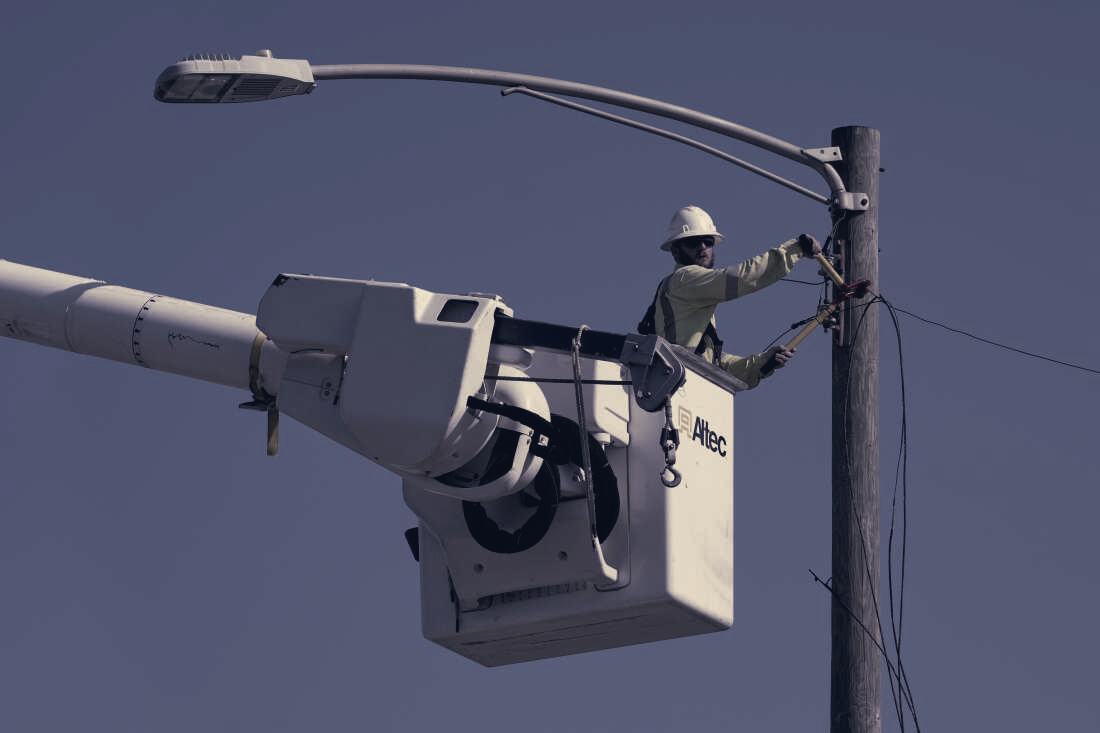
Restoration crews continue work across the region, but residents and lawyers say recovery is uneven. With federal aid requests pending and a class-action suit underway, the immediate priorities are restoring power to those still in the dark and supplying short-term relief to households facing health, food and cooling emergencies.