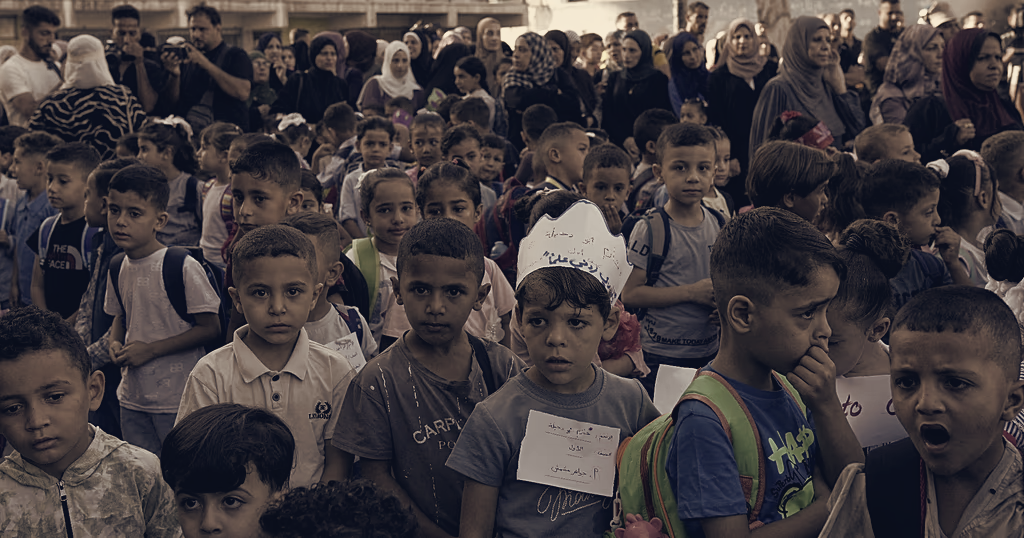
More than 280,000 children in Gaza have resumed in-person schooling, a partial restoration of routine for families after years of upheaval. The restart exposes how badly the education system was eroded during the conflict, with many buildings scarred by fighting, classrooms short of furniture and some sites still serving as shelters for displaced people.
At a United Nations Relief and Works Agency school in Nuseirat, teachers and pupils cope with shortages. Some students sit on blankets where desks are absent, while other rooms contain battered desks that survived the fighting. Years of displacement have kept large numbers of children out of formal study, as households fled airstrikes and spent days seeking water and food rather than attending classes or playing.
For some families the return has restored a fragile normality. Asmaa Al-Hour, a mother with two children in school, said, "My child is overjoyed; he had been waiting since dawn to go to school, just as he had seen his siblings do. I also have a daughter in the fourth grade; she attended classes for the first month, having spent the three years of the war wishing she could at least visit a school."
UNRWA’s own enrolment figures show more than 280,000 children are now registered in its schools and educational tents. UNRWA’s education chief, Tawfiq al-Hourani, said the agency aims to "improve the educational environment and restore it to the state it was in three years ago." He added that three years ago UNRWA operated 182 fully equipped schools and that "we have unfortunately lost more than 95 percent of them, and those that remain are occupied by displaced people."
Schools began operating again last November following the October ceasefire, yet the system faces severe strain. UNICEF reported that as of April roughly 700,000 children aged 4 to 17 had missed formal, in-person schooling for nearly three years, and about 420,000 had not had any face-to-face learning at all since October 2023. Those absent years raise the scale of catch-up teaching needed to prevent long-term learning losses.
UNRWA has signalled plans to repair and re-equip schools, but restoring pre-war capacity will be a major undertaking. Whether this school year becomes the start of a sustained recovery will depend on rebuilding classrooms, replacing basic furniture and ensuring uninterrupted instruction for the cohorts that missed years of schooling.