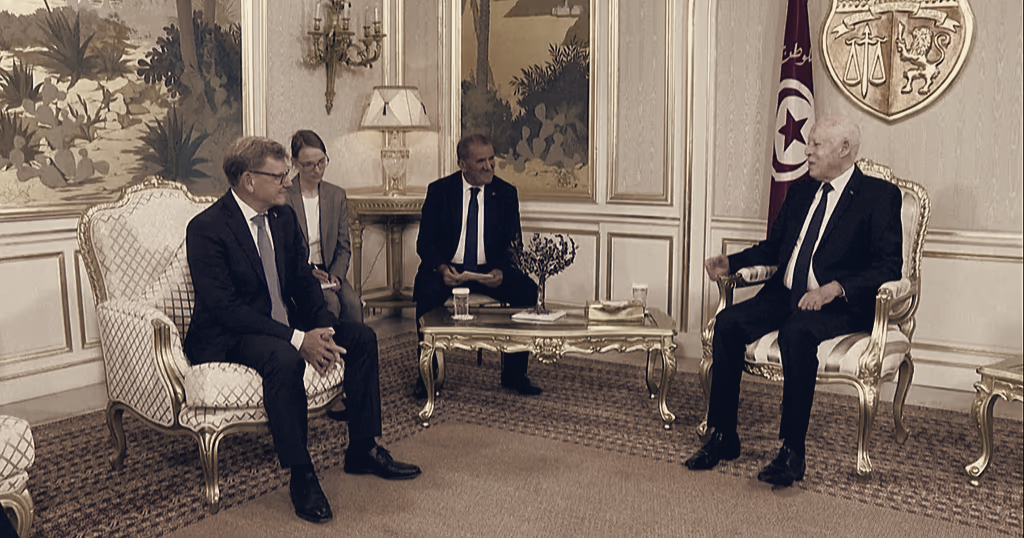

Tunisia signalled a shift in its approach to Europe when President Kais Saied hosted Germany's foreign minister in Tunis on Monday and urged a "balance" in relations with the European Union. The visit focused on exploring ways to expand the partnership between Tunis and Berlin, and Saied's demand framed the talks around parity and mutual interests.
By calling explicitly for "balance" in ties with the EU, Saied put the distribution of influence and expectations at the centre of the conversation. The choice of language emphasises Tunisia's desire to avoid one-sided arrangements and to secure terms that Tunis views as fair, a stance that could influence how Brussels and member states, beginning with Germany, structure future engagement.
Germany's decision to send its foreign minister to Tunis underlines Berlin's willingness to engage directly with Tunisian leadership. The meeting establishes a diplomatic channel for bilateral work on the issues both sides raised, and it signals that Germany sees value in deeper cooperation with Tunisia at a political level.
For Tunisia, the immediate gain is a reinforced platform to press for its priorities with a leading EU power. For Germany, the visit preserves influence in a strategically important North African partner. The joint discussions on developing the partnership set expectations for concrete follow-up, whether through additional talks, joint working groups, or technical cooperation.
What happens next will depend on how both capitals translate this meeting into action. Saied's insistence on "balance" will be a touchstone for negotiations, and observers will watch whether Berlin and other EU actors adjust their approach in response. The visit has opened the space for those next steps, leaving the details of implementation to forthcoming diplomacy.