
Fashion becomes personal armour for people worn down by constant digital chatter. Mukcyen’s Spring 2027 show, Low Energy, reframed tailoring and clingy silhouettes as practical shelter, a deliberate answer to the psychological cost of steady information flow. Yuka Kimura, now in her sixth season with the label, cited Michelangelo Antonioni’s Red Desert to trace a cultural shift from industrial clatter to what she called “a messy, overwhelming variety of inputs.”
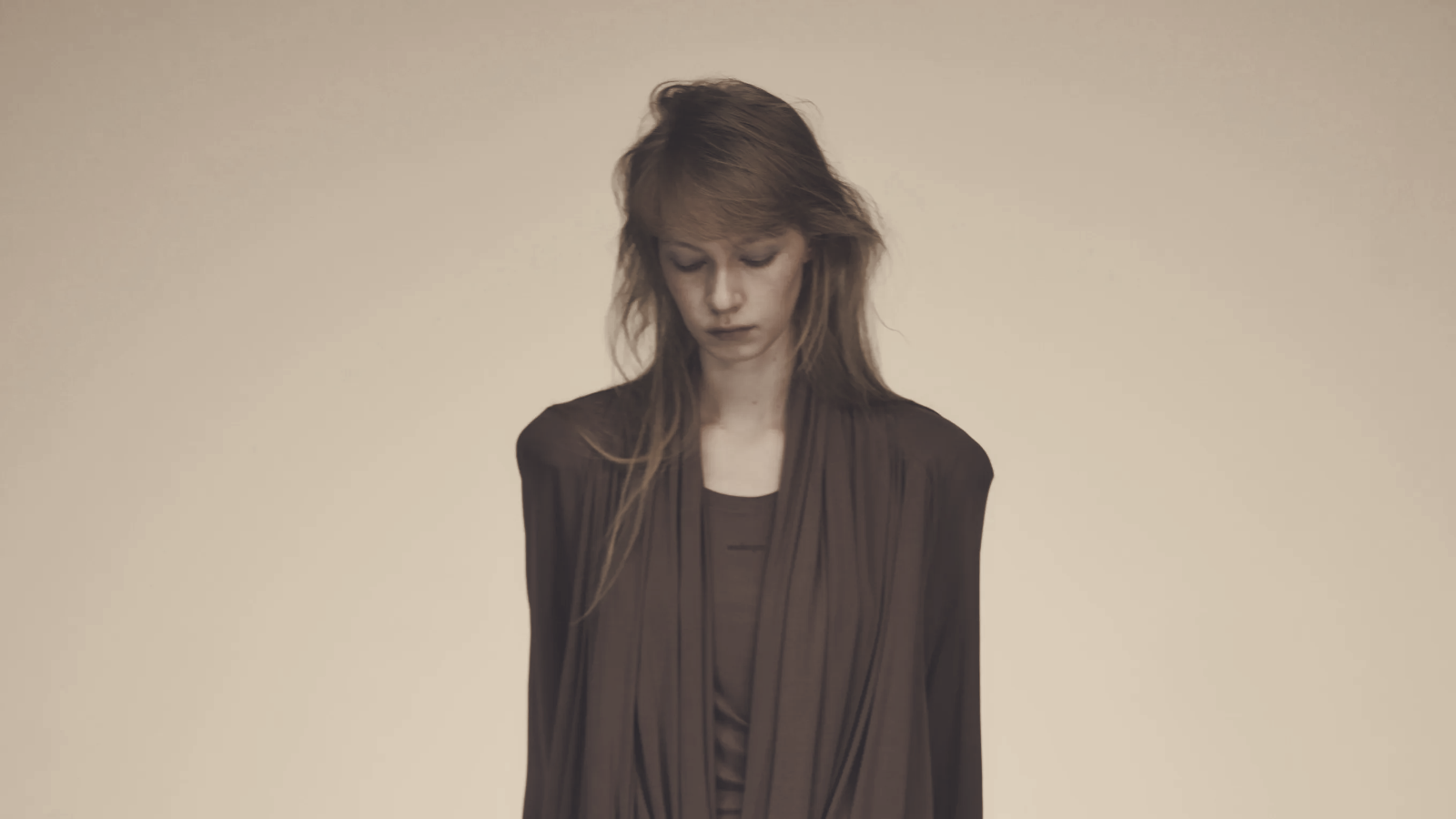
Kimura organised the collection around garments that both expose and shield. Hoods rose naturally out of jacket shoulders or dropped from bodycon tops in a nod to Alaïa, engineered to offer a visible buffer to casual interaction. “People are becoming increasingly sensitive to this kind of noise, or simply exhausted by it,” she said. “Good for when you don’t want to talk to anyone.”
The show favoured fabrics that cling. Kimura labelled several pieces ‘second-skin,’ sheer materials designed to wrap the body tightly and provoke inward attention. “The idea is that by having the fabric cling to the skin rather than hanging loosely, it creates a sense of facing oneself,” she said. Asymmetric corsets and skirts bore raw lace hems, while long, sheer black dresses ran from throat to ankle, replacing billowing volume with narrow, directed lines.
Styling underlined the defensive mood. Newspaper-print scarves were wound and tied around torsos with rope, T-shirts carried stretched neckbands or cuts that revealed only a sliver of hip, and looks finished with heeled mules whose elongated toes implied intimidation without literal spikes. The dominant logic was to combine attraction with control, so the wearer appears confident but guarded.
Kimura argues the shift is about shifting mindset as much as silhouette. “I want the wearer to change a little through the clothes,” she said. “Even a small shift in mindset, that’s something only clothing can really do.” Low Energy builds on Mukcyen’s established grungy, post-apocalyptic sensuality and supplies the label’s steadily growing community with tangible tools for days when social energy is low. The collection makes a clear case for garments that perform emotional labour as much as aesthetic work.