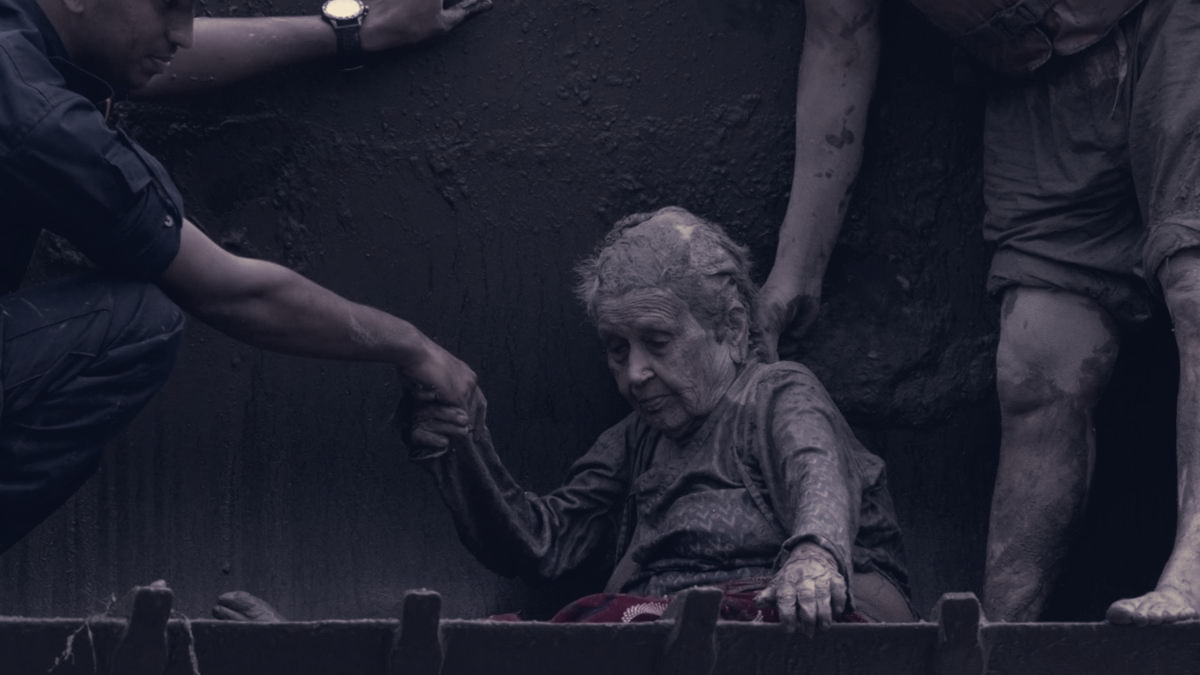

A 97-year-old woman in Nepal survived a flash flood and was pulled to safety using an excavator. The survivor, identified as Guna Maya Bohara, endured the rapid-onset waters and was later described as "a warrior." The image of an almost centenarian rescued by heavy machinery captured the stark human stakes of the flood.
The use of an excavator in the rescue signals how forceful and obstructive flood conditions can become, when traditional foot or small-boat access is not enough. Heavy equipment played a direct role in extracting a vulnerable individual from danger, and the scene reframed the event from a routine evacuation into a high-stakes salvage.
Bohara’s age makes the rescue notable beyond its visual drama. A person of 97 surviving a flash flood exposes the acute risks rapid flooding poses to the very old, whose mobility and resilience are limited compared with younger people. That fact was made plain by the need to rely on an excavator rather than lighter rescue methods.
The phrase "a warrior," applied to Bohara, anchors how observers will remember the episode. Such descriptions ease public focus toward individual resilience, and they can shape how communities and responders prioritize stories and resources after a disaster. They also crystallize an image of survival that outlasts the immediate emergency.
What happens next is likely to be local assessment of flood impacts and continued attention on those displaced or trapped by sudden waters. The episode will also serve as a reminder of the kinds of equipment and rapid responses that can matter when floods isolate people, and of the disproportionate danger faced by the oldest residents.