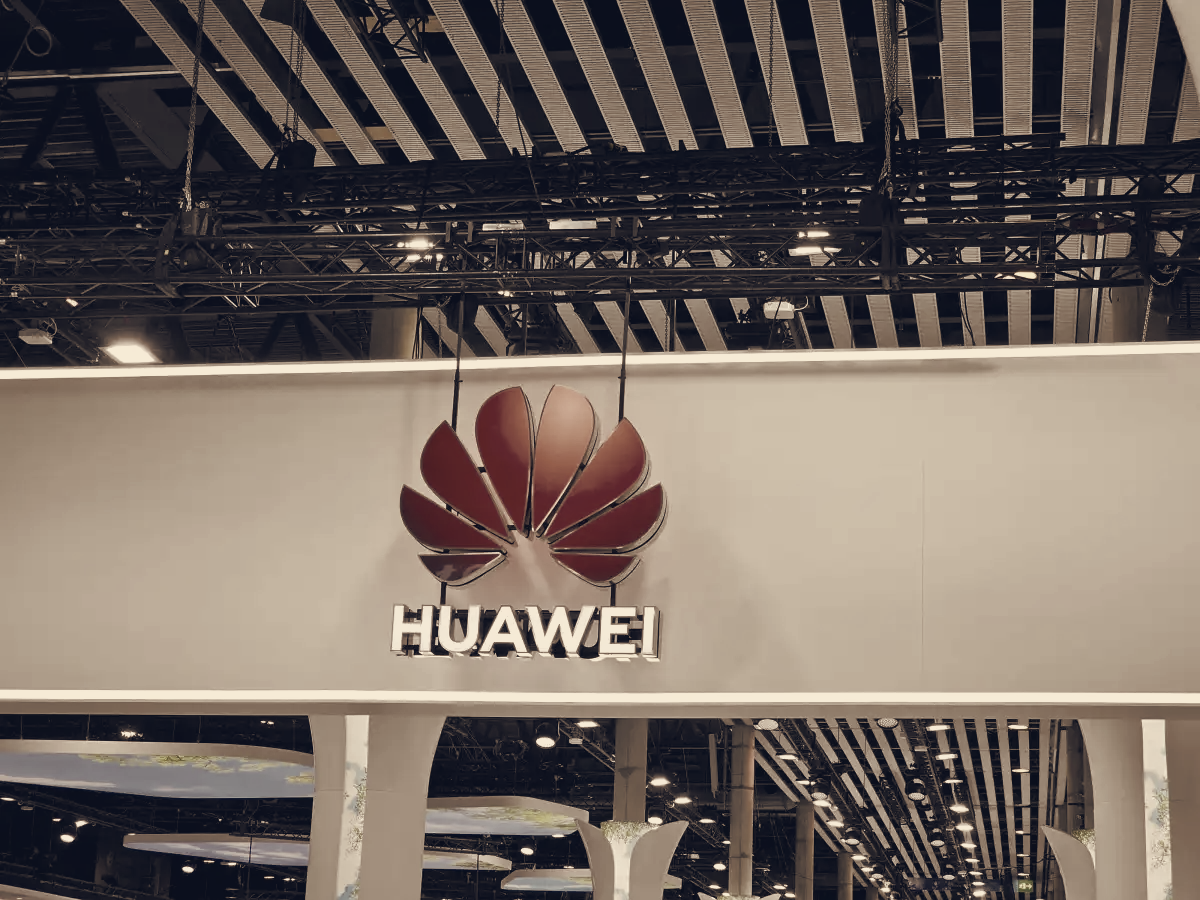
Huawei moved the launch of its Ascend 960DT chip into the first quarter of 2027, narrowing the window with competitors and compressing the timetable for China’s domestic AI hardware effort. The company announced the change at its Huawei Connect conference, where rotating and acting chairman David Wang presented the updated schedule. The chip had previously been slated for Q3 2027, the company said.
Huawei described the Ascend 960 family as ahead of plan, promising year-on-year performance gains and a doubling of capability versus previous generations. The processor is a key element of the vendor’s Peerium Computing Architecture, a stack that links processors, memory, storage and networking through a technology Huawei calls UnifiedBus. Initial systems using the approach include the Atlas 950 SuperPoD and the Atlas 950 SuperCluster, and Huawei said an Atlas 950 SuperCluster can connect up to 256,000 accelerator cards.
The sharpened attention on scale and supply. China tech analyst Rui Ma noted a discrepancy between Huawei’s recent descriptions of system size, pointing out that earlier materials described an Atlas 960 SuperPoD scaling to 15,488 Ascend 960 chips, while this week’s materials referred to a SuperPoD sized at 4,096 chips. "The chip itself is coming WAY earlier, but the SuperPoD they announced is much smaller than what they originally laid out," Ma wrote on X.
Ma also weighed in on the broader strategic context, arguing U.S. export controls are unlikely to halt China’s semiconductor ambitions. "I think it's futile to stop China's development in semiconductors because the stakes for self-sufficiency are just too high at this point," he wrote. Huawei has continued chip and system development despite restrictions on access to advanced semiconductor technology.
The timing of the launch comes a week before the September 24 meeting between U.S. President Trump and Chinese President Xi Jinping in Washington, where AI and semiconductor competition are expected to figure in discussions. U.S. political leaders have pushed to preserve America’s lead in AI hardware, while Huawei executives say China must accelerate development to narrow the gap and to better understand risks from more powerful AI systems.
The immediate questions for customers and partners are technical detail, delivery schedules and whether Huawei can scale Peerium-based systems to the very large clusters it has previously described. The market will watch chip availability and system rollouts in the coming quarters as the company moves from announcement to deployment.