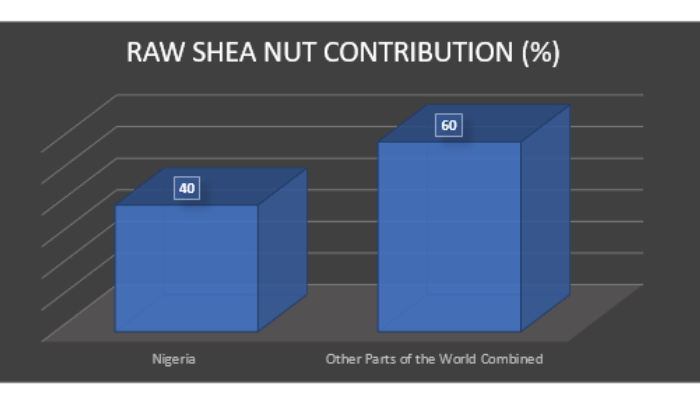

Nigeria supplies about 40% of the world’s raw shea nut, yet captures roughly 1% of global revenue. The global shea sector is valued at $6.5 billion today and is projected to reach $9 billion by 2030, a pot of value Nigerian growers currently fail to access.
The government removed all export waivers, restricting shipments to those that follow the Nigerian Commodity Exchange guidelines, and permitting exports only of volumes that cannot be processed domestically.
Officials framed the ban as a tool to force value addition within Nigeria, boost processing capacity, and steer agriculture toward industrialisation. Processing raw shea into shea butter multiplies value by 10 to 20-fold, an obvious motive behind the policy.
The policy collides with capacity constraints. Nigeria does not have enough processing infrastructure to convert 40% of global output into butter, oil, and derivatives. That mismatch shrinks market options for producers, who will be limited to buyers inside Nigeria and likely see reduced short-term revenue.
Domestic processors risk being swamped, creating a buyers’ market that could depress raw-nut prices. The draft warns of a parallel rise in cross-border smuggling as suppliers chase higher returns.
The ban may nudge more upstream investment, but it cannot deliver industrialisation on its own. To translate protection into lasting value, the sector needs targeted credit, new processing plants, skills development, and stronger research and export standards.
Absent those commitments, the government’s effort to retain value risks becoming a short-term transfer of pain to smallholders rather than a sustainable upgrade of Nigeria’s shea industry.