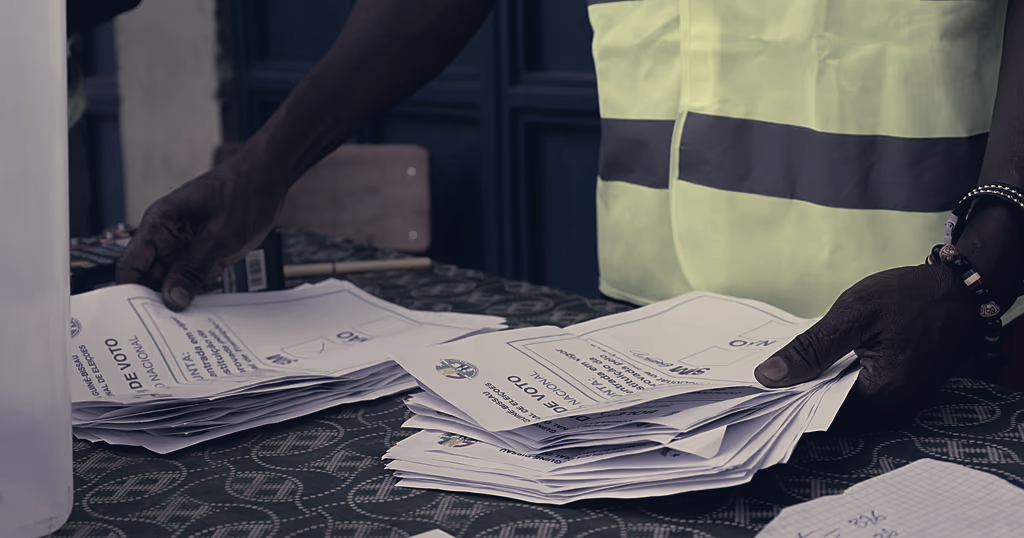

The presidency gains broader authority after voters approved a constitutional overhaul that transfers key executive powers to the head of state. Guinea-Bissau's National Electoral Commission announced the 'yes' side won with 70 percent of ballots following a referendum held on Sunday.
The vote follows a military takeover last November, which interrupted the electoral calendar and removed then-president Umaro Sissoco Embalo. The referendum comes in the run-up to a December 6 presidential election that is meant to return the country to civilian rule later this year.
Under the revised text the country will abandon the system requiring the prime minister to come from the parliamentary majority. The new constitution permits the president to appoint and dismiss the prime minister and other government members, and to dissolve parliament.
The junta, which organised the vote during its transitional period, argues the changes will stabilise state institutions before elections intended to hand power back to civilians. Transitional leader General Horta N'Tam, who is barred from running under the transitional charter, urged young people to vote "massively" as he cast his ballot.
The referendum drew sharp opposition from parts of the political class and civil society, who complained about an unelected transitional government rewriting the fundamental law. Opponents had called for a boycott, saying the poll took place "in a context of restrictions on public freedoms." The National Electoral Commission chair, Carmen Izaura Lobo, praised the exercise, citing the "organizational capacity, professionalism and dedication" of teams and applauding the referendum's "transparency" and "credibility."
Turnout appeared uneven on voting day. Observers visiting five polling stations in Bissau reported sporadic voter presence in the afternoon, and heavy morning rain deterred some residents. The Supreme Court is expected to issue final results in the coming days and has not yet received legal challenges to the process.
Guinea-Bissau, one of the world's poorest countries, has experienced five coups and several attempted coups since 1974. The referendum and the December election will reshape the balance of power in a state long troubled by military intervention and political instability.