
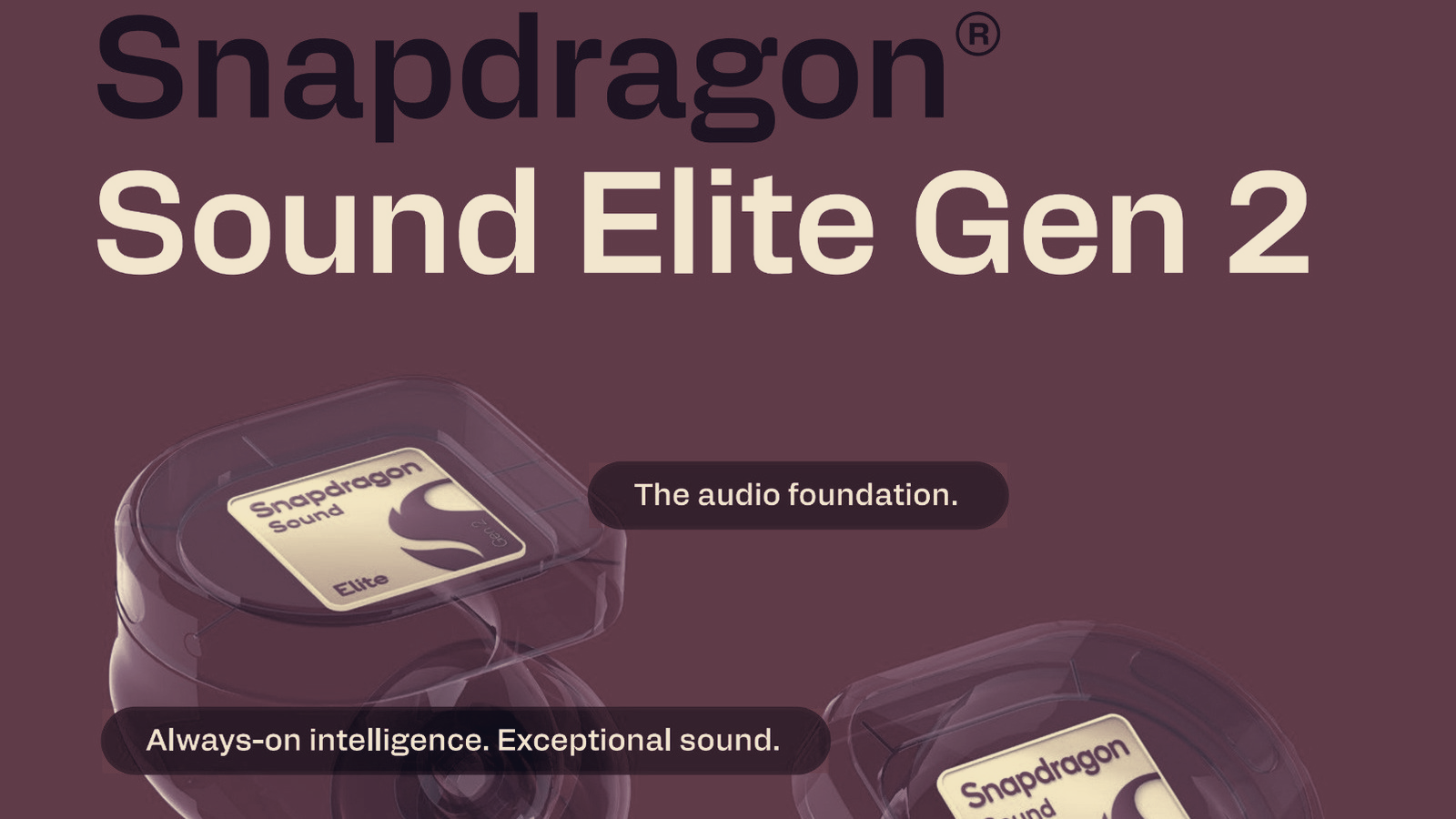
Audio device makers gain a compact platform designed to push more audio intelligence onto the gadget itself, enabling features such as real-time translation and amplified conversations without constant cloud access. Qualcomm introduced the Snapdragon Sound Elite Gen 2 as its latest audio platform, aimed at earbuds, headphones, audio glasses and camera-equipped earbuds, and positioned it to let small devices handle heavier speech and environmental sound processing locally.
The company says the new platform offers twice the AI capability of its earlier Snapdragon S7 Gen 1 Sound Platform, giving manufacturers extra headroom to run speech recognition and other audio tasks on-device. Qualcomm framed the upgrade as part of a wider shift toward voice-driven interaction on devices that do not always rely on a screen. "As AI becomes a core capability, users will increasingly expect more natural ways to interact with it," said Ziad Asghar, Qualcomm Senior Vice President and General Manager for XR, Wearables and Personal AI. "Those interactions won't always happen through a screen. They will happen through natural conversations, where users can simply speak to an AI assistant and receive help in real time."
Qualcomm highlighted consumer features the chip can enable, including on-device real-time translation and tools that amplify speech and nearby sounds to assist people who are hard of hearing. The company also added support for aptX Lossless to preserve higher-fidelity audio, and XPAN, its approach that combines Wi‑Fi and Bluetooth to extend device range.
Connectivity is handled with Wi‑Fi 6E, which Qualcomm says supports faster data transfer and helps keep always-available AI responsive without harming battery life or audio quality. The firm suggested the platform will be suitable across familiar and emerging form factors, from traditional earbuds and over-ear headphones to audio glasses, perhaps similar to the Ray-Ban Meta Audio product, and camera-enabled earbuds like the AirPods Apple is reportedly developing.
The announcement marks an incremental shift in how audio wearables handle AI tasks, moving more workload from remote servers onto devices themselves. The immediate question is how quickly manufacturers adopt the Snapdragon Sound Elite Gen 2 and which of its on-device features appear first in shipping consumer products.