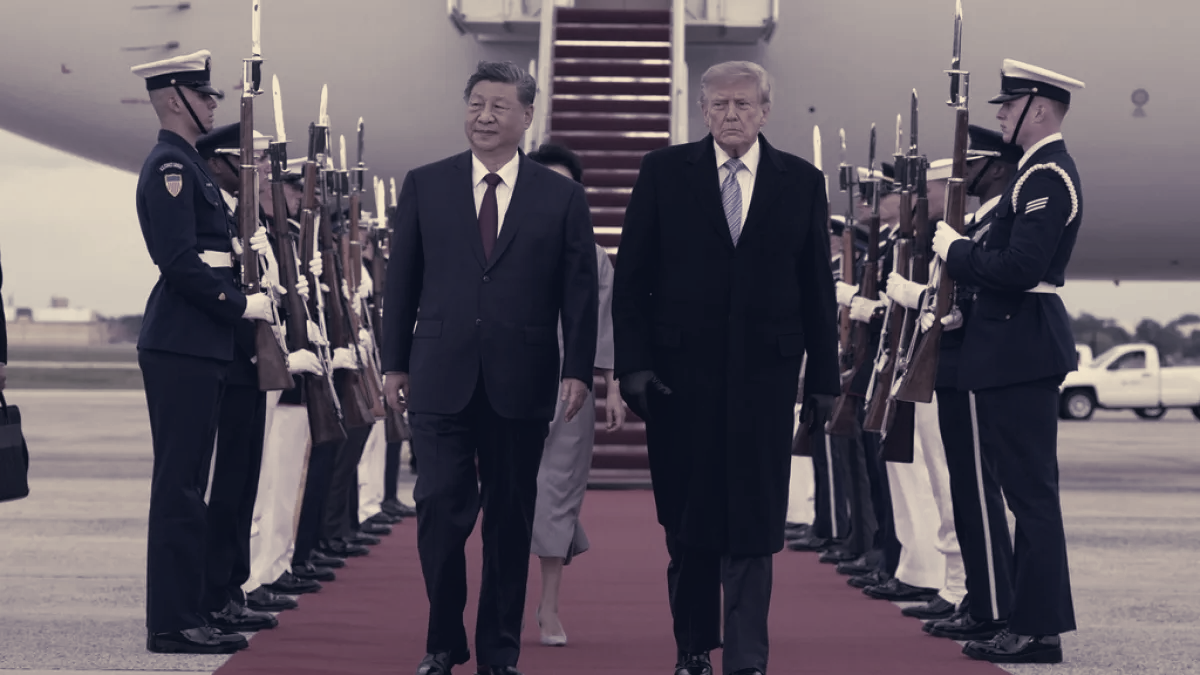
The summit in Washington shifts the immediate outcome, elevating trust restoration over headline-making agreements. President Donald Trump gave President Xi Jinping a rare personal airport welcome followed by a state banquet and a military flyover, but experts say the three-day visit is intended to stabilise relations rather than close big deals.
Trade and security tensions between the United States and China have deep roots, including tariffs and export controls. Tariffs introduced during Trump’s first term prompted Chinese retaliation on goods from soya beans to electric vehicles, and controls on chip exports continued under President Joe Biden. Since Mr Trump’s second term, new threats of extremely high levies briefly pushed relations closer to a cliff, and US tariffs currently average 36.5 percent while China’s average 31 percent.
Those figures help explain why analysts describe the meeting as a de-escalation effort. Reza Hasmath, academic faculty adviser at The China Institute at the University of Alberta, said, "This is not a bargaining summit," and called it "a stabilising summit." Mary E Lovely, senior fellow at the Peterson Institute of International Economics, said the goal is to continue the truce agreed in Busan, where China resumed shipments of critical minerals. Lovely suggested a possible Board of Trade mechanism that would see each side reduce tariffs on $30bn worth of goods.
Officials also expect the agenda to include artificial intelligence safety, Iran and Taiwan, but progress on those fronts is likely to be limited. Dexter Tiff Roberts, nonresident senior fellow at the Atlantic Council’s Global China Hub, warned that distrust, fuelled by US chip export restrictions and mutual strategic aims, will cap deliverables on AI cooperation. US Treasury Secretary Scott Bessent has proposed a dialogue and an AI hotline to report incidents, but experts say a lack of trust will constrain concrete outcomes.
On Iran and Taiwan the positions remain tense. China’s past oil purchases and dual-use exports to Iran give Beijing leverage, and Roberts said China is unlikely to act to help the US on the Iran conflict. Taiwan is awaiting US approval of a $14bn arms sale and watching the summit nervously, given Beijing’s insistence on a closer US approach to its policy.
Analysts say the meeting matters because the economic relationship is huge and instability would ripple globally. For Washington, the visit also offers political optics as Mr Trump seeks to project international leadership. If the summit achieves a modest resumption of critical mineral flows and some tariff liberalisation on non-sensitive goods, it will be judged a success. If not, expectations that personal diplomacy will solve deep structural disputes will quickly fade.