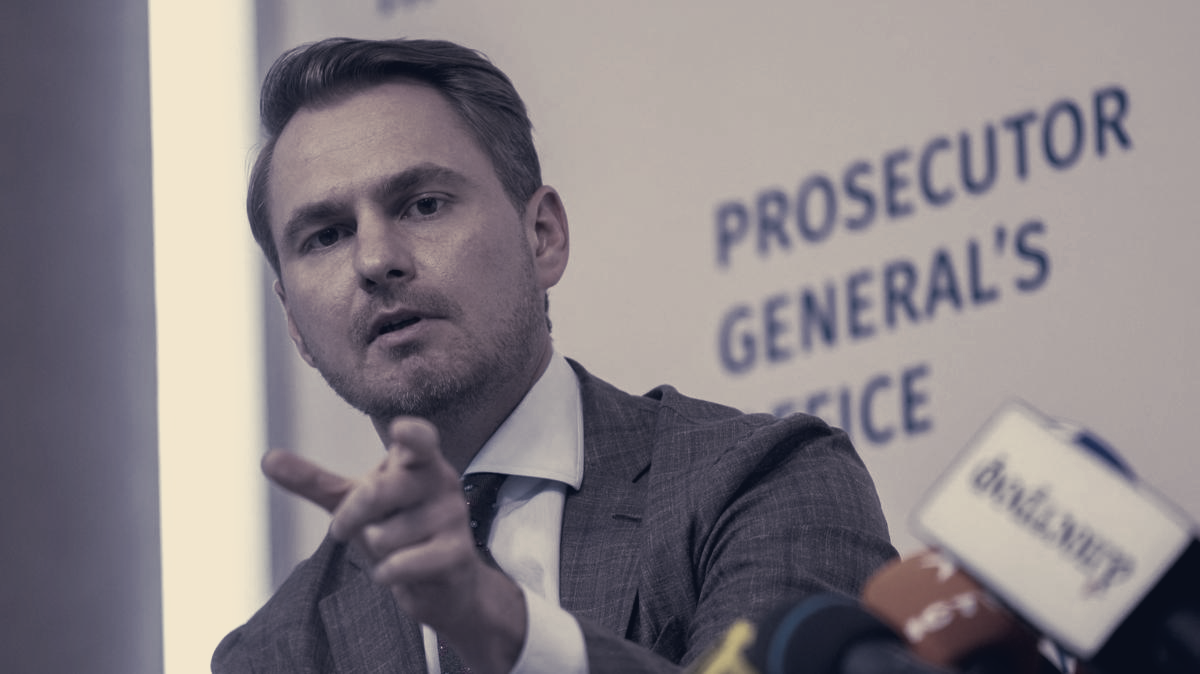

Ruslan Kravchenko's resignation removes the head of Ukraine's prosecutor service and intensifies scrutiny of the country's ability to police corruption during war. He stepped down after anti-corruption agencies searched his offices and announced they had uncovered a money-laundering network connected to illegal call centres, a probe that implicated an official inside his own team.
Ukraine's National Anti-Corruption Bureau and the Specialised Anti-Corruption Prosecutor's Office say the network received payments in exchange for protection for call centres that carried out telephone fraud and laundered millions. Investigators said proceeds were spent on property, jewellery and other valuables. The agencies identified the scheme as the ground for the weekend searches that preceded Kravchenko's departure.
Kravchenko denied the allegations in a statement released before he resigned, calling the claims "completely unsubstantiated", and in his resignation letter he said he did not want his office "to be used as a tool for political confrontation". He thanked President Volodymyr Zelensky and parliament for their "trust". The president has not issued a public comment on the resignation.
The resignation arrives against a persistent backdrop of corruption scandals in Kyiv since the full-scale invasion. Two specialist anti-corruption bodies, Nabu and Sap, were created more than a decade ago, but controversies have continued. In 2025 nationwide protests erupted after Mr Zelensky sought reforms seen as curbing those agencies' independence; G7 ambassadors warned such moves could threaten Ukraine's path to EU membership.
Ukraine remains an EU candidate country on the understanding it will demonstrate a credible fight against corruption. Following international and domestic backlash in 2025, the president restored the agencies' independence, but doubts about the depth of reform have lingered. Last month Nabu said it had uncovered a scheme that misappropriated more than $3m (£2.2m) in local currency to pay bail for a former energy minister accused of money laundering, a case that led to the dismissal of a senior official in the presidential office.
Former defence minister Mykhailo Fedorov, sacked in mid-July and since publicly critical of governance problems, told the BBC last month that Mr Zelensky should be asked about awareness of possible corruption within his circle. Fedorov also said he had no proof the president was personally involved and that, during their time working together, he had not received directions he regarded as unlawful.
Kravchenko's exit hands fresh momentum to demands for transparent follow-up from Kyiv's partners and domestic watchdogs. The immediate consequence is further pressure on Ukraine's reform record at a sensitive moment for its EU ambitions, while investigations led by Nabu and Sap continue to unfold.