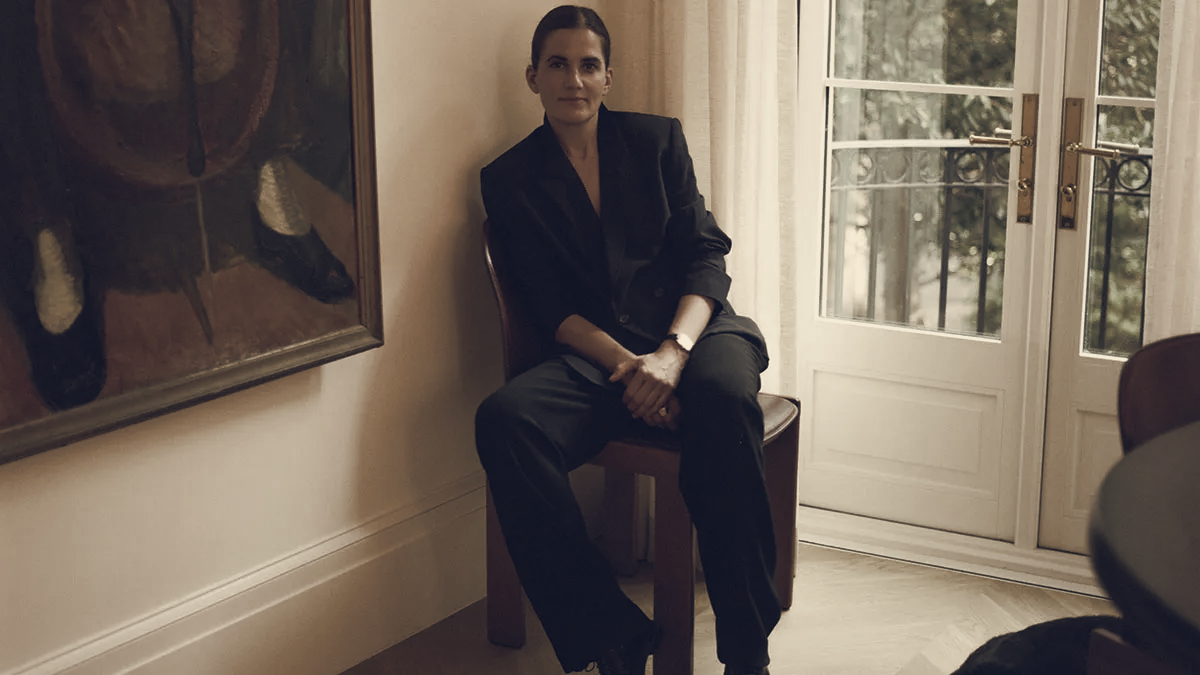

Shoppers whose bodies change will now encounter functional design details across mainstream designer collections in one place, rather than only on specialist adaptive labels. Weldun, a marketplace founded by artist and designer Carly Berlin, repackages ready-to-wear so features that ease dressing, support recovery, improve sensory comfort and allow flexible fit sit next to style cues customers already use.
Berlin says the idea came from her own experience after a preventative double mastectomy, when she noticed desirable brands had pieces that worked for bodies in transition. “Just because something is functional doesn’t mean that it can’t be beautiful. You see that all the time in interior design, but it’s really not a part of the conversation in fashion,” she says. Months of searching for tasteful options pushed her to build a platform that surfaces those garments for others.
Weldun organises inventory under four functionality headings — easy on/off, healing and recovery, sensory-considered and flexible fit — while retaining conventional filters for tops, bottoms and similar categories. Rather than stocking only purpose-built adaptive labels, the site highlights qualifying pieces from established designers, a curatorial choice illustrated by the founding collective: Kallmeyer, Another Tomorrow, Mansur Gavriel, H-O-R-S-E, Still Here and Underwater Weaving Studio.
H-O-R-S-E founder Sue Williamson, who joined the collective, says the platform’s premise resonated with her. “I was diagnosed with cancer a few years ago and have had several surgeries and treatments that have altered my body and mobility at times,” she says. “Fashion can seem trivial to some, but being able to express myself through clothing helped me maintain my sense of identity, which was huge.”
Commercially, Weldun runs as a marketplace: customers pay on Weldun’s site while the order is fulfilled by the brand partner, and Weldun manages the commercial relationship through its platform. The team argues that speaking to lived experience, rather than using clinical language or ignoring needs, will prompt repeat engagement. That argument is supported by market data cited by the company: the global adaptive clothing market is projected to grow from $1.53 billion in 2025 to $2.65 billion by 2033, and a white paper by Sinéad Burke places the disabled community’s disposable income at $2.6 trillion across the US, Canada, the UK and the EU, noting adaptive fashion represents $400 billion in the US alone.
Weldun positions its advisory network and brand partnerships as guardrails against problems that hobbled earlier entrants, including Adaptista, which pivoted to in-house product, and Juniper Unlimited, which closed after its backer collapsed. KR Liu, one of Weldun’s advisors, framed the timing as favourable, saying the technology, creative appetite and cultural readiness have aligned to make a platform like this “not just possible, but natural.”
The company completed a friends-and-family funding round pre-launch and has a second allocation of that pool committed for this fall. Berlin expects to raise Weldun’s first institutional round in mid-2027, and advisors including Christina Mallon, Maura Horton and Sinéad Burke will continue to shape the product as the marketplace scales.