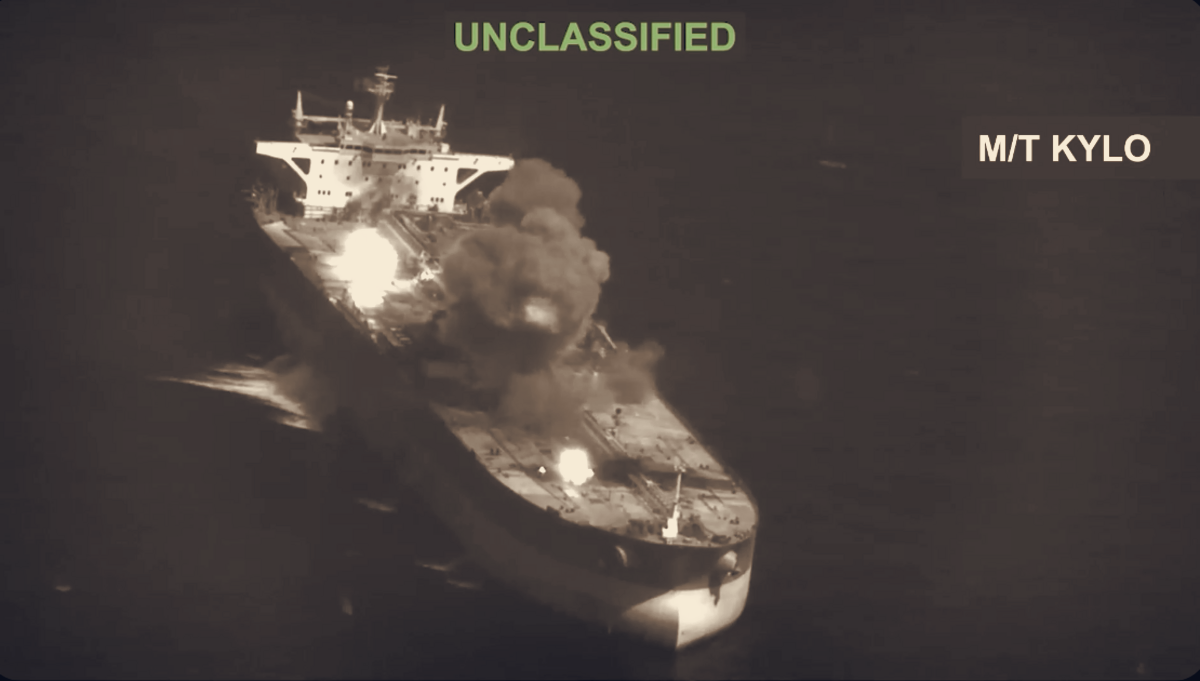

Washington disabled or destroyed three oil tankers tied to Iran, removing key maritime assets that Centcom says feed a multibillion-dollar financing network for the Islamic Revolutionary Guard Corps and its proxies. Centcom reported forces disabled one vessel near Kharg Island, struck a second close to the Strait of Hormuz, and destroyed a third in the Gulf of Oman.
The operation followed ballistic missiles that targeted a US aircraft carrier and a guided-missile destroyer, Centcom said, adding that American forces successfully evaded the attacks and that no US personnel were harmed. Iranian state media had earlier reported a tanker hit off Kharg Island, while Tehran did not immediately acknowledge the strikes described by Washington.
Admiral Brad Cooper, Centcom's commander, framed the action as a punitive economic response, saying, "Let the message to the IRGC be clear: If you shoot at two of our ships, we will impose an even higher economic cost - taking out three of yours." He added, "We will not hesitate to defend American forces, and if necessary, destroy Iran's limited and exposed oil fleet." Centcom also released footage showing the strikes.
The attacks arrive amid a return to exchange after a period of relative calm. Earlier this week US Vice-President JD Vance said the military was probing Iranian allegations that American strikes killed at least four people, including two children, at a wedding in Sirik. A 60-day ceasefire between the US and Iran expired last month, and President Donald Trump has said Washington will impose tougher economic measures on Iran and on any country that assists it.
The confrontations have already reshaped regional security and global energy flows since US and Israeli strikes on 28 February prompted Iranian reprisals, including attacks on Israel and US bases and disruptions around the Strait of Hormuz. The immediate effect of the latest strikes is to intensify the economic squeeze on networks tied to the IRGC and to demonstrate Washington's willingness to target maritime assets linked to Tehran.
What comes next is uncertain. The strikes raise the odds of further reprisals and an expanded campaign at sea, and they sharpen political scrutiny in Washington as lawmakers and voters weigh the human and fiscal costs ahead of the midterm elections.