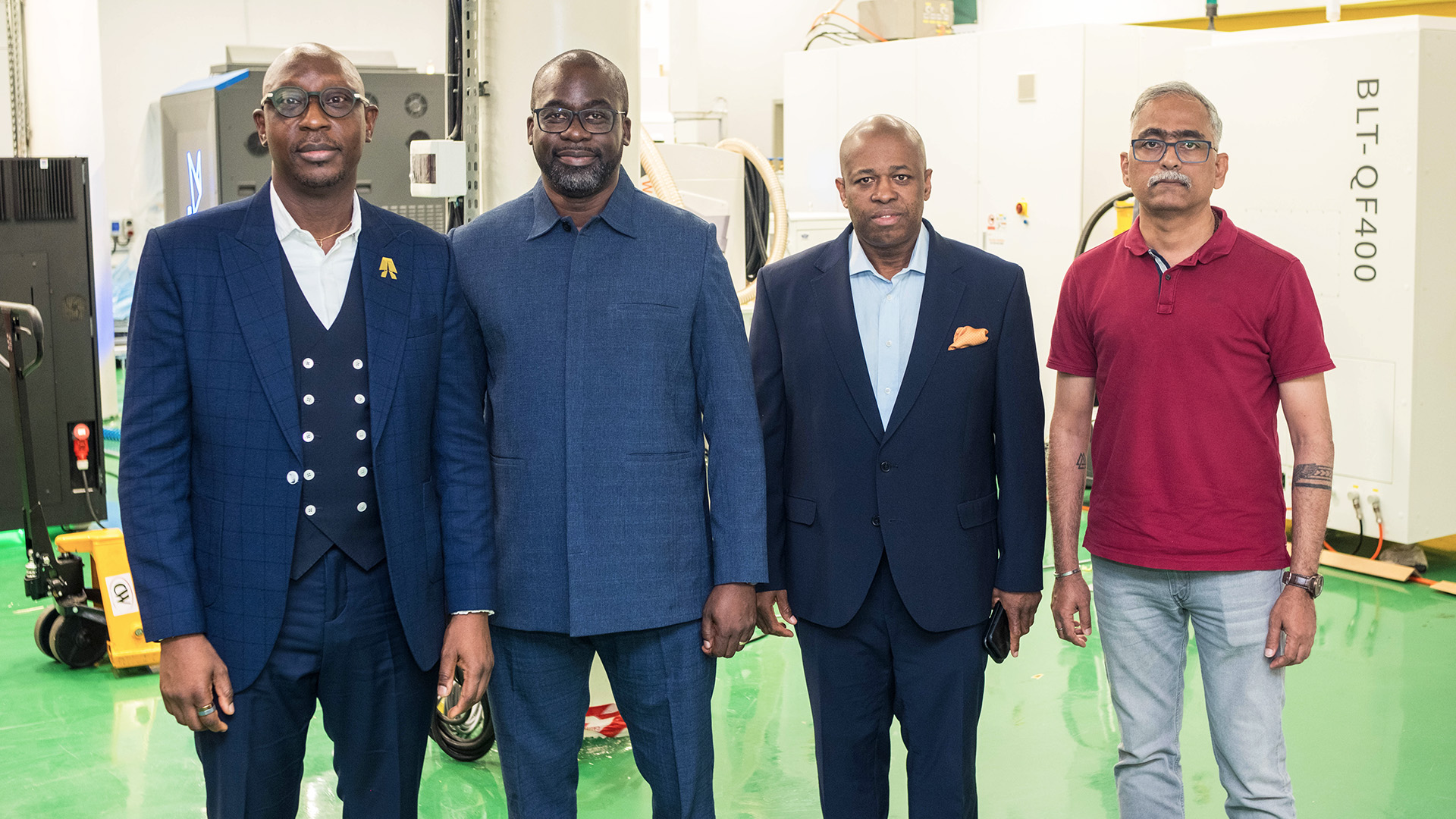

Ghanaian industry gains on-demand access to advanced manufacturing after Arridex formalised a Ghana node for its Africa Distributed Additive Manufacturing, ADAM, Network, linking local firms to the company’s Lagos Omnifactory. Arridex named Sodah Engineering and Logistics Limited, a wholly Ghanaian-owned firm, as the exclusive operator for the Ghana node, creating a direct channel for producing specialised and legacy parts regionally.
The agreement, sealed at a signing ceremony in Lagos, aims to shorten the months-long waits that often cripple maintenance and operations. Arridex positioned the network as a decentralised alternative to long international supply chains, serving sectors that include mining, energy, manufacturing, maritime and defence. Kayode Adeleke, group chief executive officer of Arridex, framed the launch as an operational fix and an industrial reset. “Across Africa, industry does not stop for want of ambition or for want of talent; many times, it stops for want of a critical part in a piece of legacy equipment,” he said. “Today, we begin a borderless manufacturing network, conceived to rewrite how manufacturing and maintenance happens across our continent,” Adeleke added.
Tesa Ayernor, managing director of Sodah Engineering and Logistics and operator of the Ghana node, warned that replacement delays impose a hidden cost across the economy. “When a critical part fails in Ghana today, industry can wait months for a replacement to arrive from another continent, and that wait is one of the largest undiscussed costs in our economy,” he said. He described the node as a chance for the region to move beyond mere supply-chain fixes. “It presents an opportunity for the region to leapfrog into the future, going far beyond solving supply chain problems for industries to establishing true manufacturing capability,” Ayernor said. “As the first node of the ADAM Network, Ghana has the opportunity to model what is possible for every node that follows on the continent.”
Work on the Ghana node begins immediately, with initial priorities set as market awareness, technical training and direct outreach to Ghanaian industry. Arridex and Sodah will also engage local research institutions to build advanced digital manufacturing skills domestically. Arridex said the Ghana activation will act as a blueprint for broader expansion, with a target of 25 nodes across 15 African countries over the next five years, anchored by the Lagos Omnifactory and a planned Mega Omnifactory expansion in 2027.
The network shifts where and how specialised parts are produced, handing manufacturers and operators faster access to replacements and an on-continent source for legacy components that previously required cross-border shipments. The Ghana node will test whether distributed additive manufacturing can convert that potential into measurable uptime and local capability.