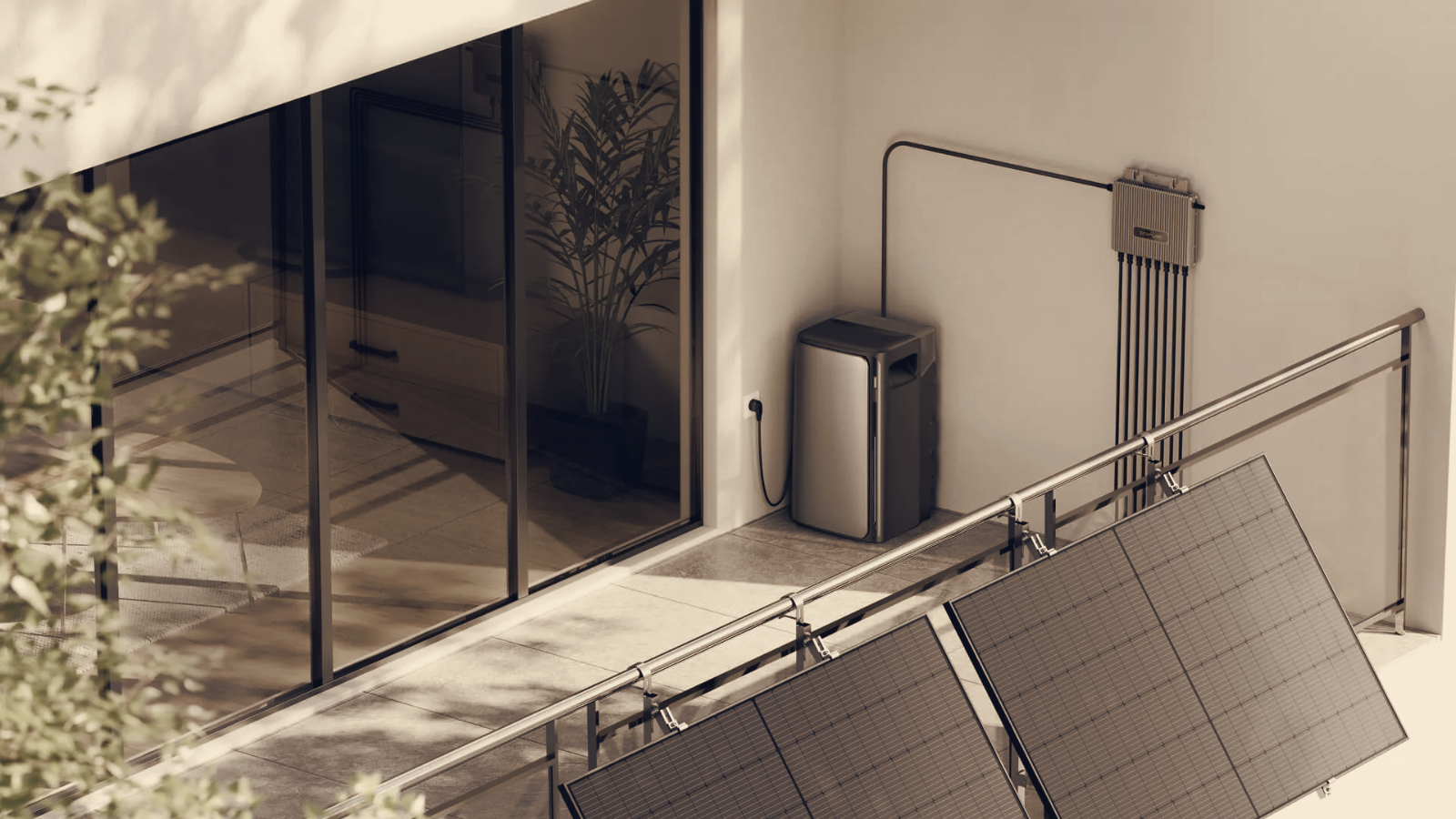

Renters and budget-conscious households stand to lower their electricity bills and avoid costly rooftop installations as more US states reclassify plug-in solar kits as simple household appliances. The new laws and pending bills remove utility preapproval and permit hurdles in many places, making it possible to buy off-the-shelf panels and a small inverter, plug them into an ordinary outlet, and prioritise that solar power for devices inside the home.
These systems, often sold as balcony or DIY plug-in solar, pair a handful of panels with a microinverter that converts DC to AC and ties into the home circuit. Buyers can add a battery power station to store daytime surplus for evening use or to keep a fridge running during an outage. Kits start at roughly $300 for basic panels, while portable batteries begin at about $500 for 1kWh and $1,500 for 3kWh. By contrast, a conventional roof-mounted installation typically begins around $15,000 and requires contractors, engineering permits, and utility sign-off.
Plug-in solar has been mainstream in parts of Europe for years, with an estimated 1.5M households in Germany alone adopting such systems. Rules in Europe commonly limit how much power can be fed into the house, often around 800W, while many US state laws now allow up to 1,200W. Utah led the way last year by reclassifying these kits as household appliances, and states where plug-in systems are now legal include Virginia, Maine, Colorado, Maryland, New Jersey, Connecticut, Vermont, and New Hampshire. Legislation awaits the governor's signature in California and New York, and several other states have introduced bills.
Industry attention is growing. Brands focused on home energy, including EcoFlow, Bluetti, and Anker, are launching products aimed at the market. EcoFlow has rolled out its Stream 2 series and Bluetti introduced the Balco line in recent months. Even large retailers such as Ikea now sell these kits in Europe, often reselling EcoFlow products.
Adoption in the US will hinge on a few forces: falling global prices for panels and batteries, continuing high energy costs driven by geopolitics, and state-level policy moves. US consumers still face higher equipment costs because of Trump’s tariffs on panels and batteries and the elimination of some solar tax credits. If California signs its bill, the market could expand rapidly because the state has some of the nation's highest residential electricity rates.
For buyers, plug-in solar reduces the upfront and bureaucratic barriers to producing their own electricity, but the economics vary. Thomas Ricker reports a modest 400W system he used for 21 months produced 709kWh and saved about €225, roughly $260, leaving the larger power station’s payback time still longer. Policymakers will need to balance safety and grid reliability as more households adopt these consumer-grade systems.