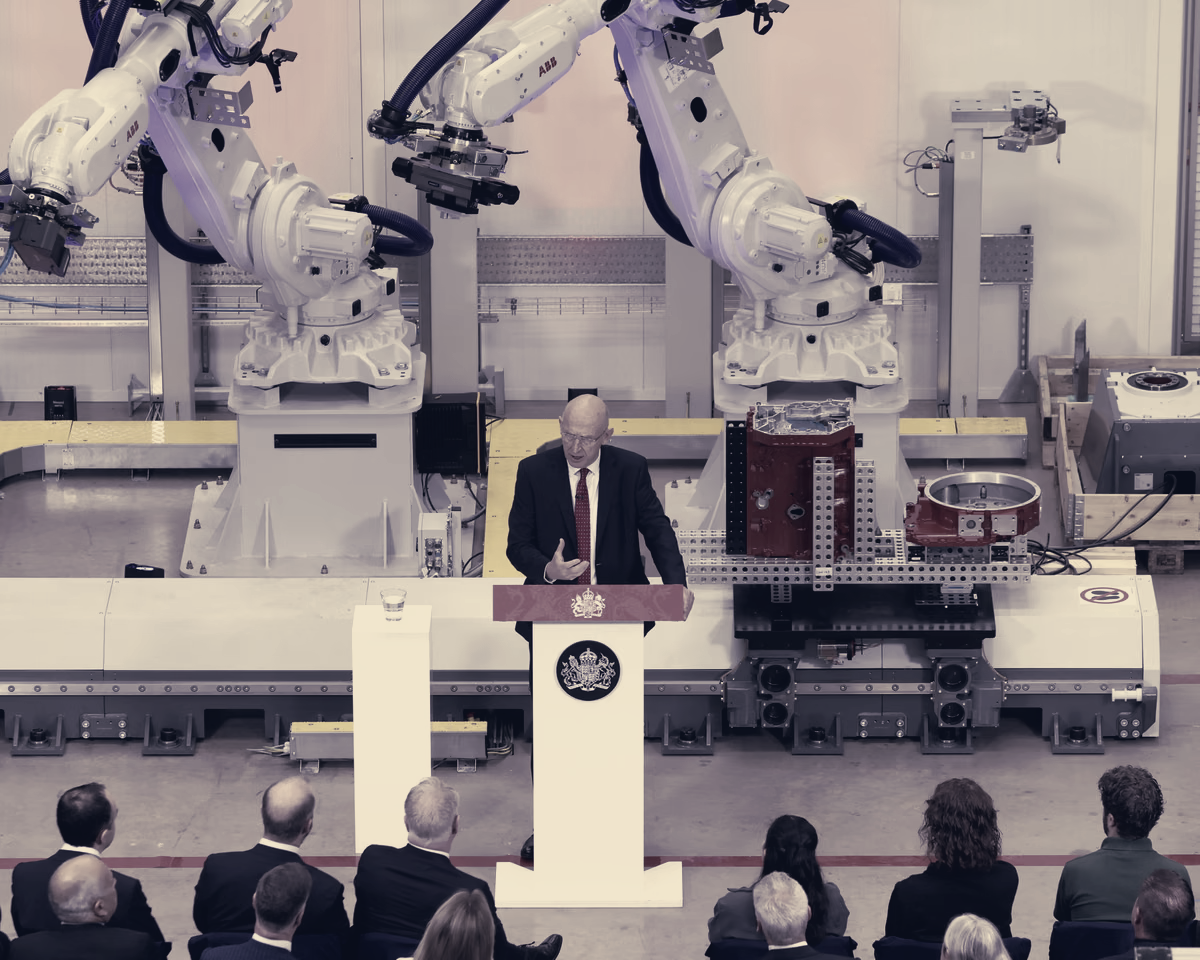

The chancellor says the 28 October budget will put economic growth at its centre while tightening the government’s grip on day-to-day spending. John Healey, speaking at a manufacturing site in Coventry, framed the autumn statement as both a plan to lift regional investment and a demonstration that Labour will meet its self-imposed fiscal limits.
Healey made clear that one immediate change will be a push to devolve more tax and spending authority to regional mayors, including proposals for retaining business rates locally and sharing a slice of income tax. He described investment, innovation and jobs as the backbone of the fiscal package and said stronger growth is the most sustainable route to improving public finances.
He repeated Labour’s commitment not to raise taxes on working people as set out in the party’s manifesto, but stopped short of ruling out other tax measures when pressed. The chancellor declined to answer questions about whether taxes will have to rise, and did not engage with a British Chambers of Commerce suggestion to scrap the pensions triple lock to pay for an employer national insurance cut for under-25s.
Healey invoked the strain in global markets to explain the need for fiscal discipline. With long-term UK bond yields having climbed to an 18-year high last week, he said the country was still paying a ‘‘Truss penalty’’ from the fallout of the 2022 mini-budget. That market backdrop, he argued, reduces headroom for spending and makes it harder for businesses to commit to investment.
The chancellor also stressed partnership with regional leaders, saying he and Andy Burnham were "in lockstep" on meeting the government’s target to balance day-to-day spending with receipts by 2029-30. Healey signalled the government will seek savings from the welfare budget and emphasised work as a route out of benefit dependency, stating there is both a "moral duty" and a "fiscal duty" to help young people into jobs. He said an individual moving from benefits into work reduces costs for the taxpayer and then contributes through taxes.
The speech came as Jaguar Land Rover announced plans to cut 4,000 roles, which Healey used to underline the fragility of the current investment climate. He declined to offer detail on specific spending cuts or tax changes before the budget itself, saying the statement will set out an agenda to raise public investment while cutting red tape for firms.
Healey’s presentation signals a constrained fiscal path: an emphasis on growth and local devolution paired with a promise of spending control and the preservation of manifesto pledges on working people’s taxes. The next steps are the publication of the budget on 28 October and the awaited findings of Alan Milburn’s review into youth worklessness, which the chancellor said will inform measures to reduce youth unemployment.