
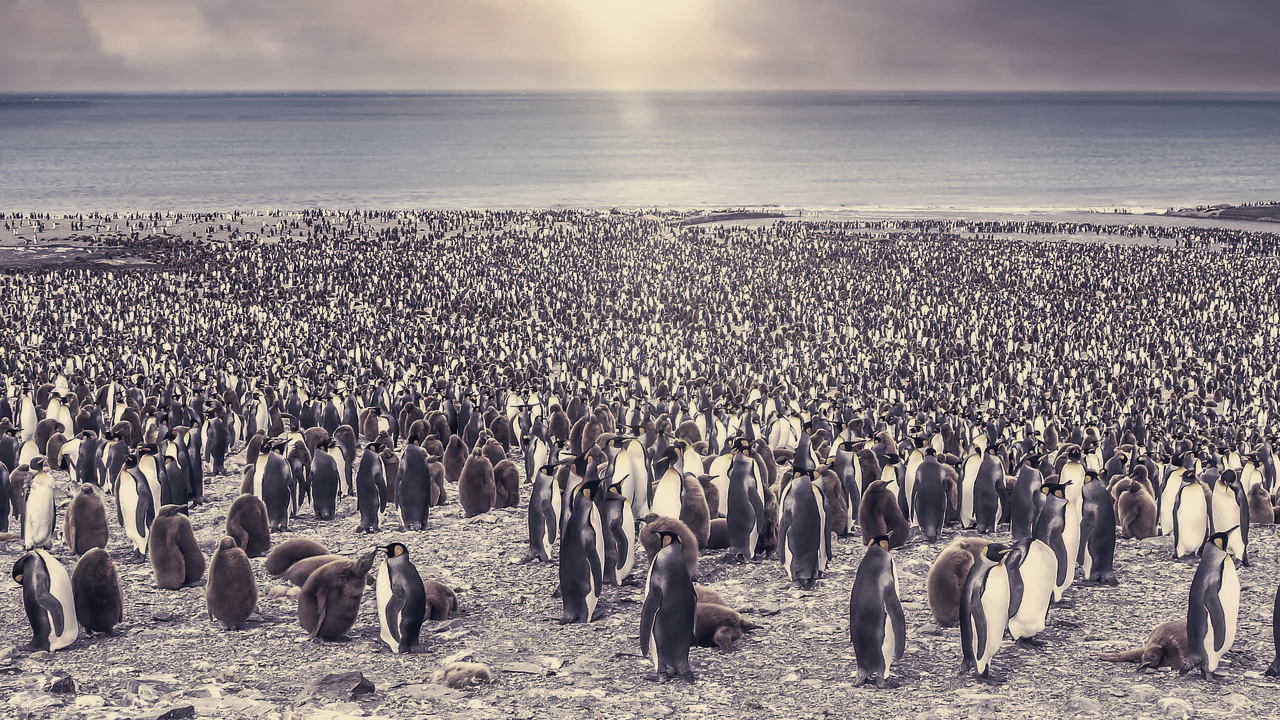
Travelers willing to accept complicated logistics can still reach some of the planet's loneliest corners, but those journeys change the terms of travel. Getting there often means long sea voyages, rare aircraft charters, or helicopter hops that arrive only in narrow seasonal windows. The payoff is extreme solitude, skies largely free of light pollution, and landscapes where wildlife and weather set the agenda.
The Story in Pictures
The Kerguelen Islands, a French territory in the southern Indian Ocean nicknamed the Desolation Islands, sit about 1,865 miles from Madagascar. Volcanic cliffs meet storm-swept seas and beaches host thousands of king penguins and elephant seals. No permanent civilian population lives there; rotating teams of scientists and engineers keep a human presence. Access is limited to the French supply vessel Marion Dufresne II, which sails from Réunion Island several times a year on a voyage that takes around six days.
On the northern edge of Ellesmere Island, Quttinirpaaq National Park lives up to its Inuktitut name, top of the world. Located just shy of 500 miles from the North Pole, the park offers miles of glaciers, jagged peaks and tundra where muskoxen and Arctic wolves roam. Visitors must first reach Resolute Bay in Nunavut and then connect by charter plane to Tanquary Fiord, a route that opens only in summer.
Ittoqqortoormiit, a settlement of about 450 people on the rim of Scoresby Sound, shows how human life continues where access is intermittent. Colorful wooden houses cling to the cliffs, seasonal hunting and fishing remain central to livelihoods, sled dogs still line streets, and winter sea ice can cut the town off entirely. The settlement is reachable by helicopter from Nerlerit Inaat Airport, which itself links by small aircraft to Reykjavik, Iceland.
Longyearbyen, Svalbard's largest town, is remote yet comparatively accessible. It retains everyday amenities, cafés, a craft brewery and a fine-dining restaurant, while glaciers and reindeer sit on the town's outskirts and the Global Seed Vault lies in a nearby hillside. Daily flights connect Oslo and Tromsø with Svalbard Airport, making Longyearbyen one of the more reachable remote outposts.
South Georgia in the South Atlantic has shifted from a whaling outpost to a wildlife sanctuary where more than half a million king penguins congregate and elephant seals blanket the shore. Rusting whaling station relics and the grave of Ernest Shackleton at Grytviken remain visible reminders of the island's past, while conservation efforts work to restore native habitats altered by earlier introductions such as reindeer. There are no airports for visitors; access comes by expedition ship, typically via cruises that depart from Ushuaia, Argentina.
McMurdo Station on Ross Island is the continent's largest research base, supporting around 1,000 people in summer and serving as a staging ground for major Antarctic science. Tourists cannot stay at McMurdo itself, though some expedition cruises to the Ross Sea offer landings nearby, giving rare access to glaciers, volcanic peaks and the Ross Ice Shelf.
True remoteness now requires more than distance, it demands logistics, timing and resilience. For those prepared to plan around seasonal windows and scarce connections, these places offer scale and silence that few modern trips can match.