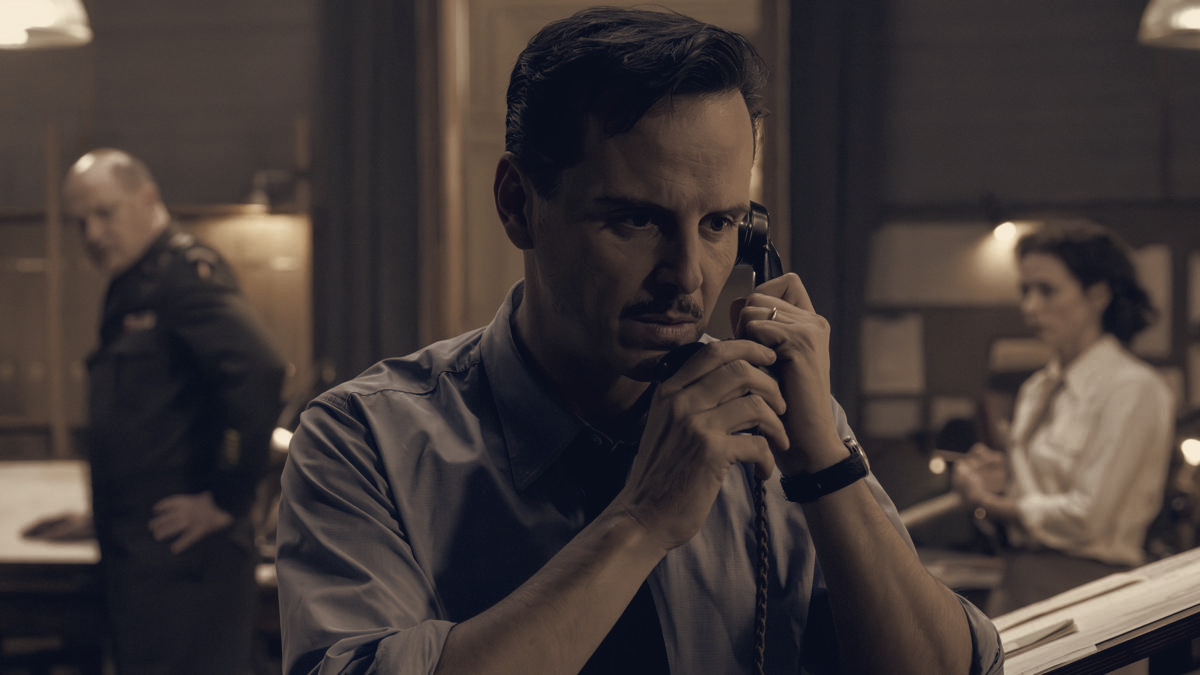

Audiences stand to gain a clearer sense of how meteorology shaped the D‑Day invasion, as Andrew Scott brings Group Captain James Stagg to the foreground in Pressure. Scott says he was drawn to Stagg because the role revealed a different kind of wartime crucial figure, someone whose humility before nature quietly steered one of the largest seaborne invasions in history.
The Story in Pictures
Scott describes Stagg as not conventionally charming, but principled, "very chilly," forthright, and obsessed with weather. He calls Stagg "an unsung hero from history," a man who was unafraid to speak truth to power while advising General Dwight D. Eisenhower on the timing of the Normandy landings. The film locates its drama almost entirely in the planning rooms where meteorologists argued over forecasts and lived under intense pressure as the invasion window approached.
The actor spoke about the part on board HMS Belfast, the warship that led the opening bombardment on 6 June 1944. He emphasised the stakes facing the team, noting Stagg’s wife was heavily pregnant at the time and the men in the building could scarcely leave as they waited for conditions to align: a full moon, low tide, little cloud or wind, and calm seas. That strain, Scott says, is the source of the film’s title as well as its emotional core.
Pressure adapts David Haig’s 2014 stage play, and director Anthony Maras enlisted contemporary weather specialists to inform the production, including Martin Young, a former deputy chief of the UK Met Office who spent 40 years studying the weather and more than 10 as its chief forecaster. Scott says the movie is chiefly about "the humility of leadership, and about the difference between power and expertise," centring the moment when command heeds scientific counsel.
Scott, whose recent credits range from All of Us Strangers to Fleabag and Sherlock, said he enjoyed playing a character who did not ingratiate himself and who gradually reveals his motivations. The film also highlights smaller players, such as Maureen Sweeney, who made a crucial call from an Irish lighthouse confirming a break in the weather. By dramatizing the technical debates behind the scenes, Pressure reframes a familiar military story as one where expertise, rather than spectacle, determined a pivotal outcome.