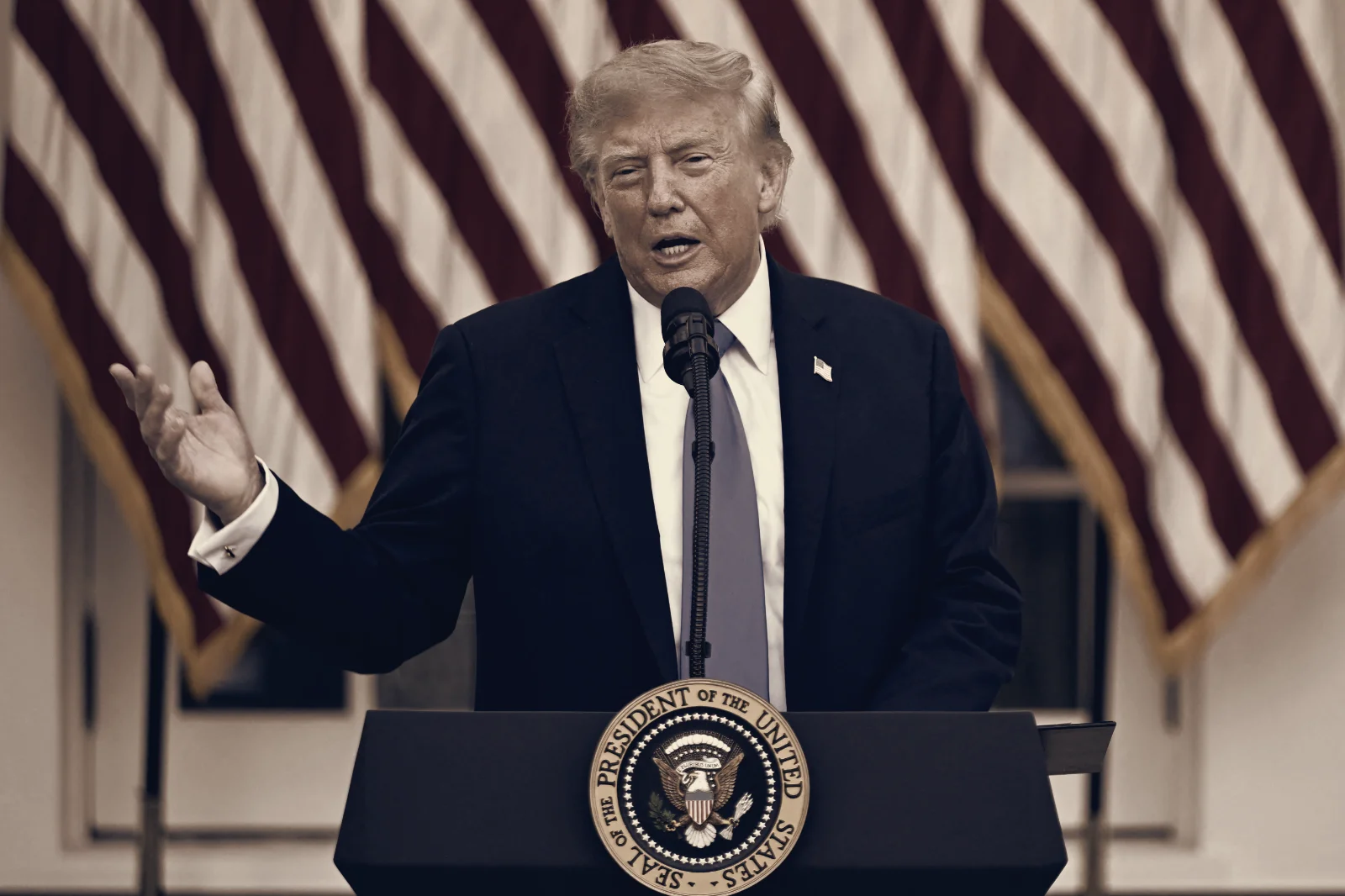

U.S. trade is at risk after President Donald Trump said he would suspend commerce with countries that run surpluses against the United States unless the Federal Reserve lowers interest rates. The ultimatum, delivered from the Oval Office and amplified on social media, turns the Fed into a direct target of a renewed political campaign for cheaper credit.
Addressing reporters, Trump said, "What I'm saying, very simply, is that we should be paying the lowest interest rate in the world," and posted, "LOWER THE RATE OR I'LL STOP TRADING WITH COUNTRIES WITH WHICH WE HAVE A DEFICIT." He pointed to a stronger-than-expected jobs report, noting employers added 162,000 jobs in August, as evidence the economy could bear lower borrowing costs.
Trump repeated his claim that each percentage point in interest costs the country $650 billion, and argued policy rates should be near 1 percent or even a half a percent rather than about 4 percent. He named Canada as an example, asserting a trade halt would save $90 billion. The Fed declined to comment on the president's posts, and the White House did not respond to requests for additional information.
Economists cited by observers say trade deficits are not inherently damaging, noting they can reflect strong domestic demand and that surplus countries often recycle dollars by buying U.S. Treasurys. Still, the president framed deficits as a direct loss that can be fixed by cutting off trade, a zero-sum view at odds with many mainstream analyses.
The remarks revive pressure on the central bank that eased after Trump installed Kevin Warsh as Fed chair. Warsh has stressed the bank's inflation mandate, saying, "Short-term interest rates are the predominant tool to achieve the dual mandate." Last week Warsh suggested rate hikes could soon be considered.
Vice President JD Vance also called for lower rates, calling it the "proper and responsible" response to recent inflation data. National Economic Council Director Kevin Hassett said, "the Fed will do what it wants to do. We respect their independence, but I think the argument for holding steady would be pretty strong." The exchange leaves the Fed both target and arbiter as officials reiterate their commitment to return inflation to the bank's 2 percent objective while confronting explicit political pressure.
With midterm elections two months away and inflation still a central voter concern, the dispute sets up a high-stakes contest between political aims and central-bank independence, and it could shape both economic policy and electoral messaging in the weeks ahead.