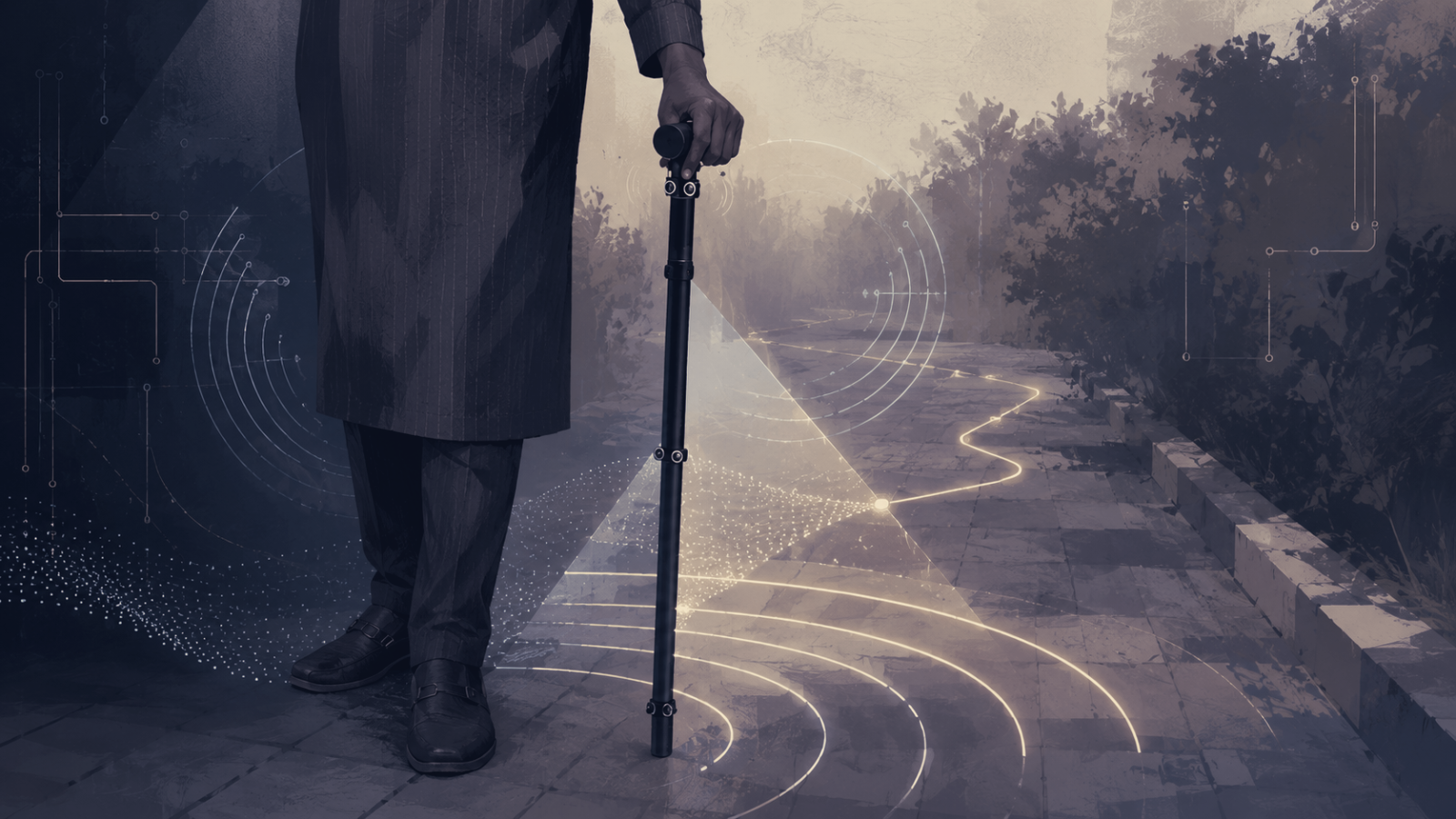

A team of 300-level Computer Engineering students at Ahmadu Bello University, Zaria, has delivered an electronic walking aid intended to give visually impaired users extra information about obstacles while moving.
The project, produced by Group 8 as part of their academic engineering work, replaces some of the cane’s purely mechanical sensing with an electronic approach.
The students documented the device in a video that accompanies the report. The recording shows the aid in operation and is the primary public record of the project, illustrating how the system is meant to function in a real environment.

The concept embeds electronic technology into a mobility tool to address a core problem for people with visual impairment, identifying hazards and obstacles, especially in unfamiliar settings. The group positions the device not as a substitute for familiar tools, but as an alternative that can provide additional contextual cues beyond what a traditional walking stick offers.
Because the work was carried out within the parameters of coursework, it stands as a practical exercise in applying engineering principles to a societal challenge. It highlights how students at a Nigerian university are turning academic tasks into demonstrable assistive-technology solutions.
The project supplies concrete material for further evaluation and development, and the recorded demonstration creates a basis for testing, feedback and refinement. The students’ work therefore represents a step from classroom assignment toward a potential prototype that could be tested and adapted for broader use.