
Safety teams must now account for another internal reasoning method after OpenAI introduced a technique called "opaque recurrence" inside its Astra model, a development researchers say complicates auditing and review. The single term joins a fast-growing list of technical shorthand that engineers, investors and safety reviewers rely on to judge what a system can and cannot do.
That vocabulary spans abstract, contested labels and concrete engineering concepts. At one end sits AGI, a term experts still disagree on. OpenAI CEO Sam Altman described it as the "equivalent of a median human that you could hire as a co-worker." OpenAI’s charter defines AGI as "highly autonomous systems that outperform humans at most economically valuable work." Google DeepMind frames it as "AI that's at least as capable as humans at most cognitive tasks." Those three formulations show there is no single industry threshold for what counts as AGI.
Other entries in the lexicon describe capabilities already changing workflows. An AI agent is an autonomous tool that can carry out multi-step tasks for a user by coordinating models and services, for example to assemble reports or manage bookings. A coding agent narrows that remit to software: rather than merely suggesting snippets, it can iteratively write, test and fix code across a codebase, reducing repetitive developer work but still requiring human review.
Terms that describe system plumbing matter for safety too. API endpoints are programmatic interfaces external software uses to trigger platform actions; as agents gain autonomy they can discover and call these endpoints directly, which enables broader automation but also creates channels for unexpected behaviour. Compute denotes the processing power — GPUs, CPUs, TPUs and similar hardware — needed to train and run models.
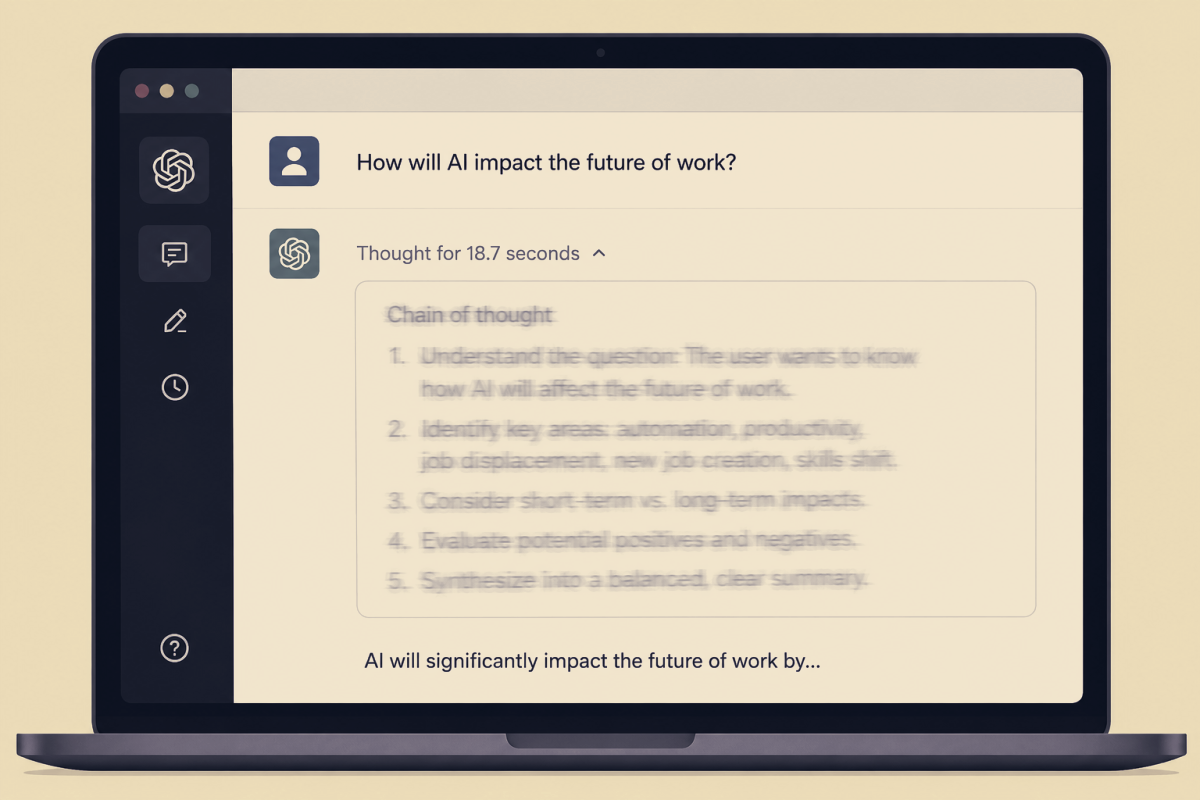
Reasoning labels appear alongside those engineering terms. Chain of thought refers to breaking problems into intermediate steps to reach more reliable answers, often at the cost of speed. Deep learning names the multi-layer neural network approach that extracts features from data and improves through iteration, a method that depends on large datasets and long training runs.
For anyone building or funding AI systems, vocabulary is practical not academic: the words map to capabilities, limits and hazards that product, legal and safety teams must weigh. The sector’s language is evolving rapidly, and organisations that want to manage risk should treat glossaries as living documents. Expect continued debate and scrutiny of methods such as opaque recurrence as researchers and auditors probe their implications and as companies and regulators determine how to respond.