
As microcars return to European streets, many have arrived from China and even legacy names such as Smart make cars abroad. Liux, a Spanish startup, argues it can compete by focusing on materials and maintenance rather than complete supply-chain sovereignty. Co-founder Antonio Espinosa de los Monteros pushed back on nationalistic notions, saying, "The idea of a European car does not exist," and the company accepts some imported components while prioritizing circularity in design.
That circular approach underpins several visible choices. Liux’s body panels use a linen-based biocomposite intended to be separable and recyclable. Batteries are not produced in Europe, but the cars can charge at home, including from rooftop solar. The company has emphasized ease of repair and longer component life to avoid rapid obsolescence, and Espinosa argued that, "One thing that’s very clear for David and me is that recycling isn’t just a lab concept. You can recycle almost anything in a lab. What makes something recyclable has to do with how it’s built."
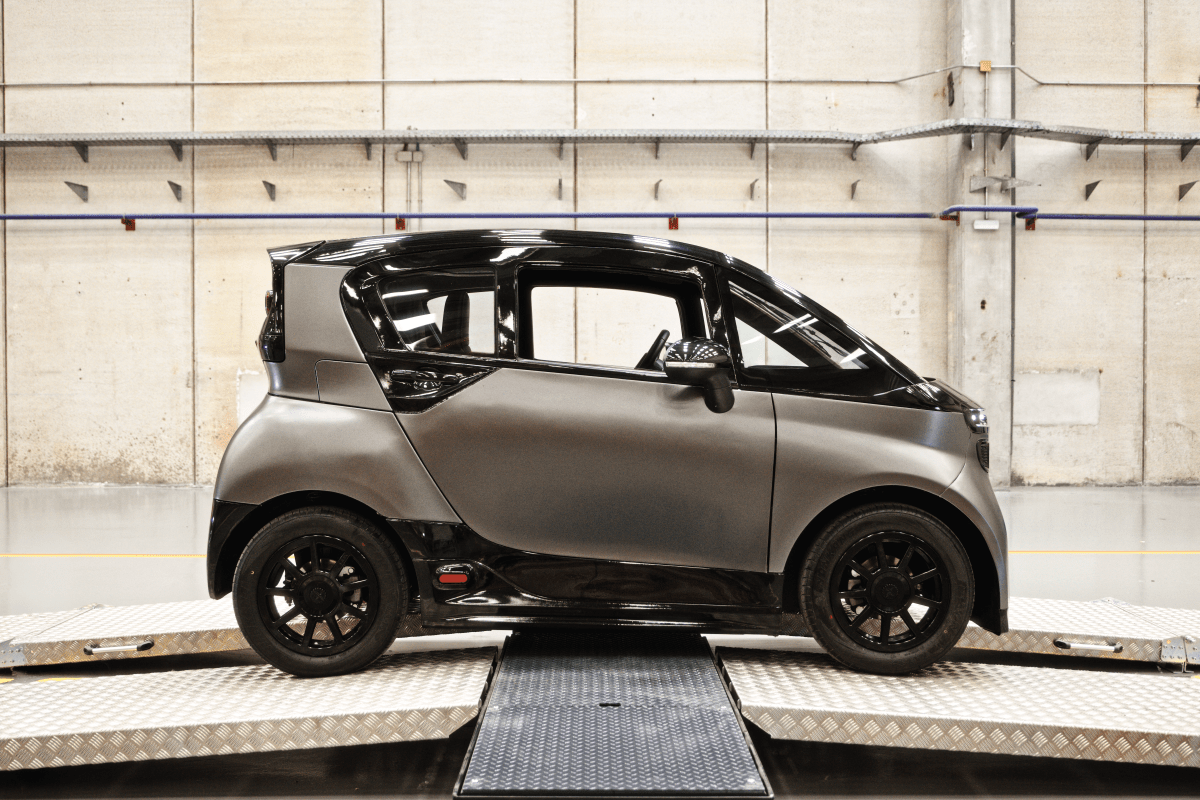
The Big grew out of an earlier Liux prototype, the Animal, and a strategic decision to pursue a smaller vehicle after 2022. Co-founder David Sancho brings EV engineering experience, including work on the Bóreas hybrid supercar shown at the 24 Hours of Le Mans in 2017. Liux now employs 65 people and will assemble vehicles across three Spanish facilities, including a final-assembly plant in Azuqueca de Henares that follows lean management methods, according to head of production Beatriz Belda González.
Liux has obtained homologation for the Liux Big across Europe and says it could scale to 20,000 cars a year by 2030. Demand remains uncertain, but more than 7,500 people have joined the waiting list, which carries no fee. The startup expects the Liux Big to slot into many households as a second car, and it says the vehicle will exploit its L7e classification to offer more usable space, including a 260-liter trunk.
Liux has not fixed final pricing but targets a sticker below €18,000, about $21,000, before EV subsidies. The company is positioning the Big as a safe, familiar-feeling microcar, running safety tests despite category rules that do not require crash testing. Moving forward, Liux plans to ramp production in Spain and explore partnerships for fleet and autonomous use while monitoring how buyers respond to a locally built, material-focused microcar.