
Members are now seeing 40% fewer views of posts LinkedIn classifies as AI slop, the company says, a rapid change after the social network added a dedicated reporting button. LinkedIn rolled out a "seems like AI slop" tool and, according to Chief Product Officer Hari Srinivasan, it has been used more than a million times since launch. "Members are now experiencing 40% less views on what we classify as AI slop from just a few weeks ago," he wrote, framing the data as an early win for the experiment.
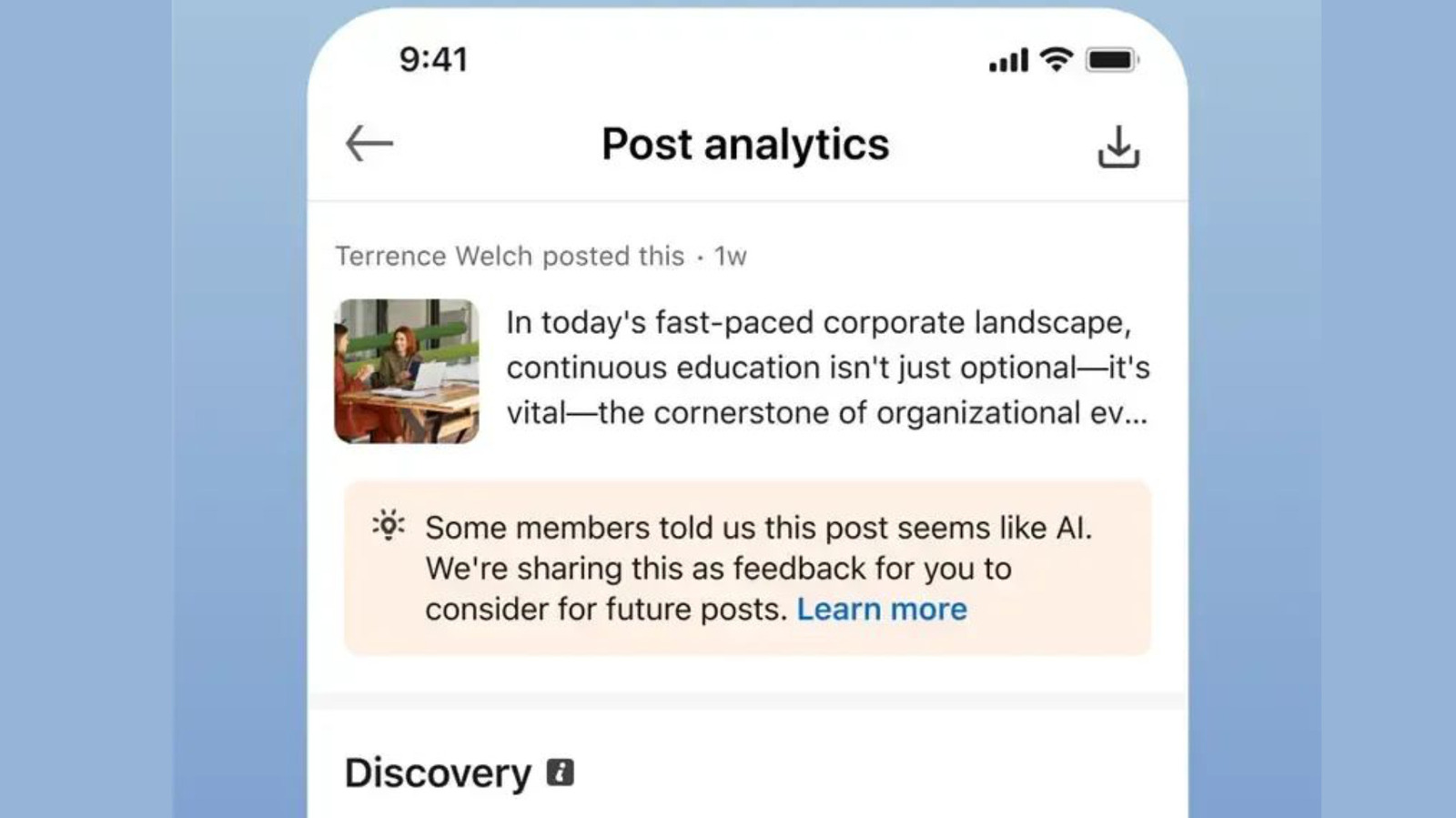
The company also said it will surface notifications when a post has been reported as seeming like AI slop, placing that signal in the app's post analytics. A screenshot shared by Srinivasan shows the new alert will give authors direct feedback that other members flagged their content. That changes accountability on the platform, making reports visible to the people whose reach may be limited by the system.
LinkedIn has declined to publish a full playbook for how it converts user reports into reduced distribution, saying instead it uses "many signals" and that it has "built safeguards to help prevent individual feedback from being used to unfairly target other members." The company previously tuned its algorithm to limit posts with common AI phrasing, citing examples such as the formulaic line, "it not X, it's Y," but it has not laid out the complete signal set behind reach decisions.
The move arrives as scrutiny of AI-written social content intensifies. A study from AI detection firm Pangram estimated more than 40 percent of longform posts on the professional network were likely produced by AI, a figure that raises the stakes for any moderation approach. At the same time, LinkedIn has offered and since removed LLM-powered conveniences, including a prominent enhance button that let users improve posts and messages with AI, underscoring the tension between promoting tools and policing their output.
The net effect is a platform experimenting with crowd signals to curb what it considers low-quality AI content, while keeping the mechanics of those interventions largely private. Authors whose posts are de-amplified will now be notified, but LinkedIn's insistence on opaque signals and safeguards leaves open questions about fairness, error rates, and how the company will measure long-term impact. For now, the company will watch whether reporting and notifications sustain the drop in AI-style posts and how members adapt to visible flags inside post analytics.