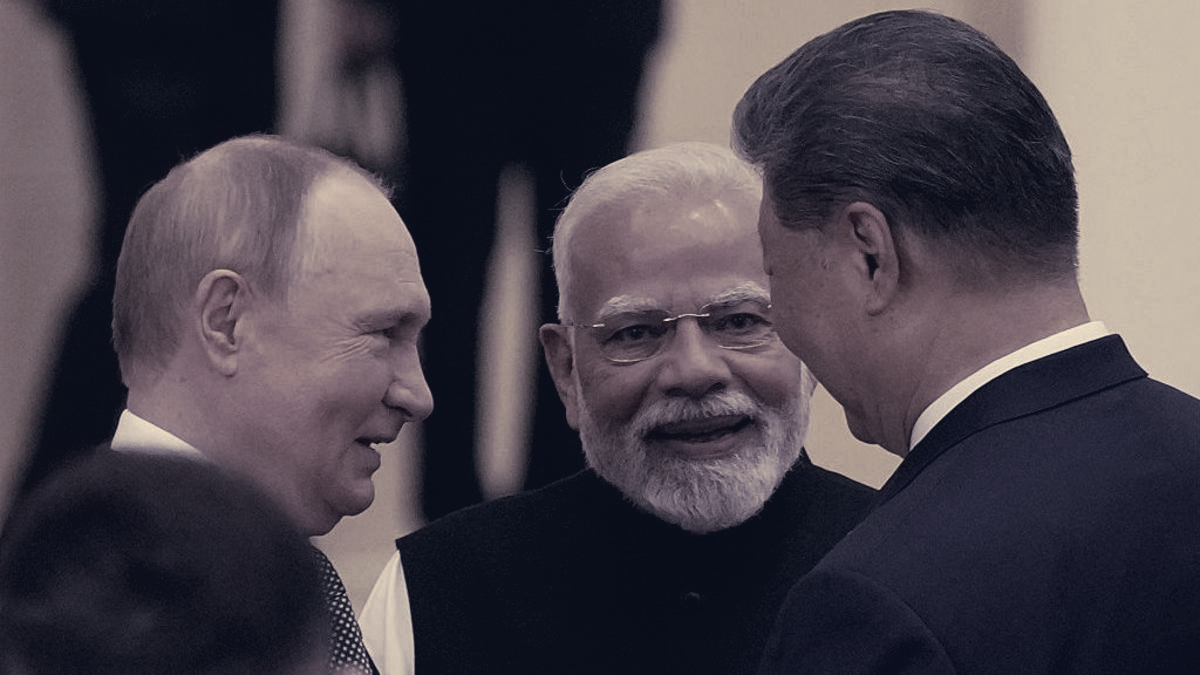
A unified Brics response to US policy is at risk as leaders from 11 member states gather in Delhi. The summit will test whether the expanded group can move beyond its internal disagreements to present coordinated measures against policies coming from Washington, notably those linked to tariffs and pressure on global trade.
Delegations include host India, China, Russia, Brazil, South Africa, the UAE and Iran, with Saudi Arabia attending as an invited participant. The agenda is shaped by the wider geopolitical shocks of the year, particularly the war in Iran and the threat of US tariffs that have unsettled energy markets and the global economy.
Analysts expect Brics to avoid an openly confrontational stance toward the United States. Michael Kugelman, a senior fellow at the Atlantic Council, warned, "India cannot afford to have a joint statement that rails against Washington," and said any criticism would be likely to sound "vague and indirect." He also noted the difficulty India faces in assembling members who hold "a wide array of views and positions on the global order."
Those divergent interests are acute. Russia and Iran may press for stronger language and tools to blunt US pressure. By contrast, India is reportedly in the final stages of a trade deal with the US and has little incentive to antagonise Washington. China appears cautious about being seen to use Brics explicitly to target the United States. The UAE, which has endured attacks from Iran during Tehran’s retaliation phase and hosts US military bases, is also unlikely to back measures that would clearly favour Iran.
Brics has grown in economic weight; it now represents roughly 49% of the world’s population, 40% of global GDP and 26% of international trade. Its institutional achievements include the New Development Bank, which has approved billions of dollars for infrastructure and development projects, and a $100bn contingency reserve arrangement, which remains untested.
Expectations at the summit include pragmatic steps rather than ideological declarations. Leaders are likely to pursue easier cross-border payments in local currencies, an option that holds particular appeal for Moscow and Tehran as they face US sanctions. The group will also continue to press for reforms at multilateral institutions such as the United Nations, the IMF and the World Bank.
For India, the summit is an opportunity to advance its claim to lead the Global South and deepen ties with countries in Africa and Latin America. Kugelman said Delhi has emphasised becoming a "leader or a voice of the Global South," but added its efforts have so far seen "limited success." The immediate test of India’s stewardship will be whether it can secure a consensus declaration; given sharp differences over Iran, ties with the US and the future of global trade, drafting one will be difficult.
What happens next will hinge on how far members are willing to accept ambiguity. Absent clear, unified measures, Brics may consolidate institutional gains and pursue incremental economic tools, while stopping short of a coordinated strategy aimed at Washington.