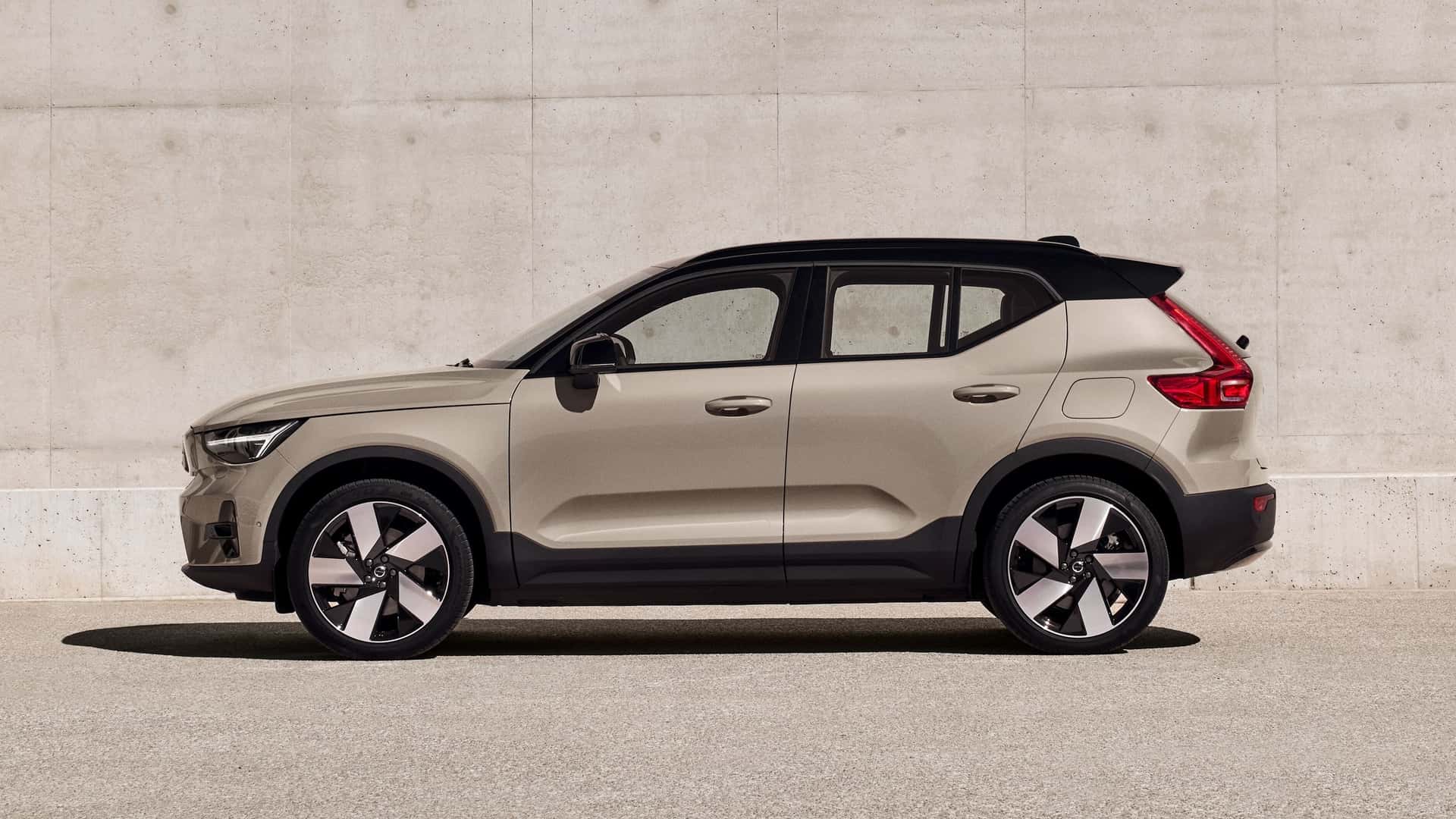
Volvo will stop producing the EX40 for the US market after the 2027 model year, a move that removes the brand’s smallest electric SUV from showrooms and elevates the larger EX60 as Volvo’s entry-level EV. The change aligns Volvo’s American range around bigger, longer-range battery vehicles and follows the earlier withdrawal of the EX30 from the US this year.
A Volvo spokesperson said at the XC40 launch that the company assesses customer needs when shaping its product mix, and that the EX60 P6 now represents the new entry point for Volvo electric SUVs with a starting MSRP of $59,795, versus the outgoing EX40’s $56,545, while offering more space and range. The new XC40 will arrive for the 2028 model year with an updated design and a more efficient mild-hybrid powertrain, and Volvo does not plan an electric XC40 in the near term.
The shift is easy to justify on paper. The EX40 used an 82.0-kilowatt-hour battery and achieved up to 296 miles of range in its Single Motor Extended Range version, while its Twin Motor variant managed 260 miles. By comparison, the EX60 delivers an estimated 330 miles of EPA range in P10 all-wheel-drive form, and even the base EX60 can travel up to 307 miles on a charge. The EX60’s starting price, including destination, is $59,795, just $3,250 higher than the outgoing EX40’s $56,545.
For buyers, the practical consequence is that a relatively small premium buys a larger, newer SUV with more range and Volvo’s latest technology. That shifts the company’s US EV offer toward vehicles that better match American preferences for space and range, while leaving those seeking a small Volvo with only the mild-hybrid XC40 as a factory option.
Volvo’s US lineup will therefore narrow at the small end of the EV market as the company phases out the EX40 in 2027 and introduces the refreshed XC40 for 2028. The brand will rely on the EX60 to carry the entry-level EV position for now, while buyers wanting a compact electric Volvo will need to look to other manufacturers.